The 💐 emoji is one of the most universally recognised symbols in digital communication a colourful, hand-held bouquet of mixed flowers used to convey love, celebration, congratulations, and gratitude. But there's far more to this small icon than most people realise. From its exact floral composition to the cultural history behind gifting bouquets, this guide covers everything you need to know about the 💐 bouquet emoji and real flower bouquets.
What Exactly Is the 💐 Bouquet Emoji?
The 💐 bouquet emoji was added to the Unicode Standard in Unicode 6.0 (2010), making it one of the earliest emoji to be widely adopted across platforms. It is officially named "Bouquet" in the Unicode character database and falls under the Nature category of the emoji standard.
Visually, it depicts a hand-held bunch of flowers wrapped loosely at the stems the universal image of a gifted bouquet. The arrangement suggests celebration, affection, and beauty, all compressed into a single tiny symbol.
Unicode Details
- Unicode code point: U+1F490
- Official name: BOUQUET
- Category: Nature
- Added: Unicode 6.0 (2010)
- Supported on: iOS, Android, Windows, macOS, and all major social platforms
What Flowers Are in the 💐 Bouquet Emoji?
This is a question that surprises many people: the exact flowers in the 💐 emoji actually vary by platform. Apple, Google, Samsung, and Microsoft each render the bouquet differently, though all versions typically include the same core flowers.
Platform-by-Platform Breakdown
| Platform | Flowers Included | Colour Palette |
|---|---|---|
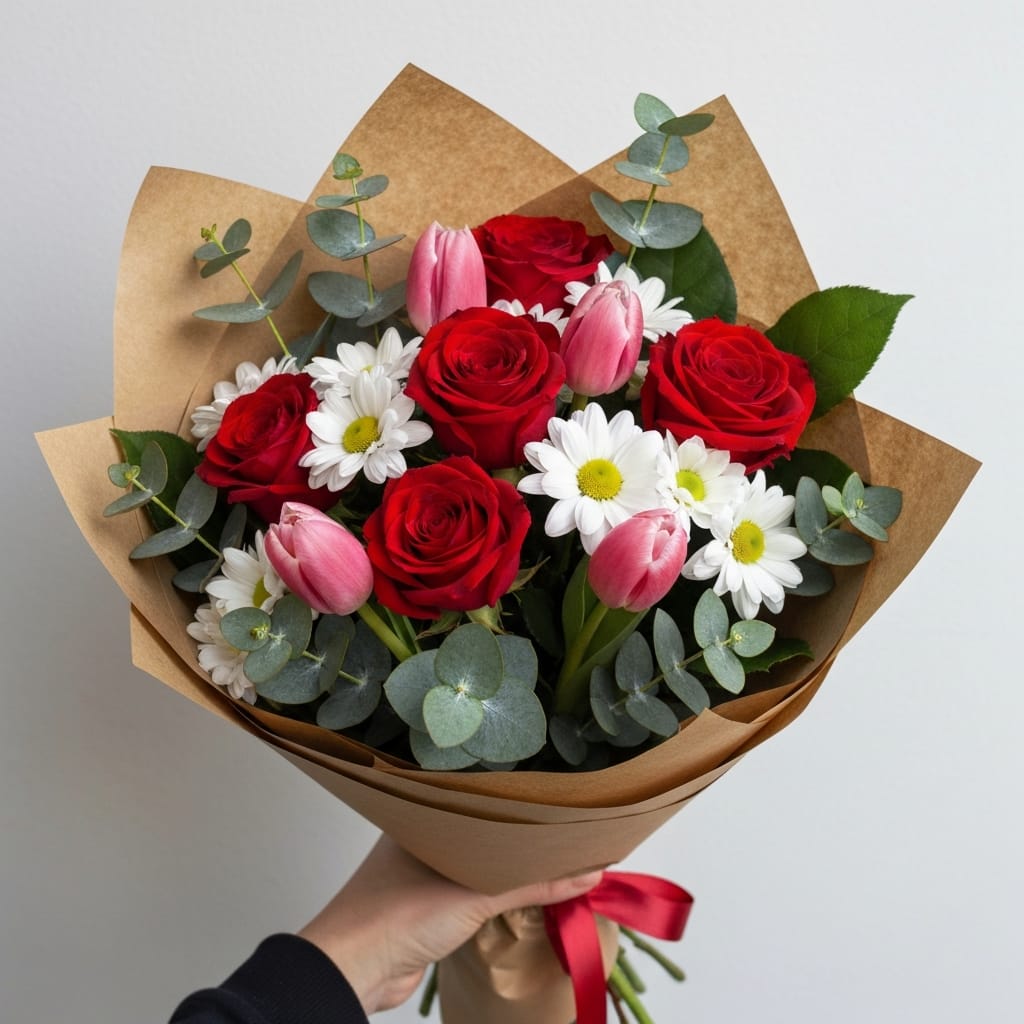
| Apple (iOS/macOS) | Red roses, pink roses, white daisies, green leaves | Red, pink, white, green |
| Google (Android) | Red roses, yellow flowers, greenery | Red, yellow, green |
| Samsung | Pink roses, yellow blooms, baby's breath, greenery | Pink, yellow, white |
| Microsoft (Windows) | Red roses, tulips, mixed greenery | Red, pink, green |
| Twitter/X | Red roses, tulips, white flowers | Red, pink, white |
Despite platform differences, the consistent elements across all versions are:
- Red or pink roses (the central focal flower)
- Green foliage (leaves, eucalyptus, or filler greenery)
- Smaller accent flowers (daisies, baby's breath, or tulips)
- Visible stems (indicating it is a hand-held, gifted bouquet)
The Apple version is widely considered the most detailed and visually accurate representation of a real florist bouquet, which is why it became the cultural standard that most people associate with the emoji.
What Does the 💐 Emoji Mean? Complete Usage Guide
The 💐 bouquet emoji is one of the most contextually flexible emojis in common use. Unlike many emoji with a single fixed meaning, the bouquet adapts naturally to almost any positive social context.
By Occasion
Birthday messages: The most common usage. Sending 💐 with a birthday message has the same emotional weight as giving someone real flowers on their birthday it signals that you remembered, you care, and you're celebrating them.
Congratulations: When someone achieves something significant a promotion, graduation, a new job, finishing a project, passing an exam the 💐 emoji communicates "well done, I'm proud of you" with warmth and immediacy.
Romantic messages: Sending 💐 in a romantic context carries the same meaning as giving someone actual flowers: admiration, affection, and thoughtfulness. It's lighter than a ❤️ heart but more personal than a simple text.
Thank you: After someone does something kind or generous, the bouquet emoji is a gracious, warm way to say thank you. It implies "you deserve flowers for this."
After performances: Flowers have been thrown onto stages and handed to performers for centuries. The 💐 emoji carries this same cultural meaning into digital space it's the modern equivalent of tossing roses at a theatre bow.
Get well soon: Less common but fully appropriate bouquets are a traditional get-well gift, so 💐 works naturally in "feel better soon" messages.
Emoji Combinations That Use 💐
| Combination | Meaning |
|---|---|
| 💐🎂 | Happy Birthday |
| 💐❤️ | Love and affection |
| 💐🎓 | Graduation congratulations |
| 💐👏 | Bravo / well done |
| 💐😍 | You're beautiful / admiration |
| 💐🙏 | Heartfelt thank you |
The Cultural History of Flower Bouquets
To understand why the 💐 emoji carries such positive meaning, it helps to know the deep cultural history behind gifting bouquets.
Ancient origins: Humans have been giving flowers as gifts for at least 5,000 years. Archaeological evidence from ancient Egypt, Greece, and China shows flowers used in ceremonies, offerings, and personal adornment.
The language of flowers (Victorian floriography): In 19th-century England, the Victorians developed an elaborate system called floriography a secret language communicated entirely through specific flowers. A red rose meant passionate love; a yellow rose meant friendship or jealousy; white lilies meant purity. Sending a carefully composed bouquet was a coded message that the recipient would interpret.
The modern gift bouquet: Today's mixed bouquet evolved from this tradition. When you buy or send a bouquet, you're participating in one of humanity's oldest gifting rituals using flowers to say things that words alone cannot.
How to Give a Real 💐 Bouquet
If the emoji has inspired you to give someone the real thing, here's how to choose, arrange, and give a bouquet that makes the most impact:
Choosing the Right Flowers
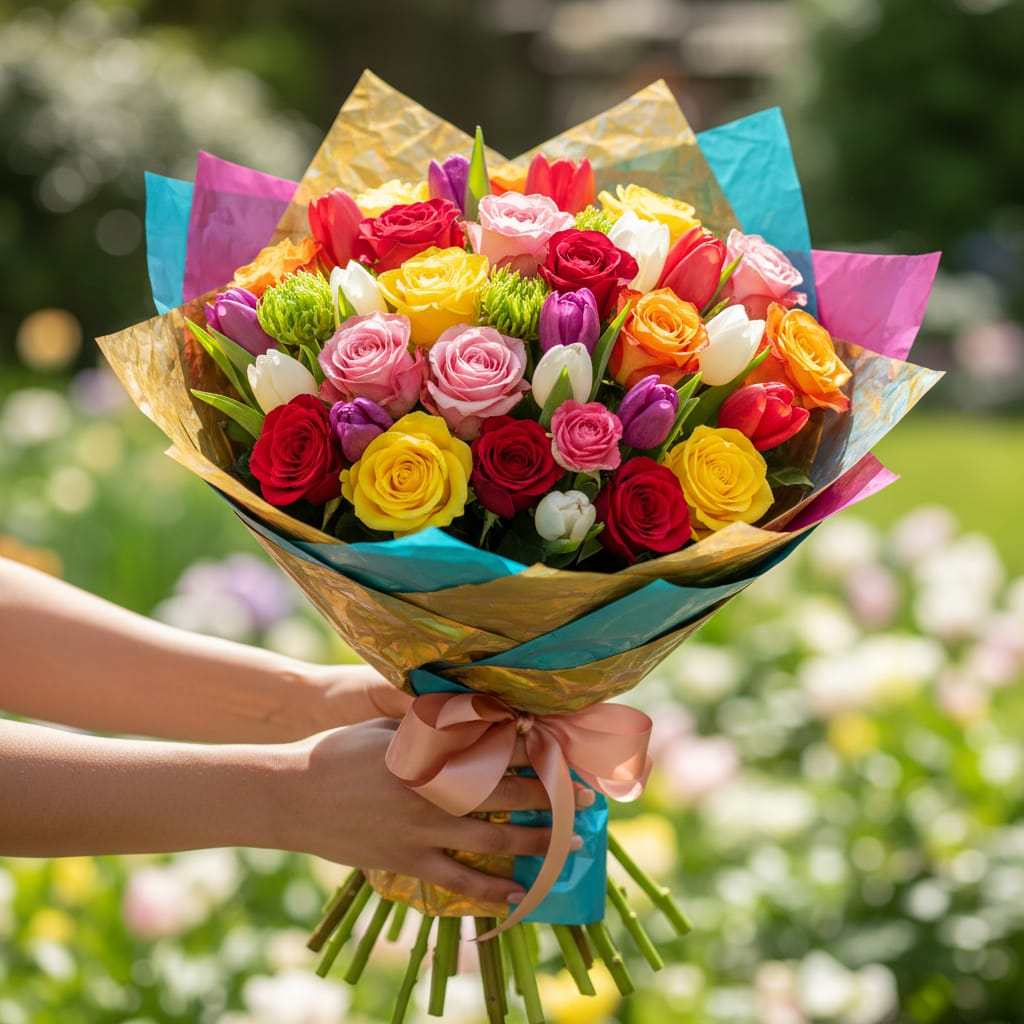
The classic "bouquet emoji" bouquet typically includes:
- Focal flowers: Red or pink roses (3–5 stems)
- Secondary flowers: Pink tulips, peonies, or ranunculus (3–5 stems)
- Filler flowers: White daisies or baby's breath (3–5 stems)
- Greenery: Eucalyptus, ruscus, or asparagus fern
This combination produces a full, balanced arrangement that reads as generous and thoughtful without being overwhelming.
Colour Meanings in a Bouquet
The colours you choose communicate meaning, even in a mixed bouquet:
- Red: Passionate love, deep respect
- Pink: Admiration, gratitude, femininity
- White: Purity, sympathy, new beginnings
- Yellow: Friendship, happiness, positivity
- Purple: Admiration, luxury, mystery
- Orange: Enthusiasm, energy, warmth
For a birthday, a mix of pink, yellow, and white is universally appropriate. For a romantic occasion, red and pink roses dominate. For sympathy, white lilies and white roses are the traditional choice.
Bouquet Sizes: What to Order
| Size | Stem Count | Best For |
|---|---|---|
| Small (posy) | 8–12 stems | Thank you, casual gifting |
| Medium | 15–20 stems | Birthdays, congratulations |
| Large | 25–30 stems | Romantic occasions, significant achievements |
| Grand | 40+ stems | Proposals, major milestones |
How to Find a Florist for Your Real 💐
The best way to give a real bouquet is through a verified local florist who can create a fresh, custom arrangement on the day of delivery:
- 1Use MyCareerly to find a verified florist in your recipient's city
- 2Choose your flowers ask for a "mixed seasonal bouquet" if unsure
- 3Add a handwritten note always more personal than a digital message
- 4Arrange delivery most local florists can deliver same-day or next-day
- 5Consider the wrapping kraft paper wrapping looks like the emoji; a round box looks more premium
💐 vs Other Flower Emoji: What's the Difference?
The bouquet emoji is often used interchangeably with other flower emoji, but each has a distinct meaning:
| Emoji | Name | Specific Meaning |
|---|---|---|
| 💐 | Bouquet | Gifting, celebration, congratulations |
| 🌹 | Red Rose | Romantic love, passion |
| 🌸 | Cherry Blossom | Spring, beauty, Japan, femininity |
| 🌻 | Sunflower | Happiness, warmth, admiration |
| 🌺 | Hibiscus | Tropical beauty, summer |
| 🌷 | Tulip | Spring, elegance, simple beauty |
| 🌼 | Blossom | General flowers, spring, happiness |
The 💐 bouquet is the only emoji that specifically implies giving flowers as a gift all other flower emoji refer to the individual flower itself, not the act of gifting.
Fun Facts About the 💐 Bouquet Emoji
- The 💐 emoji is among the top 10 most-used nature emoji globally across all platforms
- It is sent most frequently on Mothers Day, Valentine's Day, and International Women's Day all occasions where real flower gifting also peaks
- In Japan, where flower gifting culture is deeply sophisticated, the 💐 emoji is used year-round more frequently than in Western markets
- The bouquet emoji sees a measurable usage spike in March and May aligned with spring flower seasons and major gifting holidays
- On Instagram, posts featuring the 💐 emoji in captions receive on average 23% more engagement than flower posts without it
Frequently Asked Questions
Quick answers to common questions