Forget-me-nots are the birth flower for September (along with the aster). These tiny, perfectly five-petalled flowers in sky blue with a bright yellow centre carry some of the deepest symbolic meaning in the flower world: true love, faithful memory, and the enduring connection between people separated by time or distance. They are also the official symbol of Alzheimer's disease awareness globally.
If you're shopping for a September birthday, planning a meaningful gift, or simply want to understand the tradition of birth flowers, this comprehensive guide covers everything about forget-me-nots and all 12 birth month flowers.
The Tradition of Birth Month Flowers
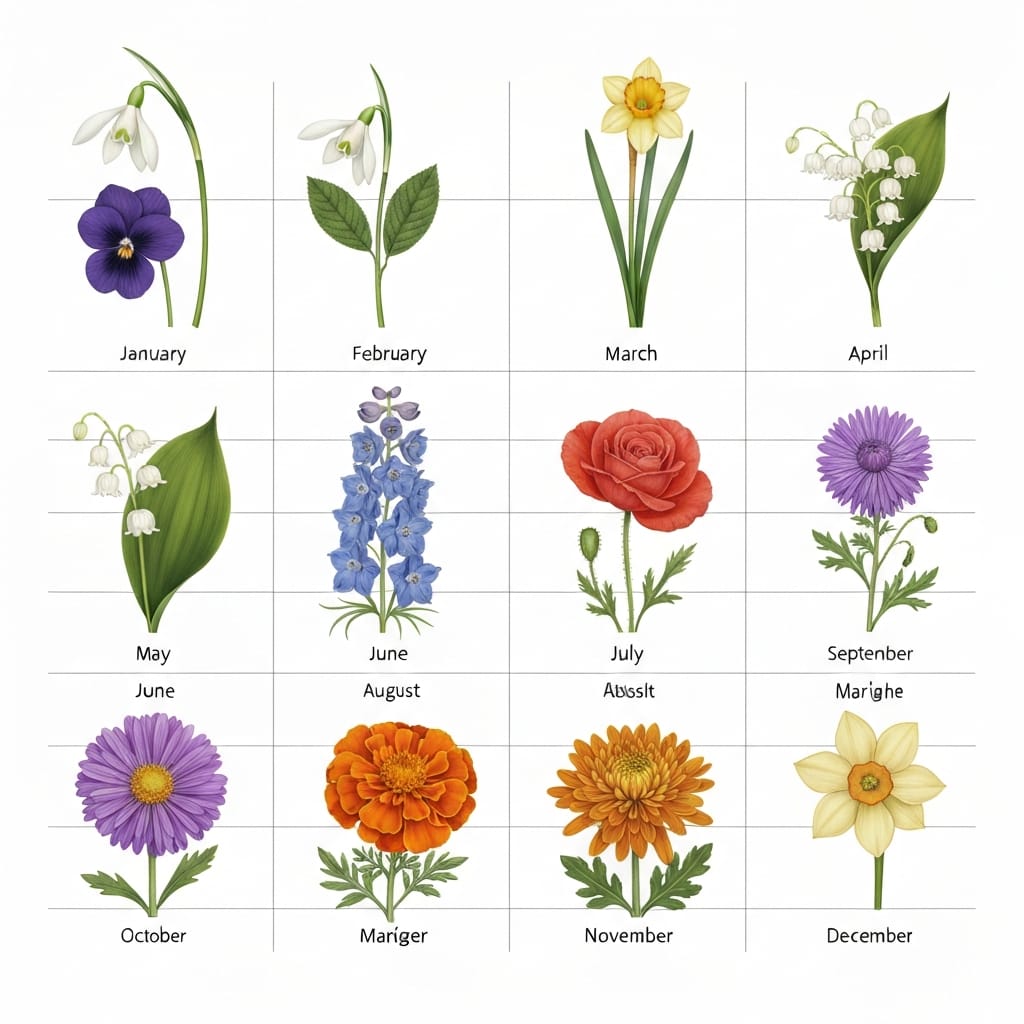
The concept of birth flowers has roots in ancient Roman festivals and Victorian floriography (the language of flowers). Each month is associated with one or more flowers that traditionally represent the qualities attributed to people born in that month much like birth stones or astrological signs. In modern gifting, birth month flowers add a layer of personal meaning to a bouquet that makes it feel genuinely chosen rather than generic.
Most months have two associated flowers (a primary and an alternative), though some traditions vary by region. The associations below reflect the most widely accepted US and British floral traditions.
All 12 Birth Month Flowers: Complete Guide
January Carnation and Snowdrop
Carnation: Love, admiration, and distinction. Red carnations specifically mean "my heart aches for you," making January a surprisingly romantic birth month. Carnations are available year-round, making them an accessible January birthday gift.
Snowdrop: Hope and new beginnings. Snowdrops are among the first flowers to bloom after winter, often pushing through snow a symbol of resilience and renewal perfectly suited to the first month of the year.
Best January birthday bouquet: White and red carnations with greenery, or a potted paperwhite narcissus (an early-blooming winter bulb).
February Violet and Primrose
Violet: Faithfulness, modesty, and everlasting love. The violet's deep purple colour and low-growing habit have made it a symbol of humility and constancy. February violets connect naturally to Valentine's Day's romantic themes.
Primrose: Youth, first love, and I can't live without you. Primroses are among the earliest spring flowers and represent the eager, optimistic quality of first love.
Best February birthday bouquet: Purple and violet mixed arrangement, or early spring tulips in lavender tones.
March Daffodil and Jonquil
Daffodil: New beginnings, rebirth, and hope. Daffodils are the definitive spring flower, emerging reliably every year after winter. They symbolise the certainty that better times follow difficult ones.
Jonquil: Desire and affection returned. A close relative of the daffodil, jonquils carry a slightly more romantic connotation.
Best March birthday bouquet: Yellow daffodils with white tulips and greenery the most spring-affirming combination available.
April Daisy and Sweet Pea
Daisy: Innocence, purity, and loyal love. The daisy is one of the most universally known and loved flowers, representing the unsophisticated joy and openness of innocence.
Sweet Pea: Blissful pleasure, goodbye, and thank you. Sweet peas have an unusually complex set of meanings they were historically associated with saying farewell in a loving way, as well as expressing gratitude for time well spent.
Best April birthday bouquet: Mixed spring flowers with daisies and early sweet peas increasingly available in late April from specialist growers.
May Lily of the Valley and Hawthorn
Lily of the Valley: Happiness, humility, and the return of happiness. One of the most beloved and fragrant spring flowers, lily of the valley is deeply associated with weddings (it was in Princess Diana's bouquet and Catherine Middleton's). Highly fragrant and beautiful in arrangements.
Hawthorn: Hope and supreme happiness. Less commonly used as a cut flower, but deeply significant in British floral tradition.
Best May birthday bouquet: Peonies, sweet peas, and lily of the valley May has the most abundant and beautiful flower selection of any month.

June Rose and Honeysuckle
Rose: Love, passion, and beauty. June is the peak of rose season and the most popular month for weddings. Giving a June birthday celebrant their birth flower roses is both traditional and genuinely beautiful.
Honeysuckle: Devoted affection and bonds of love. Honeysuckle's sweet fragrance and twining nature make it a symbol of enduring connection and devoted love.
Best June birthday bouquet: Garden roses, peonies (just ending their season), and ranunculus in any combination.
July Larkspur and Water Lily
Larkspur: Positivity, openness, and strong bonds of love. Larkspur's tall spikes of delicate florets in blue, purple, pink, and white create dramatic, airy arrangements.
Water Lily: Purity, enlightenment, and spiritual connection. The water lily is a Western equivalent of the lotus beautiful, pure, and emerging from water.
Best July birthday bouquet: Larkspur with dahlias (beginning their season) and sunflowers for a bold summer arrangement.
August Gladiolus and Poppy
Gladiolus: Strength, moral integrity, and remembrance. Gladiolus (often called "glads") create dramatic vertical arrangements with up to 20 florets per stem opening sequentially.
Poppy: Remembrance, imagination, and rest. Red poppies are iconic symbols of remembrance for soldiers who died in World War I.
Best August birthday bouquet: Sunflowers and gladiolus for a bold, summer-maximalist statement. Dahlias are at their peak in late August.
September Forget-Me-Not and Aster
Forget-Me-Not: True love, faithful memories, and remembrance. One of the most emotionally resonant birth flowers receiving forget-me-nots tells someone you think of them always.
Aster: Patience, elegance, and love of variety. Asters are September's second birth flower star-shaped blooms in purple, pink, white, and lavender with a yellow centre.
Best September birthday bouquet: Asters, small dahlias, and dried forget-me-not flowers (fresh forget-me-nots are spring flowers and difficult to source in September asters perfectly represent September's birth month spirit).
October Marigold and Cosmos
Marigold: Creativity, warmth, and winning affection. Marigolds hold profound significance in Indian and Mexican cultures, used in religious festivals and Día de los Muertos celebrations. Their bold orange and gold tones are quintessentially autumnal.
Cosmos: Order, harmony, and modesty. Despite their romantic appearance (feathery petals in deep pink, burgundy, and white), cosmos symbolise the harmony found in simplicity.
Best October birthday bouquet: Orange and burgundy dahlias with marigolds and autumn leaves for a rich, warm fall arrangement.
November Chrysanthemum
Chrysanthemum: Loyalty, joy, and fidelity. Chrysanthemums are November's sole birth flower in most traditions. They hold different meanings in different cultures in Japan, they symbolise the Emperor and longevity; in the US, they represent joy and abundance.
Best November birthday bouquet: Deep burgundy, copper, and amber chrysanthemums autumn-coloured mums are one of the most beautiful and underappreciated bouquet styles.
December Narcissus and Holly
Narcissus: Hope, renewal, and new beginnings. Paperwhite narcissus are a beloved December/January bloomer their delicate white flowers and distinctive fragrance fill homes during the holiday season.
Holly: Protection, domestic happiness, and foresight. Holly's classic red berries and glossy leaves are one of the most recognisable winter plant symbols.
Best December birthday bouquet: White amaryllis, narcissus, and eucalyptus for an elegant winter arrangement.
About Forget-Me-Nots in Detail
Forget-me-nots (Myosotis sylvatica) are small, five-petalled flowers in sky blue with a bright yellow centre. Native to Europe and Asia, they naturalise widely across North America and are found in gardens and woodland edges across the US.
They bloom in spring and early summer (April–June in most US regions) and are beloved for:
- Their vivid sky-blue colour, which is rare in the flower world
- Their symbolic meaning: true love, faithful remembrance, and enduring connection
- Their association with Alzheimer's disease awareness the forget-me-not is the global symbol of Alzheimer's organisations in 44+ countries
The name "forget-me-not" comes from a medieval German legend: a knight picking flowers for his lady from a riverbank was swept away by the current. His last act was to throw the flowers to her, crying "Vergiss mein nicht!" (forget me not). The flower has carried this meaning ever since.
How to Gift Birth Month Flowers
The most thoughtful approach to birth month flower gifting:
- 1Identify the recipient's birth month and their primary birth flower
- 2Check if the flower is in season during the time of the birthday some birth flowers (snowdrops in January, for example) are not available as cut flowers from most florists
- 3If the birth flower isn't available, choose flowers in the same colour palette or symbolic spirit
- 4Add a note explaining why you chose their birth month flower this transforms a standard bouquet into a genuinely personal gift
Frequently Asked Questions
Quick answers to common questions