
Whether you're a florist, a flower enthusiast, or simply someone who loves beautiful things, knowing flower names across the full alphabet gives you a remarkable vocabulary. This complete A-Z reference covers over 80 flower names from the most common to the genuinely rare with descriptions to help you identify and understand each one.
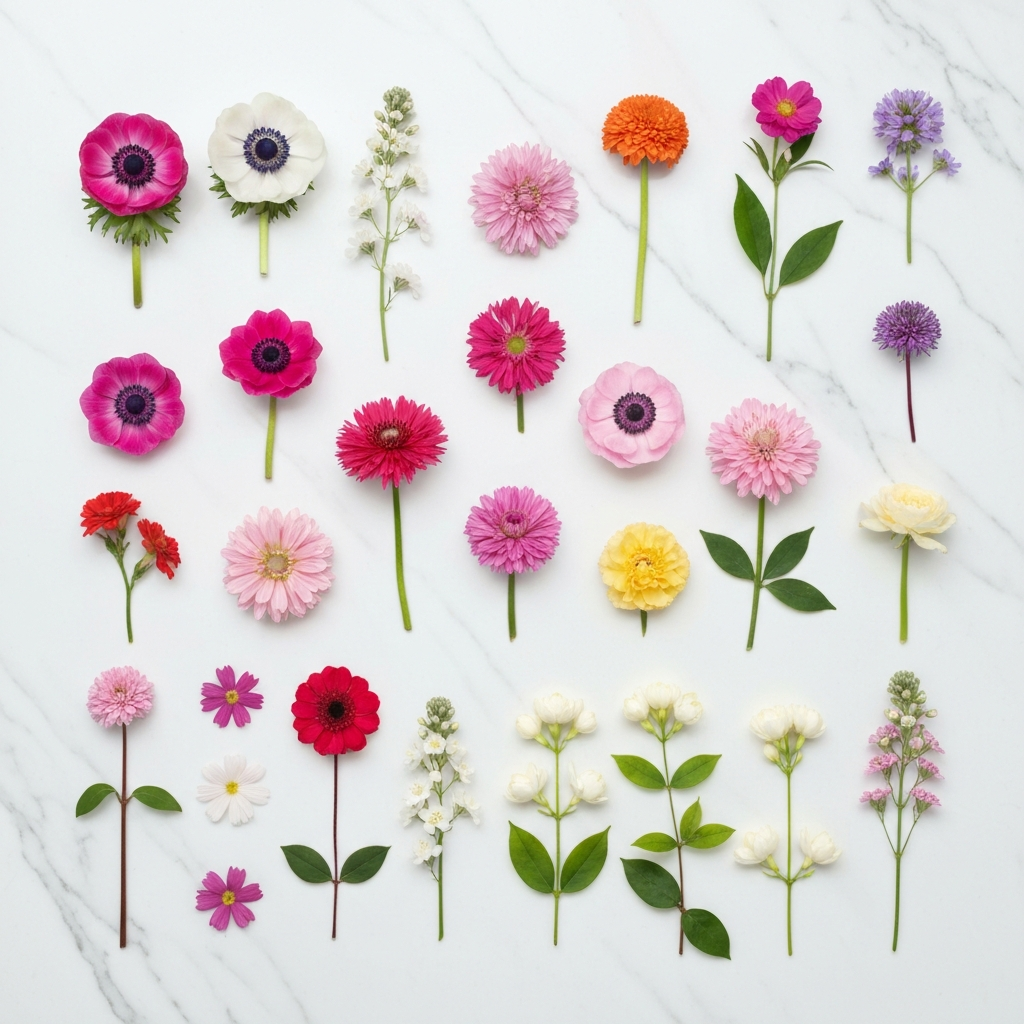
How to Use This Guide
This A-Z list is organised by common name. Each letter includes the most important flowers beginning with that letter, plus brief notes on the ones most useful to know. Use it as a reference, a study guide, or simply a starting point for exploring the enormous world of flowers.
A Flowers Beginning with A
Anemone (Anemone coronaria): Silky petals surrounding a striking dark centre. Available in red, white, and purple. Late winter through spring. One of the most dramatic flowers in the florist's range.
Allium: Purple spherical flower heads on tall stems. A member of the onion family, with a subtle onion scent. Spectacular in architectural arrangements. Spring-blooming.
Amaryllis (Hippeastrum): Large, trumpet-shaped blooms in red, white, and pink. A popular holiday flower that blooms indoors in winter from a bulb.
Aster: Daisy-like flowers with yellow centres and petals in purple, pink, white, and lavender. Late summer through fall. The fall daisy.
Azalea (Rhododendron): Masses of tubular blooms in spring. Available as potted plants in pink, red, white, and coral.
B Flowers Beginning with B
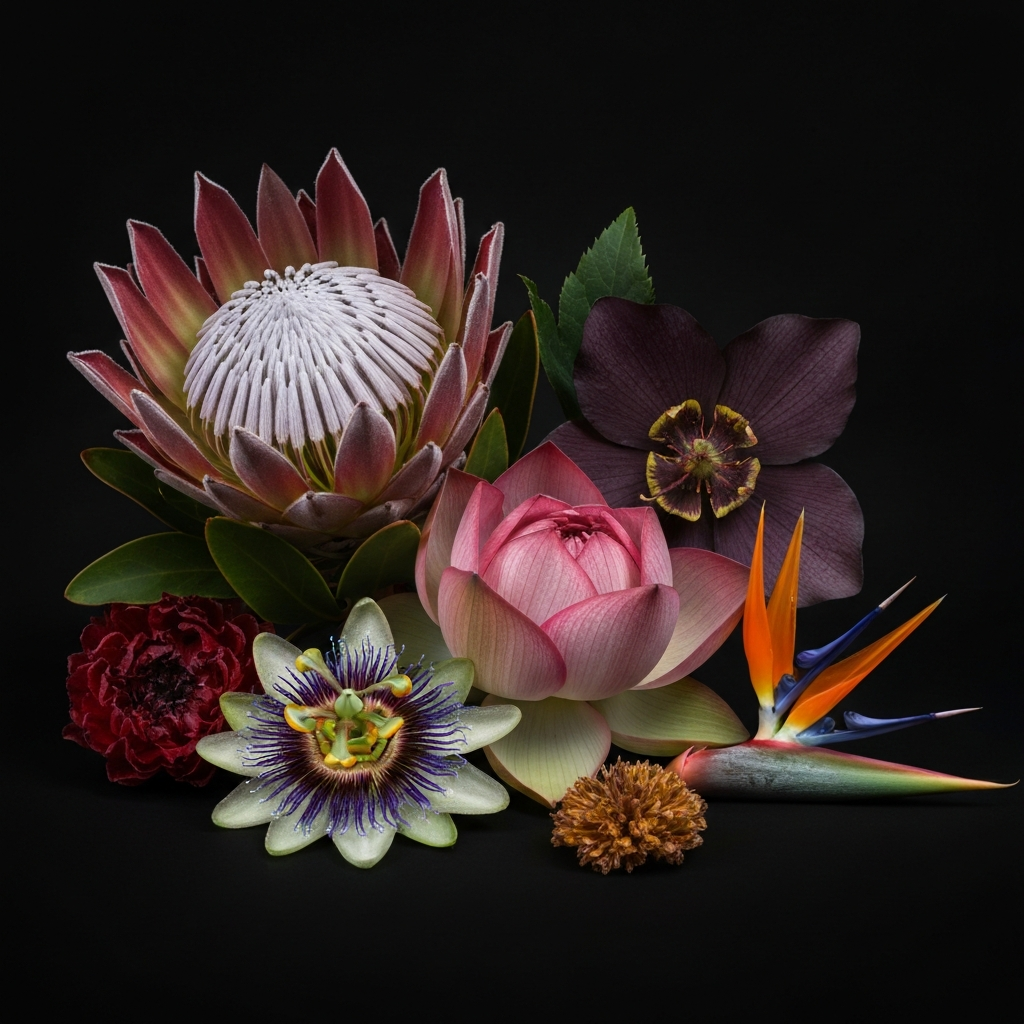
Bird of Paradise (Strelitzia reginae): One of the most architecturally striking flowers in existence. Orange and blue petals form a shape resembling a tropical bird in flight. Native to South Africa.
Black-Eyed Susan (Rudbeckia hirta): Yellow petals surrounding a dark brown-black centre. A classic American wildflower that also works beautifully as a cut flower in late summer.
Bluebell (Hyacinthoides non-scripta): Nodding, bell-shaped blue-purple flowers on arching stems. Famous for creating breathtaking woodland carpets in spring in England.
Bougainvillea: Vivid magenta, orange, or white papery bracts surrounding tiny white flowers. A tropical climbing plant that produces some of the most vibrant colour in the plant kingdom.
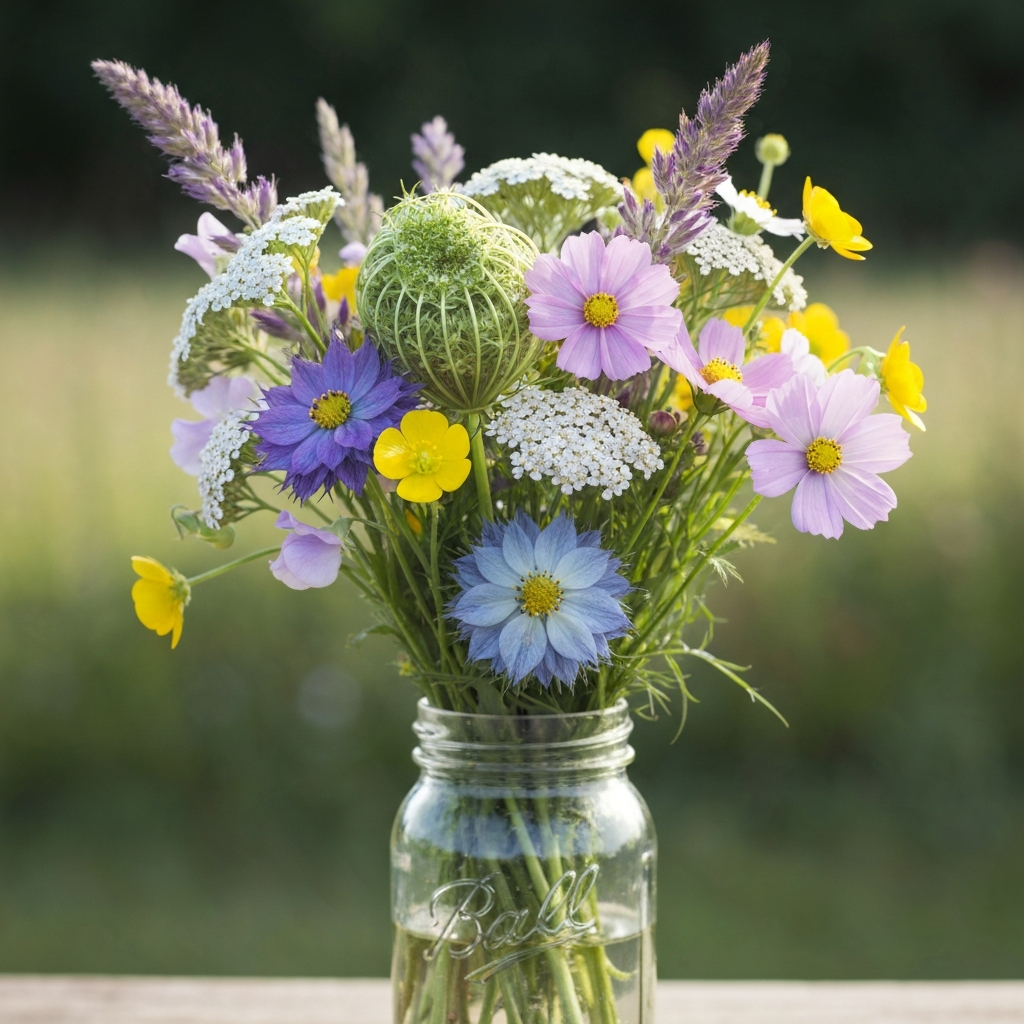
Buttercup (Ranunculus acris): Small, shiny yellow flowers on branching stems. The wildflower version of ranunculus familiar from childhood meadows across America.
C Flowers Beginning with C
Carnation (Dianthus caryophyllus): Ruffled, dense petals in every colour. Vase life of 14-21 days makes it the longest-lasting common cut flower. The backbone of professional event floristry.
Cherry Blossom (Prunus serrulata): Japan's national flower. Pale pink and white blooms appearing for just 1-2 weeks each spring. A symbol of impermanence and beauty.
Chrysanthemum: Commonly called "mums." Available in globe, spider, and cushion forms year-round. The national flower of Japan, with 14-21 day vase life.
Cosmos (Cosmos bipinnatus): Feathery, daisy-like flowers in pink, white, and magenta on delicate stems. A summer garden favourite that also makes a beautiful cut flower.
Crocus: One of the first spring flowers, pushing through snow in late February. Purple, white, and yellow. A powerful symbol of winter's end.
D Flowers Beginning with D
Dahlia: Geometrically perfect spiral petals in ball, pompon, cactus, and dinner-plate forms. Available in every colour except blue. Summer through fall. One of the most photographed autumn flowers.
Daffodil (Narcissus): Trumpet-shaped yellow or white flowers in early spring. One of the most cheerful spring flowers, widely used in public parks and gardens.
Delphinium: Tall spikes of deep blue, purple, white, or pink flowers. One of very few truly blue flowers available. Summer-blooming; widely used in wedding floristry for height.
Dandelion (Taraxacum officinale): The ubiquitous yellow wildflower that turns to a white seed globe. Long dismissed as a weed but increasingly appreciated in wildflower arrangements.
E Flowers Beginning with E
Echinacea (Coneflower): Pink or purple petals surrounding a raised orange-brown cone centre. A native American wildflower with significant medicinal uses. Blooms midsummer through fall.
Elderflower (Sambucus nigra): Clusters of tiny white flowers with a distinctive muscat fragrance. Used to make elderflower cordial. Blooms in late spring.
Evening Primrose (Oenothera): Yellow flowers that open at dusk. A wildflower that creates beautiful roadside displays across North America in summer.
F Flowers Beginning with F
Forget-Me-Not (Myosotis): Tiny blue flowers with yellow centres. A symbol of remembrance and true love. Blooms in spring, creating beautiful low ground-cover carpets.
Foxglove (Digitalis): Tall spikes of tubular, spotted flowers in pink, purple, and white. A dramatic biennial that has inspired the heart medication digitalis.
Freesia: Tubular flowers on arching stems that open sequentially bottom to top. One of the most fragrant cut flowers available year-round at florists.
Fuchsia: Pendulous bicolour flowers in pink-and-purple or red-and-white combinations. A popular hanging basket plant with a distinctively dramatic drooping form.
G Flowers Beginning with G
Gardenia (Gardenia jasminoides): Creamy white, waxy flowers with an intensely sweet fragrance. One of the most beloved flower scents in the world. Available as cut flowers from specialty florists.
Gerbera Daisy (Gerbera jamesonii): Bold, colourful daisies from South Africa in every colour. One of the most widely purchased cut flowers globally. Year-round availability.
Gladiolus: Tall spikes carrying multiple blooms that open from bottom to top. Available in every colour. A dramatic, architectural flower used extensively in event floristry.
H Flowers Beginning with H
Hellebore (Helleborus): Nodding winter and early spring flowers in dusty rose, plum, cream, and near-black. One of the most sophisticated and sought-after flowers by serious enthusiasts.
Hibiscus: Large, tropical flowers in red, orange, yellow, and pink. The state flower of Hawaii. Used fresh for one-day displays or in dried forms.
Hydrangea: Large globe-shaped flower heads made of dozens of tiny individual blooms. Blue in acidic soil, pink in alkaline. One of the most voluminous cut flowers available.
Hyacinth: Dense spikes of tiny, intensely fragrant flowers in blue, purple, pink, and white. Available in spring. The most powerfully scented spring flower.
I through Z At a Glance
I: Iris (architectural purple/blue blooms), Impatiens (summer bedding)
J: Jasmine (climbing, intensely fragrant), Jonquil (small daffodil variety)
K: Kniphofia Red Hot Poker (tall spikes of orange and yellow tubular flowers)
L: Larkspur (tall blue spikes), Lavender (purple, calming scent), Lilac (fragrant spring clusters), Lily, Lily of the Valley (tiny white bells), Lisianthus, Lotus (sacred water flower)
M: Magnolia (large cup-shaped spring blooms), Marigold (orange/yellow, pest-repelling), Mimosa (yellow pom-pom clusters, February)
N: Narcissus (daffodil family), Nasturtium (edible orange/yellow), Nigella Love-in-a-Mist (lacy blue)
O: Orchid (25,000+ species), Oxalis (clover-like, pink or white)
P: Pansy (heart-shaped petals, cool season), Passionflower (exotic, architectural), Peony (large, lush, May-June), Petunia (summer bedding), Poppy (papery, short-lived), Protea (South African, dramatic, long-lasting)
Q: Queen Anne's Lace (Daucus carota white wildflower umbel, wild carrot relative)
R: Ranunculus (layered spring bloom), Rose (world's most iconic flower)
S: Snapdragon (tubular blooms on tall spikes), Statice (papery, dries beautifully), Stock (fragrant spikes), Sunflower, Sweet Pea (ruffled, fragrant)
T: Tulip (spring cup-shaped bloom), Tuberose (intensely fragrant white spikes)
U: Ursinia Cape Daisy (orange, South African)
V: Verbena (clusters of tiny flowers), Viola (small pansy relative), Violet (sweet scented, spring)
W: Wallflower (fragrant spring bedding), Wisteria (cascading purple clusters)
X: Xeranthemum Immortelle (Mediterranean papery flower, dries without losing colour)
Y: Yarrow (Achillea flat-topped clusters, long-lasting, excellent in dried arrangements), Yellow Jasmine
Z: Zinnia (summer annual, every colour, excellent cut flower), Zantedeschia Calla Lily (elegant funnel-shaped bloom)
The Most Important Flowers by Letter
If you want to prioritise learning, these are the highest-value flowers to know from each letter:
| Letter | Most Important Flower | Why |
|---|---|---|
| A | Anemone | Popular in weddings; distinctive appearance |
| B | Bird of Paradise | Most recognisable B flower globally |
| C | Carnation | Most purchased C flower; backbone of event floristry |
| D | Dahlia | Most photographed autumn flower |
| E | Echinacea | Native American; widely grown and recognised |
| F | Freesia | Most fragrant year-round cut flower |
| G | Gerbera Daisy | Top 5 most purchased cut flower globally |
| H | Hydrangea | Most voluminous; essential in wedding floristry |
| I | Iris | Only truly blue flower commonly available |
| L | Lily | Most important sympathy and wedding flower |
| O | Orchid | Highest retail value flower globally |
| P | Peony | Most beloved seasonal flower; May-June only |
| R | Rose | Most purchased flower in the world |
| S | Sunflower | Universal happiness flower |
| T | Tulip | Second most purchased cut flower globally |
| Z | Zinnia | Most reliable summer annual for arrangements |
How Many Flower Species Exist?
There are approximately 400,000 known species of flowering plants in the world. Botanists are still discovering new species each year most in tropical rainforests in South America and Southeast Asia. The most commonly cultivated cut flower varieties number in the thousands, though florists typically work with 50-200 varieties regularly. Home gardeners might encounter 200-500 different species over a lifetime of gardening.
Frequently Asked Questions
Quick answers to common questions
What flower starts with every letter of the alphabet?+
What is the most common flower name starting with D?+
What rare flowers begin with uncommon letters like X, Q, or U?+
Which letters have the most important flowers?+
Are there any truly blue flowers?+
Browse Flowers by Letter Jump to Any Section
Every flower name from A to Z, organised into dedicated sections. Click any letter heading or the "See all" link to open that letter's full page in a new tab. Whether you're looking up a specific botanical name or just exploring, start with the letter you want below.
From Abelia x grandiflora to Actaea pachypoda, the letter A hosts some of the most beloved blooms in the world. Here are some of the most well-known examples:
- Abelia x grandiflora A popular semi-evergreen hybrid shrub featuring clusters of small, fragrant, bell-shaped white to pink flowers that bloom throughout the summer.
- Abutilon Often called the flowering maple, this tropical shrub produces pendulous, bell-shaped blooms in shades of orange, red, and yellow.
- Acacia dealbata Commonly known as Silver Wattle, this Australian native produces masses of fragrant, bright yellow, spherical flower heads in early spring.
- Acanthus mollis Known as Bear's Breeches, this Mediterranean perennial features tall, dramatic spikes of white and purple flowers rising above large, glossy leaves.
- Achillea millefolium Commonly known as Yarrow, this hardy perennial features flat-topped clusters of tiny flowers in white, pink, or yellow, native to temperate regions.
- Aconitum napellus Known as Monkshood or Wolfsbane, this highly toxic plant produces striking, deep blue, hooded flowers on tall spikes in late summer.
- Acorus calamus Commonly called Sweet Flag, this wetland plant produces inconspicuous, greenish-yellow spadix flowers and is prized for its aromatic, sword-like foliage.
- Actaea pachypoda Known as White Baneberry or Doll's Eyes, this woodland plant features fluffy white flower racemes followed by striking white berries with black spots.
See all 108+ flowers starting with A →
From Baby's Breath to Barkeria, the letter B hosts some of the most beloved blooms in the world. Here are some of the most well-known examples:
- Baby's Breath (Gypsophila paniculata) A popular filler flower featuring clouds of tiny white or pink blossoms, often used in wedding bouquets to symbolize everlasting love and purity.
- Bachelor's Button (Centaurea cyanus) Also known as Cornflower, this hardy annual produces striking electric-blue blooms and was traditionally worn by young men in love to signify their romantic status.
- Balloon Flower (Platycodon grandiflorus) Native to East Asia, this unique perennial gets its name from its balloon-shaped buds that pop open into star-shaped, deep violet-blue flowers.
- Balsam (Impatiens balsamina) An old-fashioned garden favorite with spurred, camellia-like flowers in shades of red, pink, and white, native to the tropical regions of Southern Asia.
- Baneberry (Actaea pachypoda) Known for its striking white berries with black dots, this woodland plant produces small, feathery white flower spikes in spring and is native to North America.
- Baptisia (Baptisia australis) Commonly called False Indigo, this hardy perennial features spikes of deep indigo-blue pea-like flowers and is native to the prairies of the United States.
- Barberry (Berberis thunbergii) While primarily grown for foliage, this shrub produces small, pendulous yellow flowers in spring followed by bright red berries, native to Japan and Eastern Asia.
- Barkeria (Barkeria orchid) A genus of epiphytic orchids native to Mexico and Central America, known for their long-lasting, showy, and often fragrant pink or purple flowers.
See all 64+ flowers starting with B →
From Cabbage Rose to Calla Lily, the letter C hosts some of the most beloved blooms in the world. Here are some of the most well-known examples:
- Cabbage Rose Rosa centifolia, known for its dense, globular blooms with hundreds of petals, originating from the Caucasus region and prized for its intense fragrance.
- Cacao Theobroma cacao produces small, star-shaped white or pink flowers directly on the trunk, native to the tropical rainforests of Central and South America.
- Cactus Dahlia A specific cultivar group of Dahlia featuring fully double flowers with long, narrow, pointed, and often twisted petals in a wide array of vibrant colors.
- Caladium Grown primarily for its heart-shaped, multi-colored foliage, these tropical plants from South America produce small, inconspicuous spathe-and-spadix flowers.
- Calamondin Citrus microcarpa features fragrant, star-shaped white blossoms that eventually develop into small, edible orange fruits, commonly grown as an ornamental houseplant.
- Calendula Also known as Pot Marigold, this hardy annual features bright orange or yellow daisy-like flowers and is native to the Mediterranean region.
- Calibrachoa Often called Million Bells, these trailing plants produce masses of small, petunia-like flowers in nearly every color, native to South America.
- Calla Lily Zantedeschia aethiopica is an elegant, trumpet-shaped flower native to southern Africa, often symbolizing purity and rebirth in floral arrangements.
See all 148+ flowers starting with C →
From Daboecia cantabrica to Daisy, Gloriosa, the letter D hosts some of the most beloved blooms in the world. Here are some of the most well-known examples:
- Daboecia cantabrica Commonly known as St. Dabeoc's heath, this evergreen shrub produces bell-shaped purple or white flowers and is native to Western Europe.
- Dahlia 'Bishop of Llandaff' A popular cultivar featuring striking dark bronze foliage and vibrant semi-double red flowers, often used in borders for dramatic contrast.
- Dahlia pinnata The national flower of Mexico, this tuberous perennial is famous for its wide variety of complex, multi-layered flower shapes and colors.
- Daisy, African Known botanically as Osteospermum, these daisy-like flowers feature vibrant petals in shades of purple, pink, and white with dark centers.
- Daisy, Barberton Gerbera jamesonii, native to South Africa, is a popular cut flower known for its large, brightly colored blooms and long, sturdy stems.
- Daisy, Blue Felicia amelloides, a charming South African native, produces sky-blue petals with yellow centers and is often grown as an annual in cooler climates.
- Daisy, English Bellis perennis is a classic lawn flower featuring white or pink ray florets and a yellow disk, often associated with innocence and purity.
- Daisy, Gloriosa A hybrid of Rudbeckia hirta, these sun-loving flowers feature bold yellow, orange, and mahogany petals with dark, prominent centers.
See all 90+ flowers starting with D →
From Echeveria to Echinops ritro, the letter E hosts some of the most beloved blooms in the world. Here are some of the most well-known examples:
- Echeveria A succulent plant producing bell-shaped flowers in shades of pink, orange, or yellow, native to the semi-desert regions of Central America and Mexico.
- Echinacea angustifolia Known as the narrow-leaf purple coneflower, this hardy perennial features pinkish-purple petals and a spiky central cone, native to the central United States.
- Echinacea pallida A species of coneflower with drooping, pale purple petals, often used in herbal medicine and native to the prairies of North America.
- Echinacea paradoxa The only yellow-flowered species of coneflower, this unique plant is native to the Ozark region and features bright golden petals surrounding a dark cone.
- Echinacea purpurea The most common purple coneflower, widely grown in gardens for its medicinal properties and vibrant, daisy-like blooms that attract butterflies and bees.
- Echinocactus grusonii Commonly known as the Golden Barrel Cactus, it produces small, yellow, cup-shaped flowers at the crown of the plant during the summer months.
- Echinops bannaticus A striking perennial known as the blue globe thistle, featuring spherical, metallic-blue flower heads that are highly attractive to pollinators in late summer.
- Echinops ritro A hardy globe thistle with deep blue, spherical flower heads and silvery, deeply cut foliage, native to Southern Europe and Western Asia.
See all 92+ flowers starting with E →
From Fairy Bells to Fatsia, the letter F hosts some of the most beloved blooms in the world. Here are some of the most well-known examples:
- Fairy Bells (Prosartes hookeri) Delicate, bell-shaped greenish-white flowers that dangle from arching stems, native to the moist, shaded forests of western North America.
- Fairy Primrose (Primula malacoides) A charming, winter-blooming plant featuring tiers of small, fragrant pink, lavender, or white flowers, originating from the Yunnan province of China.
- False Dragonhead (Physostegia virginiana) Also known as Obedient Plant, this North American native produces spikes of tubular pink or white flowers that stay in place when pushed.
- False Goat's Beard (Astilbe) Known for its feathery, plume-like flower spikes in shades of red, pink, and white, thriving in shady, moist garden environments.
- False Indigo (Baptisia australis) A hardy perennial featuring spikes of deep indigo-blue, pea-like flowers and attractive blue-green foliage, native to the central and eastern United States.
- False Sunflower (Heliopsis helianthoides) A robust, long-blooming perennial with bright yellow, daisy-like flowers that provide a sunny, cheerful appearance to native prairie landscapes.
- Fan Flower (Scaevola aemula) A unique Australian native featuring fan-shaped blue, purple, or white flowers that bloom profusely throughout the summer in hanging baskets.
- Fatsia (Fatsia japonica) Produces large, spherical clusters of creamy-white flowers in late autumn, followed by black berries, native to the forests of southern Japan.
See all 69+ flowers starting with F →
From Gaillardia to Gardenia jasminoides, the letter G hosts some of the most beloved blooms in the world. Here are some of the most well-known examples:
- Gaillardia Commonly known as Blanket Flower, these daisy-like perennials feature vibrant red, orange, and yellow petals and are native to North America.
- Galanthus Known as the Snowdrop, these delicate white, bell-shaped flowers are among the first to bloom in late winter across Europe and Asia.
- Galax urceolata A woodland plant native to the southeastern United States, featuring spikes of tiny white flowers and glossy, heart-shaped evergreen leaves.
- Galega officinalis Also called Goat's Rue, this herbaceous perennial produces racemes of pea-like flowers in shades of blue, white, or pink, native to Europe.
- Galinsoga quadriradiata A small, daisy-like wildflower often considered a weed, featuring tiny white ray florets and yellow centers, native to Central and South America.
- Galium odoratum Known as Sweet Woodruff, this groundcover produces clusters of tiny, star-shaped white flowers and is prized for its sweet, hay-like fragrance.
- Galtonia candicans Also known as the Summer Hyacinth, this bulbous plant produces tall spikes of pendulous, fragrant white bell-shaped flowers native to South Africa.
- Gardenia jasminoides A popular evergreen shrub known for its intensely fragrant, creamy white, waxy flowers and glossy dark green foliage, native to East Asia.
See all 48+ flowers starting with G →
From Habenaria radiata to Hardenbergia violacea, the letter H hosts some of the most beloved blooms in the world. Here are some of the most well-known examples:
- Habenaria radiata Known as the White Egret Orchid, this Japanese native features delicate, fringed white petals that resemble a bird in flight.
- Habranthus robustus Commonly called the Pink Rain Lily, this South American bulb produces trumpet-shaped rosy-pink flowers after heavy summer rainfall.
- Haemanthus albiflos The White Paintbrush Lily is a South African bulbous plant with unique, brush-like white flowers and thick, succulent-like evergreen leaves.
- Haemanthus coccineus Known as the Blood Lily, this striking South African plant produces a dense, bright red inflorescence that emerges before the leaves.
- Halesia carolina The Carolina Silverbell is a deciduous tree native to the southeastern United States, featuring clusters of delicate, bell-shaped white flowers in spring.
- Hamamelis mollis The Chinese Witch Hazel is a winter-blooming shrub known for its fragrant, spidery yellow flowers that appear on bare branches.
- Hamamelis virginiana The Common Witch Hazel is a North American shrub that produces unique, ribbon-like yellow flowers in late autumn as its leaves turn gold.
- Hardenbergia violacea A vigorous Australian climbing plant often called Purple Coral Pea, featuring cascading racemes of vibrant violet-purple flowers in late winter.
See all 58+ flowers starting with H →
From Iberis amara to Idesia polycarpa, the letter I hosts some of the most beloved blooms in the world. Here are some of the most well-known examples:
- Iberis amara Commonly known as Wild Candytuft, this white-flowered plant is native to Europe and is often used in rock gardens for its fragrant, clustered blooms.
- Iberis sempervirens An evergreen perennial known as Evergreen Candytuft, featuring masses of pure white flowers that bloom in early spring, originating from Southern Europe.
- Iberis umbellata Known as Globe Candytuft, this annual plant produces rounded clusters of pink, purple, or white flowers and is a popular choice for colorful garden borders.
- Iboza riparia A shrubby plant native to tropical Africa, known for its spikes of small, pale blue or white flowers that appear in winter, often called the Ginger Bush.
- Ice Plant Refers to Delosperma cooperi, a succulent groundcover native to South Africa that produces vibrant, daisy-like magenta flowers and thrives in hot, dry conditions.
- Iceland Poppy Papaver nudicaule is a short-lived perennial native to subpolar regions, prized for its papery, cup-shaped flowers in shades of yellow, orange, white, and pink.
- Icy Peak A specific cultivar of the Helleborus orientalis, known for its pristine white, outward-facing flowers that bloom in late winter, symbolizing renewal and hope.
- Idesia polycarpa A deciduous tree native to East Asia, producing long, drooping panicles of greenish-yellow, fragrant flowers followed by clusters of bright red berries in autumn.
See all 100+ flowers starting with I →
From Jacaranda mimosifolia to Japanese Aster, the letter J hosts some of the most beloved blooms in the world. Here are some of the most well-known examples:
- Jacaranda mimosifolia A stunning tropical tree native to South America, famous for its masses of trumpet-shaped, violet-blue flowers that carpet the ground in late spring.
- Jack-in-the-pulpit (Arisaema triphyllum) A unique woodland wildflower native to North America, featuring a hooded spathe that resembles a preacher standing in a pulpit, often striped with green and purple.
- Jacobaea maritima Commonly known as Dusty Miller, this plant is prized for its silvery-white, felted foliage and small, bright yellow, daisy-like flowers that bloom in summer.
- Jacobinia carnea Also known as the Brazilian Plume flower, this tropical shrub produces dense, showy spikes of tubular pink or rose-colored blossoms that attract hummingbirds.
- Jacob's Ladder (Polemonium caeruleum) A charming perennial wildflower with pinnate leaves resembling a ladder and clusters of bell-shaped, sky-blue flowers that thrive in cool, moist garden environments.
- Jamesia americana Known as Cliffbush, this hardy shrub native to the Rocky Mountains produces clusters of fragrant, star-shaped white or pale pink flowers in early summer.
- Japanese Anemone (Anemone hupehensis) An elegant late-season perennial that produces delicate, saucer-shaped white or pink flowers on tall, wiry stems, perfect for adding grace to autumn garden borders.
- Japanese Aster (Kalimeris incisa) A resilient, low-maintenance perennial native to East Asia, featuring masses of pale blue or white daisy-like flowers that bloom continuously throughout the summer months.
See all 50+ flowers starting with J →
From Kaffir Lily to Karoo Rose, the letter K hosts some of the most beloved blooms in the world. Here are some of the most well-known examples:
- Kaffir Lily A bulbous plant from South Africa, known for its vibrant orange or red star-shaped flowers that bloom in late autumn and winter.
- Kalanchoe blossfeldiana A popular succulent houseplant from Madagascar, featuring clusters of small, long-lasting flowers in shades of red, pink, yellow, and white.
- Kalmia latifolia Commonly known as Mountain Laurel, this North American shrub produces stunning clusters of cup-shaped, pink or white flowers in late spring.
- Kalmia polifolia Known as Bog Laurel, this small evergreen shrub is native to North American bogs and features delicate, saucer-shaped pink flowers.
- Kangaroo Paw An iconic Australian native plant, Anigozanthos features unique, velvety, tubular flowers shaped like a kangaroo's paw in vibrant red, yellow, or green.
- Kangaroo Thorn Acacia paradoxa is a prickly Australian shrub that produces bright yellow, globular flower heads, providing excellent habitat for small birds.
- Kansas Gayfeather Liatris pycnostachya is a tall, purple-spiked wildflower native to the North American prairies, highly attractive to butterflies and pollinators.
- Karoo Rose Lapidaria margaretae is a small, succulent plant from South Africa that produces large, daisy-like yellow flowers that emerge from the center.
See all 51+ flowers starting with K →
From Laburnum to Lamium maculatum, the letter L hosts some of the most beloved blooms in the world. Here are some of the most well-known examples:
- Laburnum Known as the Golden Chain tree, this plant produces long, pendulous racemes of bright yellow flowers that bloom in late spring and are native to Europe.
- Lachenalia A genus of bulbous plants from South Africa, often called Cape cowslips, featuring tubular, multi-colored flowers in shades of yellow, red, and green.
- Laelia A genus of orchids native to Mexico and Central America, prized for their large, showy, and often fragrant flowers that come in various vibrant colors.
- Lagerstroemia Commonly known as Crape Myrtle, this shrub or tree produces clusters of crinkled, papery flowers in shades of pink, red, purple, or white, native to Asia.
- Lagurus ovatus Known as Hare's Tail grass, this plant produces soft, fluffy, cream-colored flower spikes that resemble a rabbit's tail, native to the Mediterranean region.
- Lamiastrum galeobdolon Commonly called Yellow Archangel, this perennial plant features whorls of bright yellow, hooded flowers and variegated foliage, native to Europe and Western Asia.
- Lamium album Known as White Dead-nettle, this plant produces clusters of white, hooded flowers that resemble stinging nettles but lack the sting, native to Europe and Asia.
- Lamium maculatum Often called Spotted Dead-nettle, this groundcover features pink or purple flowers and silver-striped leaves, making it a popular choice for shaded garden areas.
See all 77+ flowers starting with L →
From Macadamia integrifolia to Maianthemum canadense, the letter M hosts some of the most beloved blooms in the world. Here are some of the most well-known examples:
- Macadamia integrifolia Creamy white, fragrant, nectar-rich flowers produced in long racemes, native to the rainforests of Queensland, Australia.
- Macleaya cordata Known as Plume Poppy, this tall perennial features panicles of small, creamy-pink flowers and is native to East Asia.
- Magnolia acuminata The Cucumber Tree magnolia features greenish-yellow, tulip-shaped flowers and is native to the deciduous forests of North America.
- Magnolia grandiflora An iconic evergreen tree producing large, waxy, highly fragrant white flowers, native to the southeastern United States.
- Magnolia stellata Commonly called Star Magnolia, this early-blooming shrub produces delicate, multi-petaled white or pale pink flowers in early spring.
- Magnolia x soulangeana A popular hybrid deciduous magnolia known for its spectacular display of large, pink-purple, goblet-shaped flowers before leaves emerge.
- Mahonia aquifolium Oregon Grape features clusters of bright yellow, fragrant flowers followed by dark blue berries, native to western North America.
- Maianthemum canadense Known as Canada Mayflower, this woodland plant produces tiny, star-shaped white flowers on a single stem in northern forests.
See all 64+ flowers starting with M →
From Naked Lady to Narcissus 'Mount Hood', the letter N hosts some of the most beloved blooms in the world. Here are some of the most well-known examples:
- Naked Lady A common name for Amaryllis belladonna, featuring fragrant pink trumpet-shaped flowers that bloom on leafless stalks in late summer.
- Nandina domestica Also known as Heavenly Bamboo, this shrub produces panicles of small white flowers followed by bright red berries, native to Eastern Asia.
- Narcissus A large genus of spring-flowering bulbs including daffodils and jonquils, known for their central trumpet-like corona and yellow or white petals.
- Narcissus 'Actaea' A popular poet's narcissus cultivar featuring pure white petals and a small, vibrant yellow cup with a distinct red rim.
- Narcissus 'February Gold' An early-blooming cyclamineus hybrid daffodil with reflexed yellow petals, perfect for naturalizing in woodland gardens or rockeries.
- Narcissus 'Ice Follies' A classic large-cupped daffodil cultivar with creamy white petals and a flat, ruffled yellow cup that fades to white over time.
- Narcissus 'Jetfire' A miniature daffodil cultivar with bright yellow petals and a contrasting orange-red trumpet, highly valued for its early spring color.
- Narcissus 'Mount Hood' A majestic trumpet daffodil cultivar that opens with a pale yellow tint before maturing into a stunning, uniform snowy white.
See all 66+ flowers starting with N →
From Oakleaf Hydrangea to Odontoglossum, the letter O hosts some of the most beloved blooms in the world. Here are some of the most well-known examples:
- Oakleaf Hydrangea A deciduous shrub native to the southeastern United States, featuring large, cone-shaped white flower panicles and distinctively lobed, oak-like foliage that turns deep red in autumn.
- Oat Grass A perennial ornamental grass that produces delicate, oat-like flower spikes, often used in dried floral arrangements for its rustic, airy texture and golden-brown hue.
- Obedient Plant Known botanically as Physostegia virginiana, this North American native features spikes of tubular pink or white flowers that remain in place when pushed, hence its unique common name.
- Oberonia A genus of miniature epiphytic orchids found in tropical Asia and Africa, characterized by fan-shaped leaves and tiny, densely packed flowers arranged in long, slender, drooping racemes.
- Ochna serrulata Commonly known as the Mickey Mouse plant, this South African shrub produces yellow flowers followed by bright red sepals and black berries that resemble a cartoon face.
- Oconee Bells Shortia galacifolia is a rare, low-growing woodland wildflower native to the Appalachian Mountains, prized for its delicate, bell-shaped white or pale pink spring blossoms.
- Octomeria A genus of orchids native to tropical America, featuring small, clustered flowers with eight pollinia, often found growing on tree trunks in humid, high-altitude cloud forests.
- Odontoglossum A genus of cool-growing orchids native to the high Andes, famous for their spectacular, star-shaped, often spotted or patterned flowers that are highly prized by orchid collectors.
See all 60+ flowers starting with O →
From Pachysandra terminalis to Pale Purple Coneflower, the letter P hosts some of the most beloved blooms in the world. Here are some of the most well-known examples:
- Pachysandra terminalis A popular evergreen groundcover featuring small, white, spike-like flowers that bloom in early spring, native to Japan and China.
- Paeonia lactiflora The common garden peony, prized for its large, fragrant, ruffled blooms in shades of pink, white, and red, originating from Asia.
- Paeonia suffruticosa Known as the tree peony, this woody shrub produces massive, showy flowers and is highly revered in Chinese culture for its elegance.
- Painted Daisy (Tanacetum coccineum) A cheerful perennial with daisy-like flowers featuring bright pink, red, or white petals surrounding a yellow center, native to the Caucasus.
- Painted Tongue (Salpiglossis sinuata) An annual flower from Chile known for its velvety, trumpet-shaped blooms featuring intricate, marbled patterns in deep purples, reds, and golds.
- Palaquium gutta A tropical tree producing small, star-shaped flowers, native to Southeast Asia and historically significant for its latex production.
- Pale Corydalis (Corydalis sempervirens) A delicate biennial wildflower with pink, yellow-tipped tubular flowers, commonly found in rocky, open woodlands across North America.
- Pale Purple Coneflower (Echinacea pallida) A prairie native with drooping, pale pinkish-purple petals and a prominent, spiky central cone, often used in traditional herbal medicine.
See all 202+ flowers starting with P →
From Quamoclit coccinea to Queen of the Prairie, the letter Q hosts some of the most beloved blooms in the world. Here are some of the most well-known examples:
- Quamoclit coccinea A vibrant annual vine known as the scarlet starglory, featuring brilliant red, star-shaped flowers that attract hummingbirds to gardens across the warmer regions of North America.
- Quamoclit lobata Commonly known as the Spanish flag, this exotic climber displays unique racemes of flowers that transition from red to orange and finally to creamy yellow as they mature.
- Quamoclit pennata Widely recognized as the cypress vine, this delicate plant features finely dissected, fern-like foliage and small, trumpet-shaped crimson flowers that bloom profusely throughout the summer months.
- Quamoclit sloteri A popular hybrid known as the cardinal climber, this vigorous vine produces intense red, star-shaped blooms that provide a striking contrast against its dark, deeply lobed green leaves.
- Quararibea funebris Known as the funeral flower or flor de cacao, this tropical tree produces fragrant, yellow-white blossoms used historically in Mesoamerican cultures to flavor ceremonial chocolate drinks.
- Queen Anne's Lace Scientifically known as Daucus carota, this wild carrot relative features intricate, flat-topped clusters of tiny white flowers that resemble delicate, antique lace patterns in meadows.
- Queen of the Night A spectacular cactus, Epiphyllum oxypetalum, which blooms only once a year at night, revealing large, fragrant, white, star-shaped flowers that wither by the following morning.
- Queen of the Prairie Filipendula rubra is a tall, hardy perennial native to North American prairies, showcasing large, fluffy, fragrant plumes of soft pink flowers that resemble cotton candy.
See all 20+ flowers starting with Q →
From Rabbit's Foot Fern to Ram's Horn Orchid, the letter R hosts some of the most beloved blooms in the world. Here are some of the most well-known examples:
- Rabbit's Foot Fern A popular indoor plant featuring fuzzy, creeping rhizomes that resemble rabbit feet, native to tropical regions of Asia and Polynesia.
- Radiant Rose A vibrant hybrid tea rose cultivar known for its intense, glowing orange-red petals and strong, spicy fragrance in garden settings.
- Ragged Robin A delicate wildflower native to Europe and Asia, recognized by its deeply fringed, bright pink petals that appear ragged and wind-swept.
- Ragwort A common wildflower featuring bright yellow, daisy-like flower heads, often found in meadows and pastures throughout Europe and parts of North America.
- Rain Lily Small, star-shaped flowers that bloom rapidly after heavy rainfall, native to the Americas and often found in white, pink, or yellow hues.
- Rainbow Cactus A stunning succulent native to the Chihuahuan Desert, producing large, vibrant pink or magenta flowers atop a stem covered in colorful spines.
- Rainbow Rose A specially processed rose where the petals are artificially dyed in multiple colors, often used as a novelty gift for special occasions.
- Ram's Horn Orchid A rare orchid species native to the southeastern United States, named for its uniquely curved, spiraling flower structure that resembles a ram's horn.
See all 74+ flowers starting with R →
From Sabatia angularis to Salvia leucantha, the letter S hosts some of the most beloved blooms in the world. Here are some of the most well-known examples:
- Sabatia angularis Known as Rose Pink, this biennial wildflower features star-shaped pink petals and is native to the eastern United States.
- Saintpaulia Commonly known as the African Violet, these popular houseplants feature fuzzy leaves and vibrant purple, pink, or white blooms.
- Salix babylonica The Weeping Willow produces catkins in spring and is famous for its graceful, drooping branches and association with melancholy.
- Salpiglossis sinuata Known as the Painted Tongue, this annual features trumpet-shaped flowers with intricate, velvety veining in shades of purple, red, and gold.
- Salvia apiana White Sage is a perennial shrub native to the southwestern United States, prized for its aromatic silver-white foliage and white flowers.
- Salvia divinorum A species of sage native to the cloud forests of Mexico, known for its unique blue and white flowers and psychoactive properties.
- Salvia elegans Pineapple Sage is a perennial shrub that produces vibrant red tubular flowers and leaves that smell strongly of fresh pineapple.
- Salvia leucantha Mexican Bush Sage is a popular ornamental featuring arching spikes of velvety purple and white flowers that attract many pollinators.
See all 89+ flowers starting with S →
From Tabebuia to Tecoma stans, the letter T hosts some of the most beloved blooms in the world. Here are some of the most well-known examples:
- Tabebuia A genus of tropical trees known for their spectacular, trumpet-shaped flowers in shades of yellow, pink, or white, native to the Americas.
- Tagetes Commonly known as marigolds, these hardy annuals feature vibrant orange, yellow, or mahogany blooms and are widely used for pest control in gardens.
- Talinum paniculatum Also known as Jewels of Opar, this plant produces delicate sprays of tiny pink flowers followed by jewel-like seed pods, native to the Americas.
- Tanacetum coccineum Known as the Painted Daisy, this perennial features daisy-like flowers with bright red, pink, or white petals and a yellow center, native to the Caucasus.
- Tanacetum parthenium Commonly called Feverfew, this medicinal herb produces clusters of small, white, daisy-like flowers and has been used traditionally to treat headaches and fevers.
- Tanacetum vulgare Known as Common Tansy, this hardy perennial features flat-topped clusters of button-like, golden-yellow flowers and has a strong, aromatic scent, native to Eurasia.
- Taraxacum officinale The common dandelion, recognized by its bright yellow flower heads that transform into spherical, wind-dispersed seed heads, native to Eurasia and naturalized globally.
- Tecoma stans Known as Yellow Bells or Esperanza, this shrub produces clusters of bright yellow, trumpet-shaped flowers and is native to the Americas.
See all 65+ flowers starting with T →
From Ulex europaeus to Urceolina peruviana, the letter U hosts some of the most beloved blooms in the world. Here are some of the most well-known examples:
- Ulex europaeus Commonly known as Gorse, this hardy shrub features vibrant yellow, pea-like flowers and sharp thorns, native to Western Europe and often found on heathlands.
- Ulmus americana The American Elm produces small, inconspicuous greenish-brown flowers in early spring before the leaves emerge, serving as a vital early nectar source for various pollinators.
- Ulmus glabra Known as the Wych Elm, this tree produces clusters of reddish-purple flowers in early spring, which develop into papery, winged seeds known as samaras.
- Ulmus parvifolia The Lacebark Elm features tiny, inconspicuous flowers that bloom in late summer or autumn, contrasting with its distinctive mottled, exfoliating bark patterns.
- Umbellularia californica The California Bay Laurel produces small, yellow-green flowers in clusters during the spring, followed by aromatic, olive-like fruits that are native to the coastal forests of California.
- Umbilicus rupestris Commonly called Pennywort, this succulent plant features spikes of small, bell-shaped, greenish-pink flowers and grows in rocky crevices throughout Western Europe and the Mediterranean.
- Uncinia rubra A sedge native to New Zealand, it produces inconspicuous flower spikes, but is primarily grown for its striking, fiery red-bronze foliage that adds color to gardens.
- Urceolina peruviana A rare bulbous plant from the Andes, it features pendulous, urn-shaped, bright red flowers with green tips, making it a highly sought-after specimen for collectors.
See all 33+ flowers starting with U →
From Vaccinium corymbosum to Vangueria infausta, the letter V hosts some of the most beloved blooms in the world. Here are some of the most well-known examples:
- Vaccinium corymbosum Commonly known as Highbush Blueberry, this shrub produces clusters of small, bell-shaped white or pinkish flowers in spring before developing edible blue fruit.
- Valeriana officinalis Known as Garden Valerian, this perennial herb features clusters of fragrant, tiny white or pale pink flowers and has a long history of medicinal use.
- Valerianella locusta Commonly called Corn Salad or Lamb's Lettuce, this plant produces small, inconspicuous pale blue flowers and is widely grown as a cool-season salad green.
- Vancouveria hexandra Known as Northern Inside-out Flower, this woodland perennial from the Pacific Northwest displays delicate, nodding white flowers with reflexed petals resembling a shooting star.
- Vanda coerulea A stunning orchid species from the Himalayas, prized for its large, flat, sky-blue to violet flowers with a distinctive tessellated pattern on the petals.
- Vanda tricolor An epiphytic orchid native to Indonesia, featuring fragrant, waxy flowers with white, yellow, and reddish-brown spots that add a tropical flair to any collection.
- Vanda 'Miss Joaquim' The national flower of Singapore, this robust hybrid orchid produces vibrant purple and orange-pink flowers that bloom continuously throughout the year in tropical climates.
- Vangueria infausta Known as the Wild Medlar, this African shrub produces small, greenish-yellow flowers followed by edible fruit, often found in dry woodland and rocky habitats.
See all 124+ flowers starting with V →
From Wachendorfia thyrsiflora to Wandering Jew, the letter W hosts some of the most beloved blooms in the world. Here are some of the most well-known examples:
- Wachendorfia thyrsiflora A striking perennial from South Africa featuring tall, branched spikes of bright yellow, star-shaped flowers that bloom in late spring and summer.
- Wahlenbergia gloriosa Known as the Royal Bluebell, this delicate alpine wildflower is the floral emblem of the Australian Capital Territory, featuring vibrant violet-blue, bell-shaped blooms.
- Wahlenbergia undulata A charming wildflower native to southern Africa, producing slender stems topped with pale blue or white, five-petaled flowers that sway gracefully in the breeze.
- Waldsteinia fragarioides Commonly called Barren Strawberry, this low-growing groundcover produces cheerful, bright yellow, five-petaled flowers that resemble wild strawberries and thrive in woodland settings.
- Wallflower (Erysimum cheiri) A fragrant, old-fashioned garden favorite available in shades of yellow, orange, red, and purple, often symbolizing faithfulness in adversity and enduring love.
- Wallich's Geranium (Geranium wallichianum) A hardy perennial native to the Himalayas, prized for its large, saucer-shaped, violet-blue flowers with white centers that bloom throughout the summer months.
- Wand Flower (Dierama pulcherrimum) Also known as Angel's Fishing Rod, this plant features arching, grass-like stems with dangling, bell-shaped flowers in shades of pink, purple, or white.
- Wandering Jew (Tradescantia zebrina) While primarily grown for its striped foliage, this plant produces small, delicate, three-petaled purple or pink flowers that emerge from boat-shaped bracts.
See all 98+ flowers starting with W →
From Xanthisma texanum to Xylosma congesta, the letter X hosts some of the most beloved blooms in the world. Here are some of the most well-known examples:
- Xanthisma texanum Commonly known as the sleepy daisy, this yellow-flowered annual is native to the southern United States and thrives in dry, sandy prairie soils.
- Xanthoceras sorbifolium Known as the yellowhorn, this deciduous shrub from northern China produces stunning white flowers with red or yellow centers in late spring.
- Xanthorrhoea Commonly called the grass tree, this iconic Australian native produces a long, spear-like spike covered in tiny white or cream-colored flowers.
- Xanthosoma sagittifolium Often called elephant ear, this tropical aroid produces large, spathe-and-spadix flowers that are creamy white and native to the tropical Americas.
- Xeranthemum annuum Known as the immortelle, this annual flower from the Mediterranean produces papery, everlasting blooms in shades of purple, pink, and white.
- Xerophyllum asphodeloides Commonly called turkeybeard, this perennial wildflower from the eastern United States features tall, dense racemes of small, star-shaped white flowers.
- Xerophyllum tenax Known as bear grass, this plant produces a spectacular, tall, plume-like cluster of creamy white flowers and is native to western North America.
- Xylosma congesta While primarily grown for foliage, this shrub produces small, inconspicuous, fragrant yellow-green flowers and is native to East Asia.
See all 20+ flowers starting with X →
From Yarrow to Yellow Corydalis, the letter Y hosts some of the most beloved blooms in the world. Here are some of the most well-known examples:
- Yarrow (Achillea millefolium) A hardy perennial featuring flat-topped clusters of tiny white or yellow flowers, native to temperate regions and historically used for medicinal healing properties.
- Yellow Archangel (Lamium galeobdolon) A vigorous groundcover plant with variegated silver-green foliage and spikes of bright yellow, hooded flowers that thrive in shaded woodland environments.
- Yellow Bell (Tecoma stans) A tropical shrub known for its vibrant, trumpet-shaped golden flowers that bloom throughout the year, native to the Americas and highly attractive to hummingbirds.
- Yellow Bells (Forsythia) A popular deciduous shrub that signals the arrival of spring with a profusion of bright yellow flowers appearing on bare branches before the leaves emerge.
- Yellow Bird of Paradise (Caesalpinia gilliesii) A striking shrub featuring exotic yellow petals with long, prominent red stamens, native to South America and often grown for its dramatic, architectural appearance.
- Yellow Calla Lily (Zantedeschia elliottiana) An elegant bulbous plant with funnel-shaped, sunny yellow spathes and spotted foliage, often used in sophisticated floral arrangements and wedding bouquets.
- Yellow Camellia (Camellia chrysantha) A rare and highly prized species of camellia native to China, distinguished by its unique, waxy, golden-yellow blooms that contrast beautifully with dark, glossy leaves.
- Yellow Corydalis (Pseudofumaria lutea) A delicate, long-blooming perennial with fern-like foliage and clusters of bright yellow, tubular flowers that thrive in rocky crevices and shaded garden walls.
See all 44+ flowers starting with Y →
From Zaluzianskya capensis to Zauschneria californica, the letter Z hosts some of the most beloved blooms in the world. Here are some of the most well-known examples:
- Zaluzianskya capensis Known as the Midnight Candy, this South African native features white, star-shaped flowers that release a sweet, honey-like fragrance only after the sun sets.
- Zantedeschia aethiopica Commonly known as the Calla Lily, this elegant South African plant features large, trumpet-shaped white spathes surrounding a yellow spadix, often symbolizing purity and rebirth.
- Zantedeschia albomaculata A species of Calla Lily native to southern Africa, recognized by its creamy white to pale yellow spathes and distinctive spotted foliage that adds ornamental value.
- Zantedeschia elliottiana The Golden Calla Lily is a stunning cultivar featuring vibrant, sun-yellow spathes and lush green leaves speckled with white, making it a popular choice for tropical gardens.
- Zantedeschia 'Flame' A striking hybrid Calla Lily cultivar that displays a fiery blend of orange, red, and yellow hues, often used in floral arrangements for its dramatic color profile.
- Zantedeschia 'Green Goddess' A robust Calla Lily cultivar known for its large, long-lasting green and white spathes, which provide a sophisticated and modern aesthetic in garden borders and containers.
- Zantedeschia 'Picasso' This unique Calla Lily cultivar features a creamy white spathe with a deep purple-black throat, creating a high-contrast look that is highly prized by floral designers.
- Zauschneria californica Also known as California Fuchsia, this drought-tolerant perennial produces brilliant tubular scarlet-red flowers that are a favorite nectar source for hummingbirds in late summer.


