
Whether you're new to flowers, studying floristry, building your gifting vocabulary, or simply curious about the beautiful blooms you see in shops and gardens, knowing flower names is the foundation of everything. Understanding which flower is which helps you shop with confidence, communicate clearly with florists, and make more meaningful gifting choices.
This guide covers 20 flower names with their key details: colour range, season, symbolic meaning, and practical use. These 20 flowers represent the vast majority of what you'll encounter at any US florist, garden centre, or farmers market.
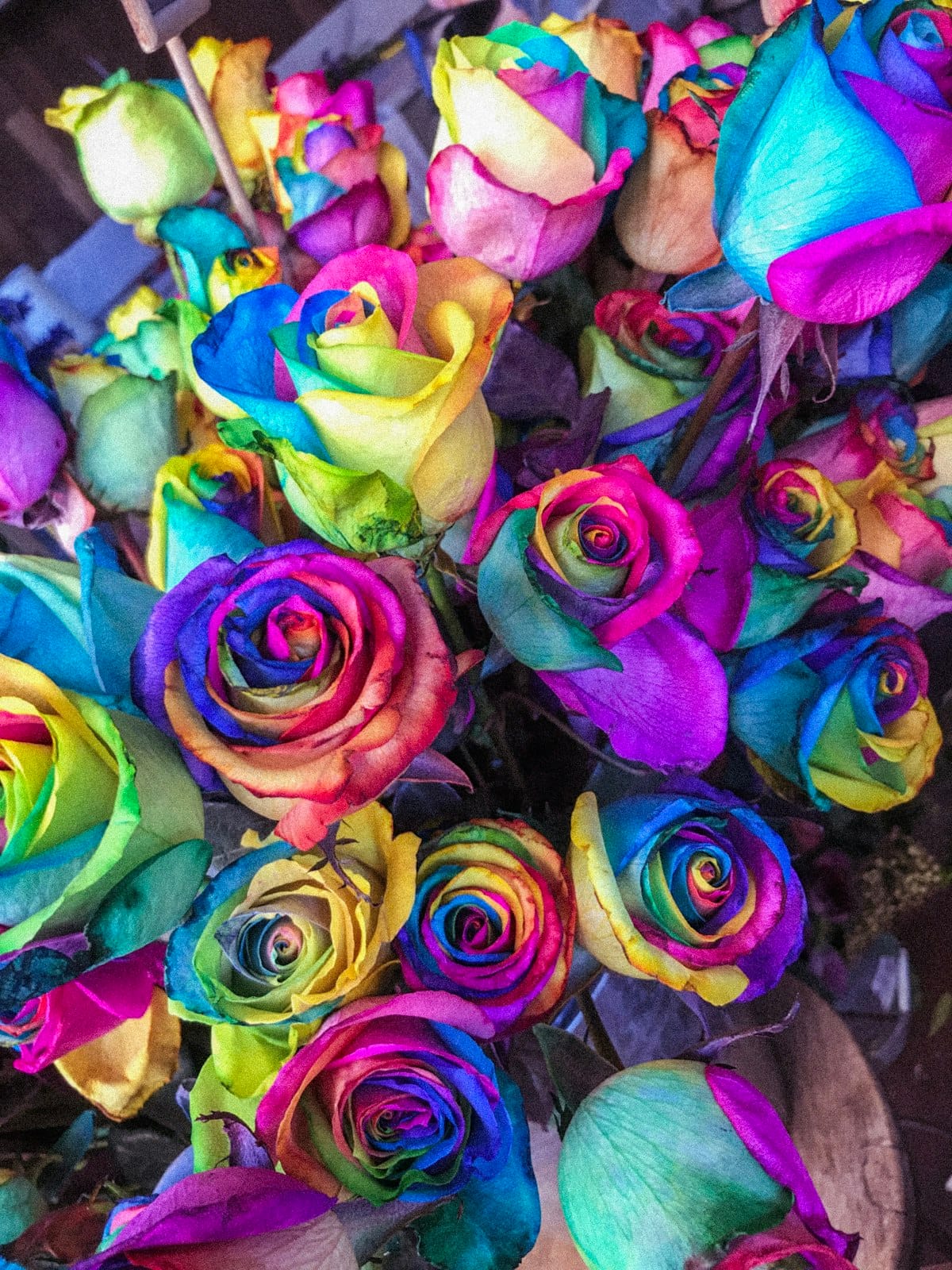
The 20 Most Important Flower Names to Know
1. Rose (Rosa)
Colours: Every colour except true black and true blue
Season: Year-round
Symbolic meaning: Romantic love (red), friendship (yellow), purity (white), admiration (pink), enthusiasm (orange)
Used for: Romance, anniversaries, birthdays, sympathy, weddings, any occasion
The most commercially important flower in the world. Over 4 billion rose stems are sold in the US annually. With 150+ species and thousands of cultivated varieties, roses are the most versatile flower in floristry.
Care tip: Trim stems at a 45-degree angle under water, use flower food, and change water every 2 days. Roses last 7–14 days with proper care.
2. Tulip (Tulipa)
Colours: Every colour including black, bicolours, and parrot varieties
Season: Late winter to spring (January–May)
Symbolic meaning: Perfect love, elegance, new beginnings
Used for: Spring celebrations, birthdays, thank-you gifts, everyday gifting
One of the most popular cut flowers globally. Tulips continue to grow after cutting, adding 2–3 inches to their height in the vase. Buy with buds partially closed for the longest display. Vase life: 7–10 days.
3. Lily (Lilium)
Colours: White, pink, orange, red, yellow (Asiatic); white, pink, deep rose (Oriental)
Season: Spring through fall; year-round from florists
Symbolic meaning: Purity, innocence, spiritual peace; renewal and new beginnings in spring
Used for: Sympathy, weddings, formal occasions, Easter
Lilies are among the most architecturally impressive cut flowers. A single stem carries 5–8 buds that open sequentially over 10–14 days. Oriental lilies (like Stargazer) are intensely fragrant; Asiatic lilies have virtually no scent but vivid colour. Remove pollen-bearing anthers to prevent staining.
4. Sunflower (Helianthus annuus)
Colours: Yellow, orange, red, bicolour; speciality dark/chocolate varieties
Season: Summer–fall (June–October); year-round from florists
Symbolic meaning: Adoration, loyalty, long life, happiness
Used for: Birthdays, get-well, congratulations, summer events
Sunflowers are the most immediately cheerful flower available. Their large, open faces with bright yellow petals and dark centres are impossible not to smile at. Vase life: 10–12 days. Best in a tall vase with frequent water changes.
5. Orchid (Orchidaceae family)
Colours: Purple, white, pink, yellow, orange, green, bicolour virtually every colour
Season: Year-round
Symbolic meaning: Luxury, beauty, strength, love, refinement
Used for: Luxury gifting, anniversaries, corporate gifts, home decor (as potted plant)
With over 28,000 species, orchids are the most diverse family of flowering plants. Phalaenopsis (moth orchid) is the most popular potted plant for gifting and can bloom for 2–4 months with minimal care. As cut flowers, cymbidium orchids last 3–4 weeks in water.
6. Daisy (Bellis perennis / Gerbera jamesonii)
Colours: White with yellow centre (common daisy); every colour (gerbera)
Season: Spring–summer; gerbera year-round
Symbolic meaning: Innocence, purity, loyal love, new beginnings
Used for: Children's gifts, birthdays, everyday cheer, casual gifting
Gerbera daisies are the most colourful and commercially important daisy variety, available in every colour imaginable. They're among the longest-lasting cut flowers (10–14 days) and are widely available year-round at florists.
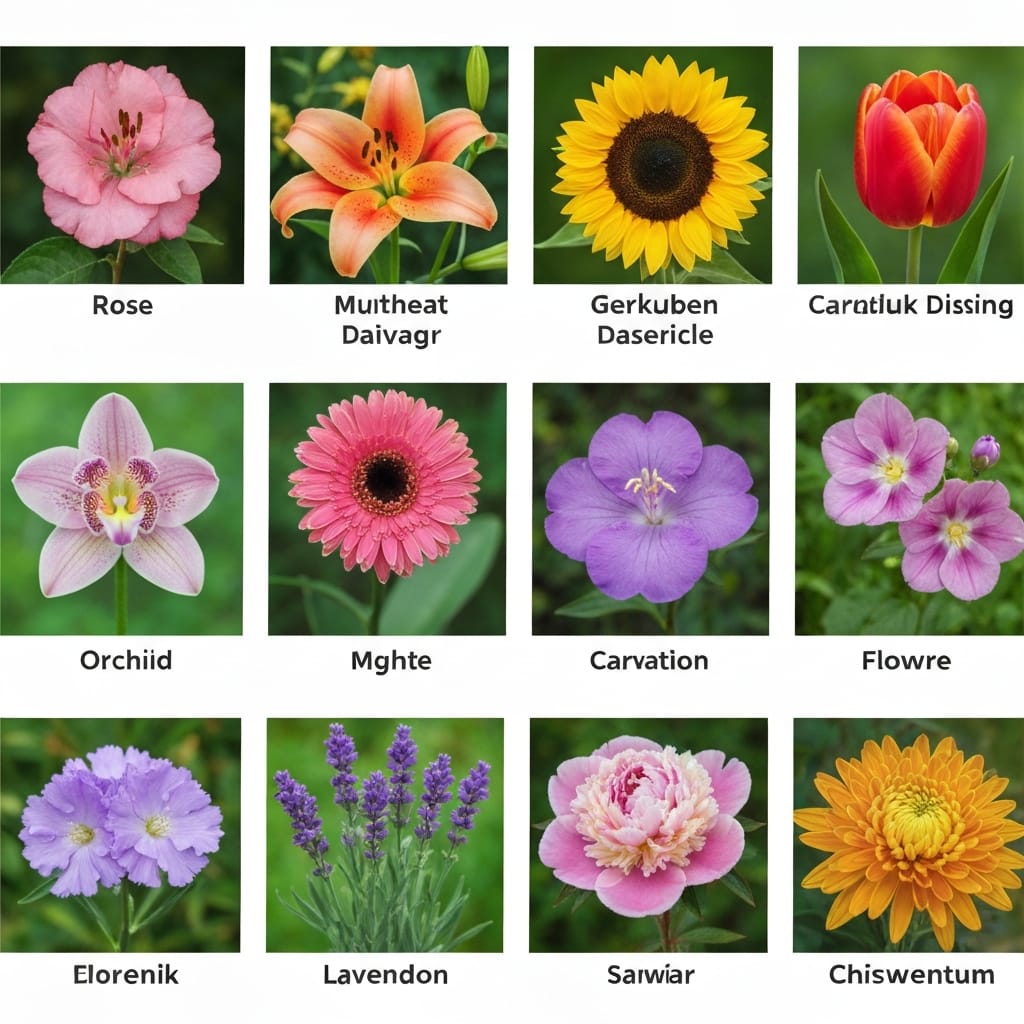
7. Carnation (Dianthus caryophyllus)
Colours: Every colour including bicolour and picotee patterns
Season: Year-round
Symbolic meaning: Love, admiration, good luck (varies by colour)
Used for: Any occasion; widely used in professional floristry and event design
Carnations are the most underrated flower in the consumer market. With a vase life of 14–21 days (the longest of any common cut flower), an extraordinary colour range, and a ruffled beauty that looks luxurious in well-arranged bouquets, they punch far above their price point.
8. Peony (Paeonia)
Colours: Blush, white, cream, coral, pink, magenta, red
Season: Late spring (April–June)
Symbolic meaning: Romance, prosperity, honour, good fortune
Used for: Weddings, anniversaries, romantic occasions, luxury gifting
Peonies are widely considered the most beautiful of all garden flowers. Their enormous, layered blooms in blush and cream carry a sweet, distinctive fragrance. They have a brief season, which intensifies their emotional impact. Buy in bud form for maximum vase life (5–7 days from bud to full display).
9. Lavender (Lavandula)
Colours: Purple, violet, blue-purple, white, pink
Season: Summer (June–August) fresh; dried year-round
Symbolic meaning: Calm, devotion, purity, serenity
Used for: Home fragrance, dried arrangements, sachets, calming gifts
Lavender is unique among flowers in that it functions equally as a visual element, a fragrance source, a medicinal herb, and a culinary ingredient. Dried lavender lasts indefinitely and retains its calming scent for 1–2 years.
10. Hydrangea (Hydrangea macrophylla)
Colours: Blue, pink, purple, white, green, lime green
Season: Summer–fall (June–October); year-round from florists
Symbolic meaning: Gratitude, understanding, heartfelt emotion
Used for: Weddings, large arrangements, centrepieces, home decor
Hydrangeas offer more volume per stem than almost any other flower, making them exceptional value for large-scale arrangements and centrepieces. A single fully open hydrangea head equals 5–8 roses in visual impact.
11. Dahlia (Dahlia)
Colours: Every colour except true blue; extraordinary colour range
Season: Summer–fall (July–October)
Symbolic meaning: Elegance, inner strength, commitment, positive change
Used for: Late summer weddings, sophisticated arrangements, garden-to-vase displays
Dahlias are the most diverse flower form they range from tiny pompon varieties (2 inches) to "dinner plate" dahlias (12+ inches across). Their peak season is August–October, when they're at their most abundant and least expensive.
12. Iris (Iris germanica)
Colours: Purple, blue, yellow, white, orange, bicolour
Season: Spring (April–June)
Symbolic meaning: Faith, hope, courage, wisdom
Used for: Spring arrangements, meaningful gifting, garden design
The iris's dramatic form upright petals (called "standards") above drooping petals (called "falls") creates a distinctive, elegant silhouette. Vincent van Gogh painted irises famously, and they remain one of spring's most distinctive blooms.
13. Marigold (Tagetes)
Colours: Yellow, orange, gold, rust, bicolour
Season: Summer–fall (May–October)
Symbolic meaning: Creativity, warmth, winning affection, sacred (in South Asian and Mexican cultures)
Used for: Summer/fall arrangements, Day of the Dead celebrations, garden design
Marigolds hold profound cultural significance in India (where they're used in religious ceremonies and wedding decorations in enormous quantities) and Mexico (central to Día de los Muertos celebrations). Their bold, saturated colours photograph beautifully.
14. Poppy (Papaver)
Colours: Red, orange, white, pink, purple, bicolour
Season: Spring–early summer (April–June)
Symbolic meaning: Remembrance, peace, sleep, imagination
Used for: Remembrance Day, spring arrangements, wildflower-style displays
The red poppy is one of the world's most powerful symbols of remembrance for fallen soldiers, established after World War I. Poppies are brief-lived in the vase (3–5 days) but their impact during that window is extraordinary.
15. Chrysanthemum (Chrysanthemum)
Colours: Every colour except blue; extraordinary variety of forms
Season: Fall (September–November) peak; year-round potted
Symbolic meaning: Longevity, joy, fidelity; imperial significance (Japan)
Used for: Fall arrangements, sympathy, long-lasting gifting, potted displays
Chrysanthemums are the best-selling potted plant in the US during fall and have a cut flower vase life of 14–21 days among the longest available.
16. Ranunculus (Ranunculus asiaticus)
Colours: White, cream, yellow, orange, coral, pink, red, deep burgundy
Season: Winter–spring (January–May)
Symbolic meaning: Charm, radiance, attractiveness
Used for: Weddings, luxury arrangements, photography
With up to 150 paper-thin petals per bloom, ranunculus are the most petal-dense cut flower available. They're the florist's secret weapon for creating arrangements that look expensive and photograph exceptionally well.
17. Anemone (Anemone coronaria)
Colours: Red, purple, white, pink, bicolour; all with dramatic dark centre
Season: Late winter–spring (February–May)
Symbolic meaning: Anticipation, protection, new beginnings
Used for: Weddings, design-conscious arrangements, spring displays
Anemones have a graphic, high-contrast quality wide-open petals in rich colours with a dramatic black centre that creates striking visual impact in modern arrangements.
18. Sweet Pea (Lathyrus odoratus)
Colours: White, cream, pink, lavender, purple, bicolour; no yellow or orange
Season: Spring–early summer (March–June)
Symbolic meaning: Blissful pleasure, goodbye, thank you
Used for: Wedding bouquets, romantic gifts, cottage-garden arrangements
Sweet peas carry one of the most enchanting fragrances in the flower world: light, powdery, and distinctively nostalgic. Their delicately ruffled petals are beautiful in loose, organic arrangements.
19. Freesia (Freesia)
Colours: Yellow, white, pink, red, purple, orange
Season: Spring (February–May)
Symbolic meaning: Innocence, friendship, trust, thoughtfulness
Used for: Fragrant bouquets, spring gifting, wedding floristry
Freesia is one of the most fragrant cut flowers, with an intensely sweet scent that carries well. They grow on arching stems with multiple buds that open sequentially, providing good display longevity.
20. Lisianthus (Eustoma grandiflorum)
Colours: Purple, white, pink, lavender, bicolour
Season: Summer–fall (June–October)
Symbolic meaning: Appreciation, charisma, calming
Used for: Weddings, sophisticated arrangements, peony-season alternative
Lisianthus (sometimes called "prairie gentian") has ruffled, layered blooms that closely resemble peonies, earning it the nickname "poor man's peony." They're available year-round from florists and provide a similar aesthetic at significantly lower cost than peonies.
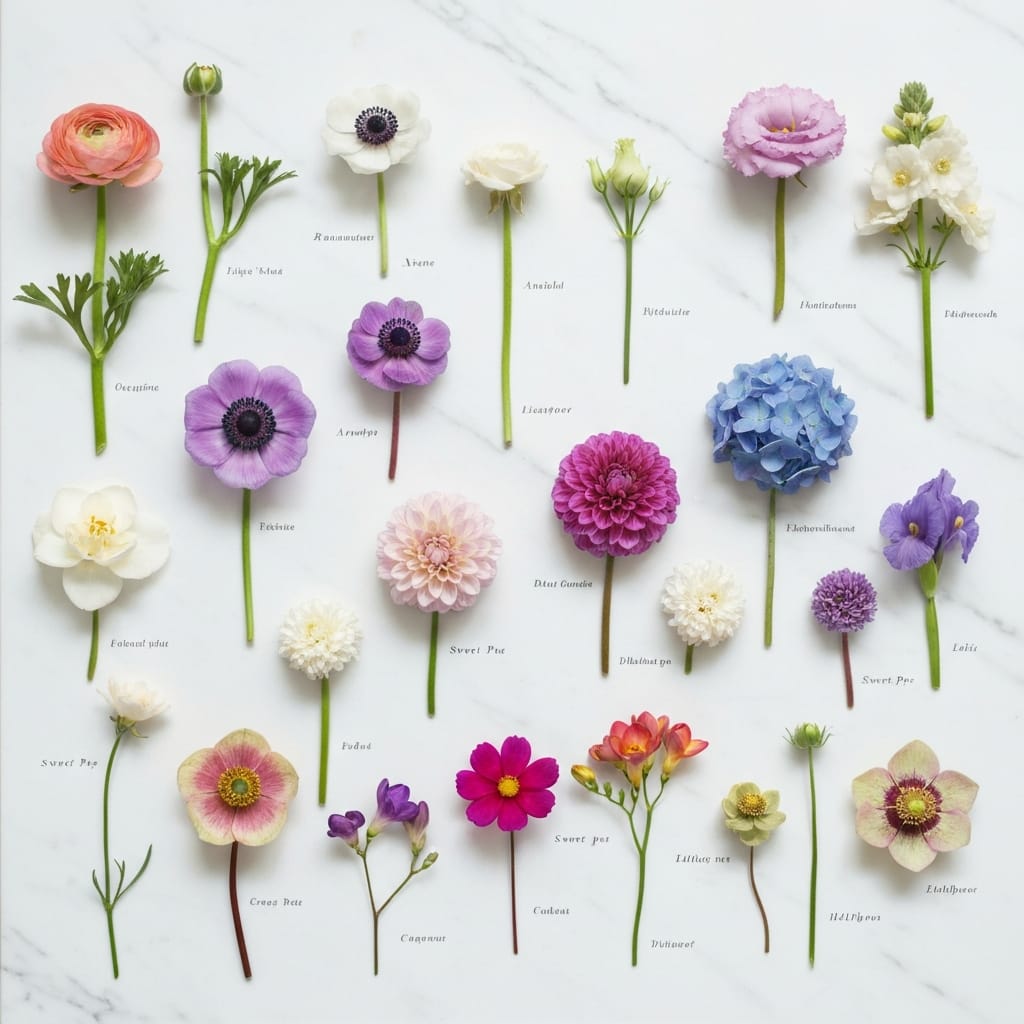
How to Learn Flower Names Faster
The most effective way to learn flower names is through repeated exposure combined with a simple mnemonic system:
Group by season: Spring flowers (tulips, ranunculus, peonies, sweet peas, freesia) share visual characteristics. Fall flowers (dahlias, chrysanthemums, marigolds) tend toward warmer, deeper colours.
Group by form: Round/ball flowers (carnation, ranunculus, peony). Trumpet/bell flowers (lily, freesia). Flat/open flowers (daisy, sunflower, anemone). Spike flowers (lavender, iris, delphinium).
Group by setting: The more formal/wedding flowers (orchid, peony, ranunculus, lisianthus). The more everyday/accessible flowers (rose, tulip, carnation, daisy, sunflower).
Visit a florist monthly: Nothing beats in-person exposure to fresh flowers. Ask your florist to name the flowers in their displays. Most florists are delighted to educate interested customers.
Quick Gifting Reference
| Occasion | Best Choice | Why |
|---|---|---|
| Birthday | Sunflower, gerbera, tulip | Cheerful and celebratory |
| Anniversary | Rose, peony, orchid | Romantic significance |
| Sympathy | White lily, carnation | Quiet dignity and longevity |
| Wedding | Rose, peony, ranunculus | Photogenic and romantic |
| Thank you | Freesia, sweet pea, daisy | Lightness and gratitude |
| New home | Lavender, orchid, hydrangea | Long-lasting and meaningful |
Frequently Asked Questions
Quick answers to common questions


