
What is the most beautiful flower in the world? The question seems impossible to answer objectively beauty is personal, cultural, and deeply subjective. And yet, certain flowers rise above personal preference to produce near-universal responses of awe, reverence, and delight. These are the flowers that have been called beautiful not just in one culture or one era, but across continents and centuries.
This article examines the all-time contenders for the title of "most beautiful flower in the world," what makes each genuinely extraordinary, and the science behind why humans find flowers beautiful at all.
The Science of Floral Beauty
Before revealing the contenders, it's worth understanding what makes a flower beautiful to the human eye and why our perception of flower beauty exists at all.
Bilateral Symmetry
The human brain is drawn to bilateral symmetry shapes where one half mirrors the other precisely. This attraction evolved because bilateral symmetry in living things signals genetic fitness and health. Flowers evolved bilateral symmetry for the same reason: to signal fitness to pollinators. The result is that both humans and pollinators share a deep attraction to symmetrically perfect blooms like roses, dahlias, and peonies.
Fractal Patterns
Many flowers exhibit fractal geometry mathematical patterns that repeat at different scales. Sunflowers, dahlias, and romanesco broccoli arrange their florets in the Fibonacci sequence (1, 1, 2, 3, 5, 8, 13, 21...), creating spiraling patterns that the human brain processes with unusual ease and pleasure. Research shows that humans rate fractal patterns as more aesthetically pleasing than random or perfectly ordered patterns they occupy a mathematical "sweet spot" that our brains find inherently beautiful.
Colour Psychology
Flower colours evolved to attract specific pollinators with specific visual systems. Red and pink attract certain bee species. White and pale yellow attract moths and night pollinators. The colours that most effectively attract pollinators overlap significantly with the colours humans find most aesthetically pleasing which is why rose colours, peony blush, and lavender purple produce such immediate, positive emotional responses.
Scent-Memory Connection
Floral fragrances connect directly to the limbic system the brain's emotional memory centre. The olfactory pathway is the only sensory system with a direct connection to emotional memory, which is why the smell of a specific flower can produce instant, vivid memories and strong emotional responses. This neurological connection amplifies our perception of a flower's beauty through the emotional resonance triggered by its scent.
The All-Time Contenders for Most Beautiful Flower
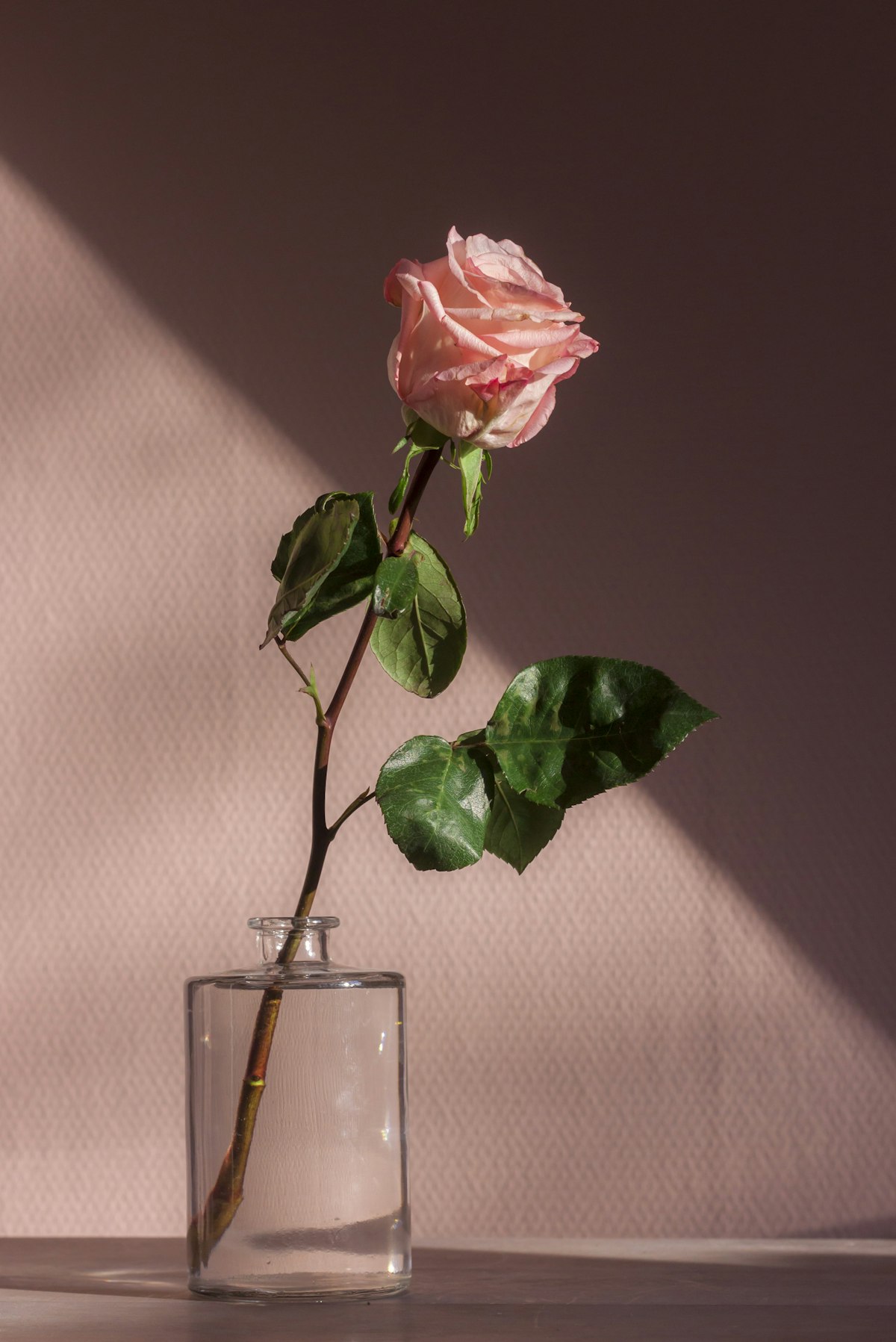
1. The Rose The Undisputed Title Holder
No flower has held the title of "most beautiful" more consistently across more cultures and more centuries than the rose. The ancient Greek poet Sappho (600 BC) called the rose the "Queen of Flowers." Roman emperors imported millions of rose petals from Egypt for celebratory banquets. Islamic art and architecture are defined by rose patterns. Persian poetry centres on the rose as the ultimate symbol of beauty. Elizabethan and Romantic poets from Shakespeare to Keats devoted their finest verses to it.
In the modern era, market data confirms what history suggests: roses are the world's most purchased flower by an enormous margin (4+ billion stems annually in the US alone). Global beauty surveys consistently place the rose at number one across every demographic and cultural group polled.
What makes the rose irreplaceable: The combination of visual beauty (spiral petal arrangement, bilateral symmetry), fragrance (a complex scent profile containing over 300 chemical compounds), cultural significance (5,000+ years of continuous cultivation and celebration), and extraordinary variety (150+ species, thousands of cultivars). No other flower offers all four of these qualities simultaneously.
The highest expression of rose beauty is the David Austin garden rose specifically varieties like Juliet (a warm apricot, described by the breeder as the most requested wedding flower of the 21st century), Patience (the most purely beautiful blush), and Crown Princess Margareta (golden apricot with an exquisite fragrance). These varieties represent the pinnacle of 5,000 years of rose cultivation.
2. The Peony The Most Emotionally Resonant
Peonies are the only flower that reliably produces what might be called an "irrational" response people consistently describe feeling something close to joy or longing when they encounter a fully open peony. Their enormous, layered blooms in blush, cream, and magenta; their sweet, distinctive fragrance; and their brief, precious season (just 6–8 weeks per year) combine to create an experience more like an encounter with great art than a simple purchase.
In China, the peony has been cultivated for over 1,500 years as the "King of Flowers" a status bestowed by the Tang Dynasty court and maintained in Chinese cultural tradition ever since. Entire festivals are dedicated to peony viewing each spring. The peony is also the state flower of Indiana and a national symbol of prosperity and honour across East Asian cultures.
What makes the peony extraordinary: The gradual reveal. Peonies start as tight marble-sized buds and open slowly over 3–5 days into their full glory, creating a dynamic display that changes daily. No other flower offers this same quality of ongoing discovery. Combined with their fragrance and their brief season, peonies feel genuinely precious in a way that year-round flowers cannot.

3. The Cherry Blossom The Most Transcendent
The cherry blossom's beauty is inseparable from its transience, and this inseparability is what makes it transcendent rather than merely beautiful. The Japanese concept of "mono no aware" the bittersweet appreciation of impermanence is embodied perfectly in the cherry blossom's brief bloom. The trees that are bare and unremarkable for 50 weeks of the year become, for 1–2 weeks in spring, something so beautiful that millions of people plan their calendars around witnessing it.
Cherry blossoms produce a visual effect that can only be described as surreal: paths and parks transformed into tunnels of pale pink and white, each bloom lasting only days before the wind carries the petals away like fragrant snow. The Japanese have celebrated hanami (cherry blossom viewing) as a national cultural tradition for over 1,000 years.
What makes cherry blossoms extraordinary: The context. A cherry blossom in a florist's vase is beautiful. A full-bloom cherry tree against a clear sky is one of the most extraordinary natural sights in the world. The scale and brevity of the experience amplifies the beauty beyond what any single bloom could convey.
4. The Lotus The Most Symbolically Powerful
The lotus achieves something no other flower on Earth manages: it holds sacred status in three major world religions (Hinduism, Buddhism, Jainism), an ancient world civilisation (Egypt), and continues to be revered in the modern world across hundreds of millions of adherents. Its biological reality a pristine, perfectly formed bloom emerging daily from muddy, murky water has made it the universal symbol of purity transcending adversity, spiritual awakening from material existence.
The lotus's beauty is geometric perfection. Its large, perfectly symmetrical blooms in white, pale pink, and deep rose open each morning in precise mathematical proportions, creating a visual harmony that feels almost designed rather than evolved. Ancient Egyptians used the lotus as a foundational architectural motif lotus column capitals appear across the great temples of Karnak and Luxor.
5. The Orchid The Most Exotic
The orchid's claim to "most beautiful" rests on different qualities from the rose or peony: not emotional warmth but intellectual awe. With over 28,000 species, orchids are the most diverse flowering plant family on Earth. Their extraordinary range of form from the familiar Phalaenopsis moth orchid to the alien-looking bee orchid, from the tiny jewel orchid to the enormous Grammatophyllum speciosum encompasses more aesthetic variety than perhaps any other genus.
Victorian orchid collectors risked (and lost) their lives in tropical jungles to bring back new species. "Orchidelirium" the frenzied obsession with collecting new orchid varieties drove the world's first major plant collecting expedition era. Individual specimens sold for thousands of pounds. This intensity of pursuit is itself evidence of their extraordinary beauty.

The Most Beautiful Flower You Can Buy Today
If you want to experience extraordinary flower beauty without traveling to a Japanese park in spring or a tropical jungle, these flowers represent the most beautiful readily available at US florists:
For sheer elegance: David Austin garden roses in blush or cream
For romantic abundance: Double peonies in their brief spring season (April–June)
For delicate, layered beauty: Ranunculus in white, cream, or softest coral
For dramatic impact: Dinner-plate dahlias in August–September
For lasting luxury: Cymbidium orchids as a 3–4 week vase flower
How Beauty Changes with Season
The most beautiful flower available is often the one that is currently in season and at its freshest. A perfect spring ranunculus bought the day it arrived at a florist is more beautiful than any out-of-season flower that has been in cold storage for weeks.
The most beautiful flower experiences by season:
- Spring (March–May): Ranunculus, peonies, sweet peas, garden roses, cherry blossom branches
- Summer (June–August): Dinner-plate dahlias, lisianthus, lavender, cosmos
- Fall (September–November): Late dahlias, chrysanthemums, dried flower combinations
- Winter (December–February): Amaryllis, paperwhite narcissus, forced hyacinths
The Verdict
If one flower must be named the most beautiful of all time, the garden rose specifically the David Austin English Rose consistently tops global beauty rankings across cultures, time periods, and expert panels. It combines perfect form, fragrance, colour range, cultural significance, and extraordinary variety in a way no other flower approaches.
But beauty is ultimately personal. The most beautiful flower is often the one that makes you feel something and that depends on your memories, your culture, and the specific moment when you encounter it.
Frequently Asked Questions
Quick answers to common questions


