
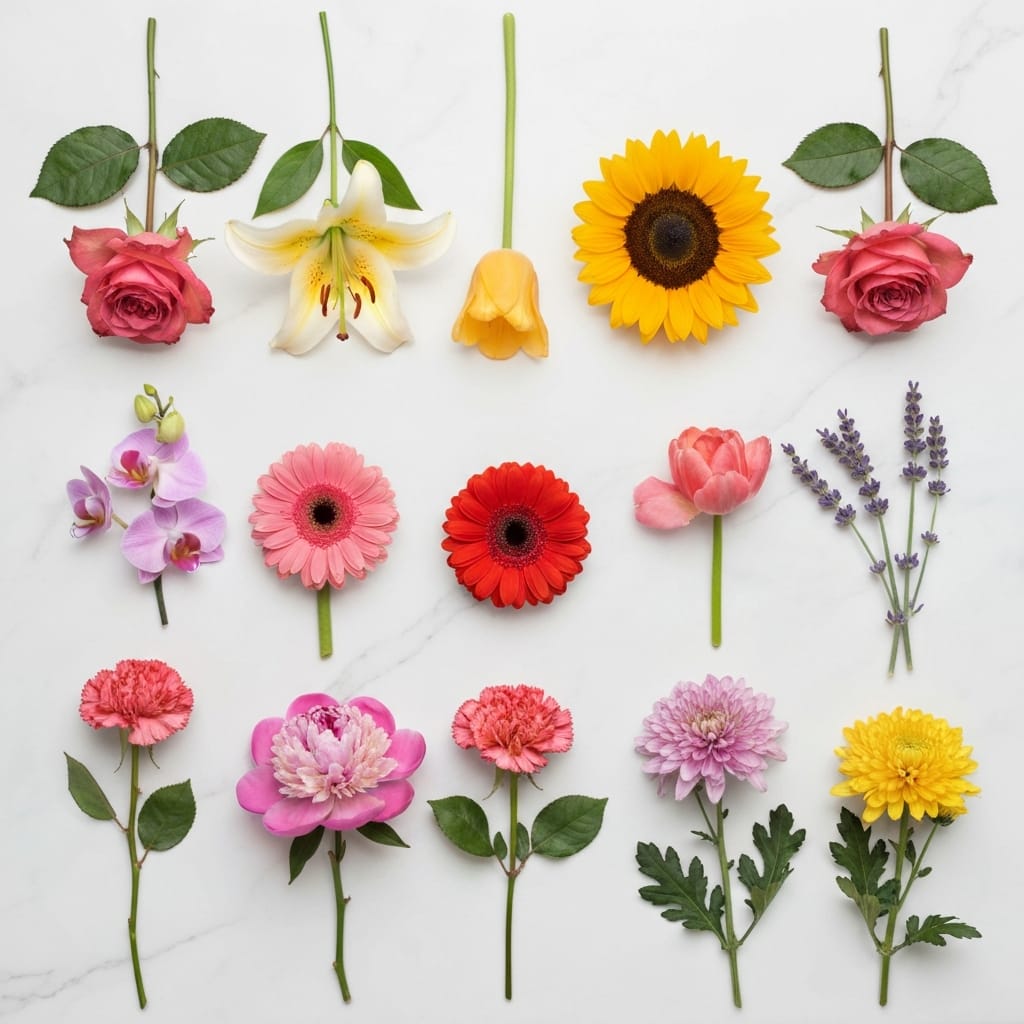
Learning flower names is one of the most rewarding things a flower enthusiast can do. Whether you want to walk into a florist with confidence, arrange your own bouquets, or simply appreciate the blooms in your garden, knowing these 10 essential flowers gives you a strong, practical foundation. Master these and you'll feel at home in any florist, market, or garden centre.
Why Start With 10 Flowers?
The floral world contains over 400,000 known species of flowering plants. For a beginner, that number is overwhelming. The good news: just 10 flower families cover the vast majority of what you'll encounter at florists, grocery stores, and flower markets across the United States.
These 10 flowers were selected because they are:
- Widely available year-round or seasonally at most florists
- Visually distinctive each has a unique appearance that's easy to memorise
- Culturally significant each carries recognised meaning and is used in real gifting and event floristry
- Affordable all are accessible at a range of price points
Once you can identify all 10 on sight, you're ready to move into intermediate and specialist floristry.
The 10 Essential Flowers Every Beginner Should Know
1. Rose (Rosa)
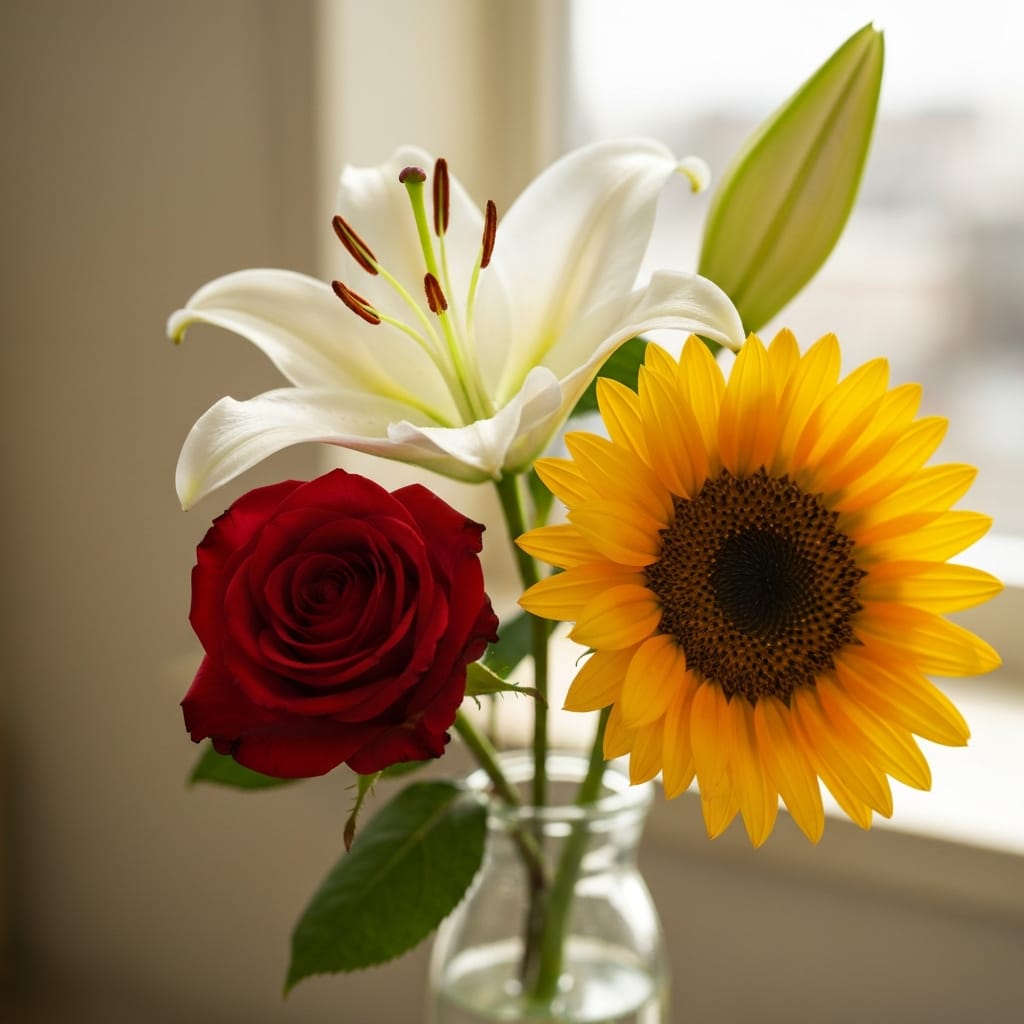
The most important flower in the world to know. Roses are the best-selling cut flower globally, available in red, pink, white, yellow, orange, coral, and lavender. Their distinctive spiral-petalled blooms and thorned stems make them instantly recognisable.
Key facts:
- Family: Rosaceae
- Bloom time: Year-round (cultivated)
- Vase life: 7-14 days
- Meaning: Love, passion, appreciation (varies by colour)
- Price range: $1-5 per stem at florists
Beginner tip: When you first see roses at a florist, notice how the outer guard petals protect the inner bloom. Fresh roses feel firm to the touch; old roses feel papery and loose.
2. Lily (Lilium)
Large, trumpet-shaped flowers carried on tall, sturdy stems. Lilies are the dominant sympathy flower in the US and a major wedding flower. Each stem carries 4-8 buds that open sequentially over 10-14 days, giving extraordinary value.
Key facts:
- Family: Liliaceae
- Bloom time: Year-round (cultivated); summer in gardens
- Vase life: 10-14 days
- Main varieties: Asiatic (no scent, vivid colours), Oriental (intensely fragrant, usually white or pink)
- Important: Remove lily pollen anthers as they open lily pollen permanently stains fabric
3. Sunflower (Helianthus annuus)
The most cheerful flower in existence. Sunflowers are instantly recognisable by their large yellow petals radiating from a brown or golden centre disk. They're one of the few flowers that genuinely make people smile on sight.
Key facts:
- Family: Asteraceae
- Bloom time: Summer-fall; year-round from florists
- Vase life: 6-12 days
- Height: 12-60 inches depending on variety
- Meaning: Adoration, loyalty, happiness
Beginner tip: Sunflowers are one of the easiest flowers to arrange their strong stems and defined shape make them work in almost any vase, either alone or mixed with greenery.
4. Tulip (Tulipa)
Cup-shaped flowers on a single clean, leafless stem. Tulips come in virtually every colour except true blue, and are available from February through May. Their clean, minimal appearance makes them a favourite of modern and Scandi-inspired interiors.
Key facts:
- Family: Liliaceae
- Bloom time: Spring only (March-May); greenhouse varieties extend to Feb-June
- Vase life: 7-10 days
- Varieties: Over 3,000 registered tulip varieties exist
- Interesting behaviour: Tulips continue to grow in the vase they may grow 1-2 inches after cutting
5. Daisy / Gerbera Daisy (Gerbera jamesonii)
The classic "sunshine" flower: round centre surrounded by evenly spaced petals. At florists, you'll most commonly encounter Gerbera daisies the large, bold, colourful cultivated variety from South Africa that comes in every colour except blue.
Key facts:
- Family: Asteraceae
- Bloom time: Year-round from florists
- Vase life: 7-10 days
- Colours: Every colour available, including bicolour varieties
- Meaning: Innocence, purity, cheerfulness
6. Orchid (Orchidaceae)
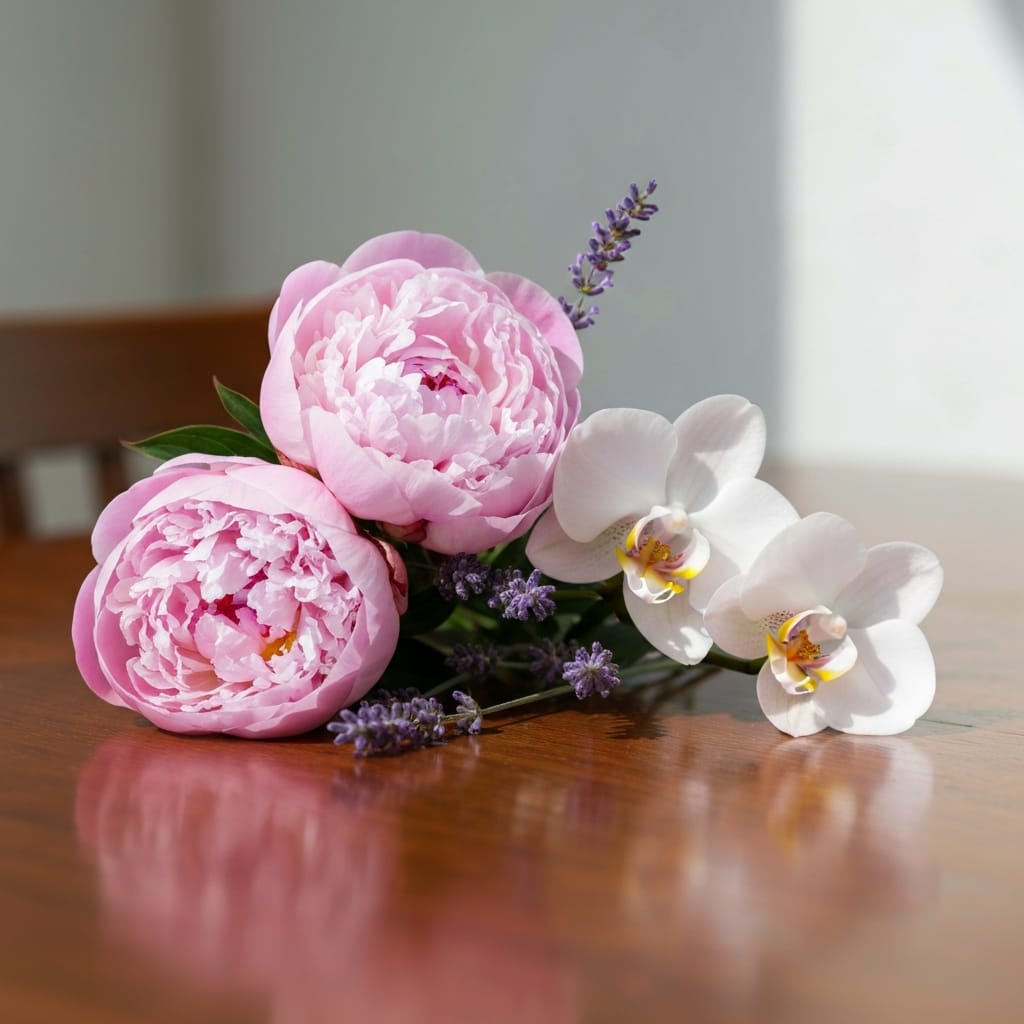
The most exotic of the essential 10. Orchids have an extraordinary reputation for being difficult, but the most common variety sold the Phalaenopsis (moth orchid) is genuinely easy to keep. As cut flowers, cymbidium orchids last 3-4 weeks; as potted plants, Phalaenopsis blooms for 2-4 months.
Key facts:
- Family: Orchidaceae (largest flowering plant family 25,000+ species)
- Bloom time: Year-round as potted plants; cut stems available from specialty florists
- Vase life: 3-4 weeks (cymbidium cut stems)
- Potted Phalaenopsis care: 1/4 cup water per week, indirect light
7. Carnation (Dianthus caryophyllus)
The most underrated flower on this list. Carnations are dismissively called "cheap" by people who don't know them well but professional florists and event designers use them extensively precisely because they deliver maximum impact at minimum cost, and last longer than any other common cut flower.
Key facts:
- Family: Caryophyllaceae
- Bloom time: Year-round
- Vase life: 14-21 days (longest of all common flowers)
- Colours: Every colour available including multi-colour and picotee varieties
- Forms: Standard (single large bloom), Spray (multiple smaller blooms per stem)
8. Lavender (Lavandula)
The only flower on this list primarily valued for its scent. Lavender's distinctive purple spikes and unmistakeable calming fragrance have made it one of the most recognised plants in the world. It works equally well as a fresh flower and a dried botanical.
Key facts:
- Family: Lamiaceae
- Bloom time: Summer (June-August in the US)
- Fresh vase life: 7-14 days
- Dried life: 1-2 years, holds colour and scent
- Uses: Fresh arrangements, dried bundles, sachets, culinary
Beginner tip: To dry lavender, hang bundles upside down in a cool, dry room for 2-3 weeks. The scent intensifies as it dries.
9. Peony (Paeonia)
The most beloved seasonal flower in floristry. Peonies are only available for 6-8 weeks in late spring (May-June in the US), which creates genuine demand they sell out at florists daily during season. Their large, lush, layered blooms have a light, sweet fragrance and work beautifully as a solo arrangement or in mixed bouquets.
Key facts:
- Family: Paeoniaceae
- Bloom time: Late spring only May to June in the US
- Vase life: 5-7 days (shorter than most flowers, but the display is spectacular)
- Colours: Pink, white, coral, red, pale yellow
- Meaning: Romance, prosperity, good fortune
Beginner tip: Buy peonies in tight bud form. They will open fully over 2-3 days in a warm room, giving you a longer display period.
10. Chrysanthemum (Chrysanthemum)
Commonly called "mums," chrysanthemums are one of the most versatile flowers in the florist's toolkit. They come in globe, spider, cushion, and daisy forms, in nearly every colour, and last exceptionally well in a vase. They're the dominant flower in fall arrangements and widely used in both retail and event floristry.
Key facts:
- Family: Asteraceae
- Bloom time: Year-round from florists; fall in gardens
- Vase life: 14-21 days
- Colours: Yellow, white, purple, red, orange, bronze
- Cultural note: Chrysanthemums are the national flower of Japan and hold deep cultural significance in East Asia
Quick Reference: Beginner Flower Comparison
| Flower | Vase Life | Available | Price | Best For |
|---|---|---|---|---|
| Rose | 7-14 days | Year-round | $$ | Romance, gifting |
| Lily | 10-14 days | Year-round | $$ | Sympathy, weddings |
| Sunflower | 6-12 days | Year-round | $ | Cheerful gifts |
| Tulip | 7-10 days | Spring | $ | Modern decor |
| Gerbera Daisy | 7-10 days | Year-round | $ | Bright bouquets |
| Orchid | 21-28 days | Year-round | $$$ | Luxury gifts |
| Carnation | 14-21 days | Year-round | $ | Budget arrangements |
| Lavender | 7-14 days | Summer | $$ | Fragrance, dried |
| Peony | 5-7 days | May-June | $$$ | Weddings, romance |
| Chrysanthemum | 14-21 days | Year-round | $ | Fall, versatile |
Your 30-Day Beginner Flower Challenge
The fastest way to learn flower names is through repeated, hands-on exposure. Here is a simple 4-week plan:
Week 1: Visit a florist and buy 3 flowers from the list above. Observe how they look and smell. Put them in a vase and watch them change over the week.
Week 2: Return to the florist. Try to name each flower you see before asking. Buy 2 more varieties you haven't tried yet.
Week 3: Try a mixed self-arranged bouquet using 3-4 flowers from the list. Use different heights and leaf textures.
Week 4: Walk through the florist and name every flower you can see on sight. If you can name 8 out of 10, you're ready for intermediate flowers.
What Comes After These 10?
Once you can confidently identify all 10 beginner flowers, move on to these intermediate flowers: ranunculus, anemone, lisianthus, hydrangea, dahlia, iris, sweet pea, freesia, protea, and hellebore. These are the flowers that separate casual flower buyers from genuine enthusiasts.
Frequently Asked Questions
Quick answers to common questions


