
Beauty in flowers is partly objective and partly cultural but certain blooms transcend personal preference to produce an almost universal response of awe. They appear in the world's great art, command extraordinary prices at auction, inspire dedicated pilgrimage to see them in bloom, and have been celebrated across centuries and cultures. This list combines the world's most celebrated exotic blooms with the most beautiful flowers available at florists across the United States.
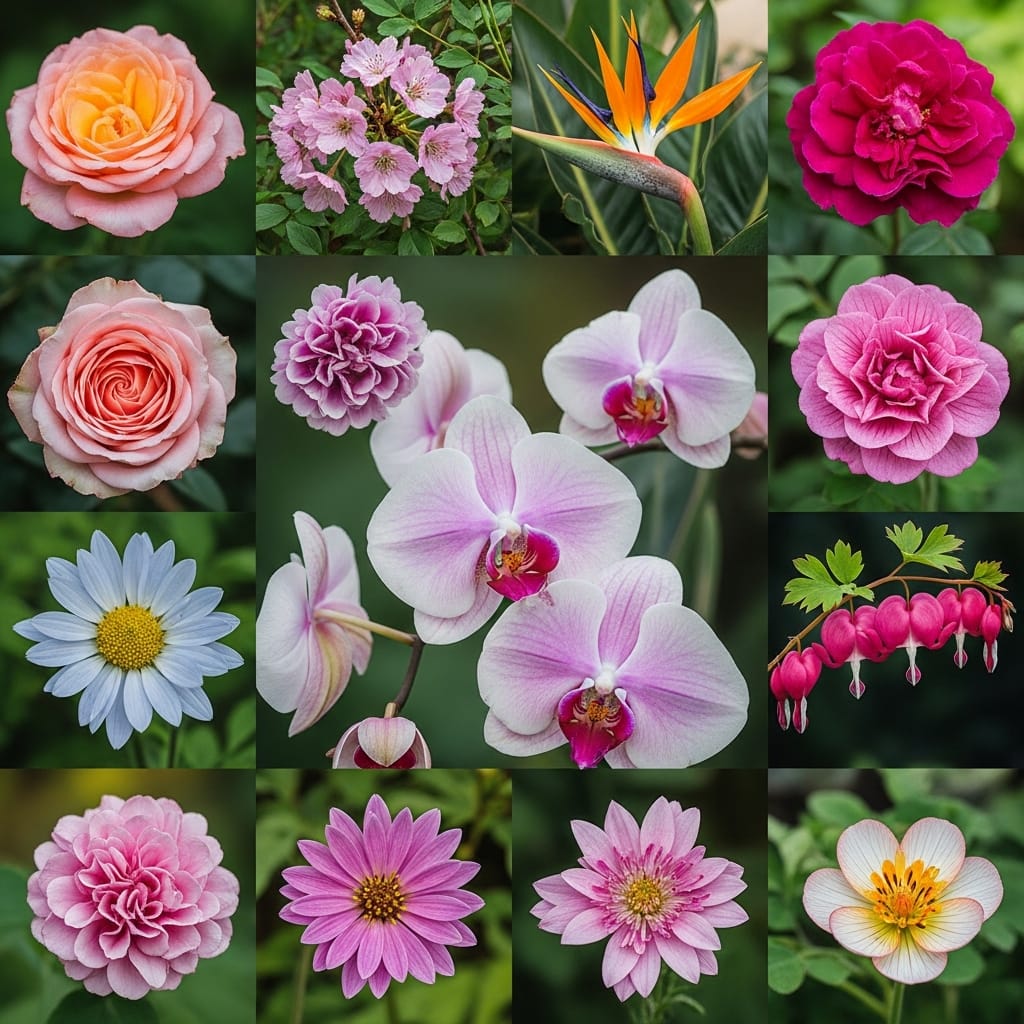
Why We Find Flowers Beautiful: The Science
Before revealing the list, it's worth understanding why humans find flowers beautiful at all. Research in evolutionary biology and psychology suggests several reasons:
Bilateral symmetry: Flowers with bilateral symmetry (one side mirrors the other) signal genetic fitness to pollinators and humans share this instinctive attraction to symmetry. A perfectly symmetrical rose or dahlia triggers a deep aesthetic pleasure response.
Fractal patterns: Sunflowers, dahlias, and romanesco broccoli all exhibit fractal patterns self-similar shapes that repeat at different scales. The human brain processes fractal patterns with unusual efficiency, creating a pleasant sensation of visual "completion."
Colour psychology: Flower colours evolved to attract specific pollinators. Pink and red attract certain bee species; yellow and white attract others. Humans share many of the same colour perception preferences as pollinators, which is why we find these colours intrinsically attractive.
Scent-memory connection: Floral fragrances trigger the limbic system, the brain's emotional centre, more directly than almost any other sensory input. The smell of a rose or peony can transport us back in time and produce emotional responses disproportionate to the stimulus.
The 10 Most Beautiful Flowers in the World
1. Black Bat Flower (Tacca chantrieri)
Perhaps the most dramatically beautiful flower on Earth. Jet-black blooms with whisker-like tendrils reaching up to 28 inches radiate from the flower in a way that looks genuinely otherworldly. Found in tropical Southeast Asia, the black bat flower requires warmth and high humidity it's not a florist flower but a prized tropical plant collector's specimen.
Why it makes the list: It breaks every rule of what a "beautiful" flower should look like and creates beauty through pure drama.
2. Jade Vine (Strongylodon macrobotrys)
One of the rarest flowers in the world, the jade vine from the Philippines produces claw-shaped blooms in an impossible turquoise-green that seems almost neon in tropical light. In its native habitat, it grows in dense rainforest and its natural pollinators are large bats. It's critically endangered in the wild and difficult to cultivate.
Why it makes the list: The jade vine's colour is unlike any other flower on Earth. True turquoise is extraordinarily rare in the plant kingdom, making every bloom a botanical miracle.
3. Middlemist's Red (Camellia)
The world's rarest flower. Only two living specimens are known to exist: one at the Royal Horticultural Society's Chiswick garden in London, and one at Kumamoto Castle in New Zealand. John Middlemist brought it from China to England in 1804. This deep rose-pink camellia, exquisite in its perfection, is something almost no living person has seen in person.
Why it makes the list: Rarity creates beauty knowing that only two exist in the world transforms an already beautiful flower into something almost mythological.
4. Ghost Orchid (Dendrophylax lindenii)
The ghost orchid is a leafless, nearly transparent orchid found in Florida's swampy forests and Cuba. It has no leaves and produces no chlorophyll, surviving entirely as a parasite on its host tree. When in bloom, its ghostly white flowers appear to float in mid-air. It's extraordinarily rare, extremely difficult to photograph, and has been called the most elusive beautiful flower in the world.
5. Peony (Paeonia)
Of all the flowers that are both widely available and reliably beautiful, the peony stands alone. Their enormous, layered blooms in shades of blush, cream, coral, and magenta produce the most intensely romantic visual experience in floristry. They photograph with an extraordinary depth that no other flower matches professional photographers consistently rank peonies among the most photogenic subjects in all of nature.
The fact that they're only available for 6–8 weeks each spring makes them feel as rare and precious as many exotic blooms.
6. Cherry Blossom (Prunus serrulata)
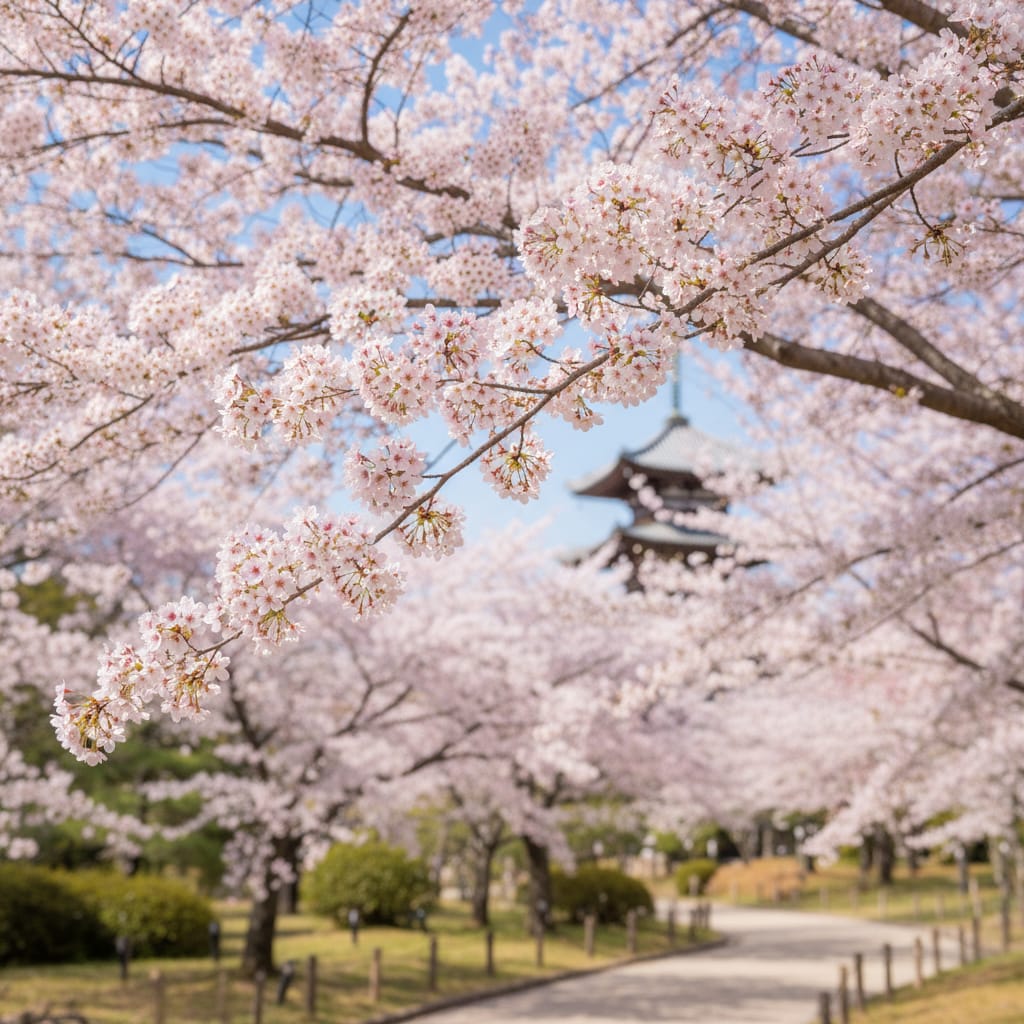
The cherry blossom's beauty is inseparable from its transience. The brief bloom window typically 1–2 weeks in late March to mid-April creates an intense beauty amplified by the knowledge that it won't last. In Japan, this quality (called "mono no aware" the bittersweet appreciation of impermanence) is central to the cultural meaning of cherry blossoms.
When a cherry tree is in full bloom, it produces a visual effect that borders on the supernatural. Paths lined with cherry trees in full flower create a canopy of pale pink and white that looks more like a dream than reality. The Washington D.C. cherry blossom bloom, a gift from Japan in 1912, draws over a million visitors annually.
7. Lotus (Nelumbo nucifera)
The lotus combines extraordinary physical beauty with profound symbolic meaning in a way no other flower achieves. Its large, perfectly symmetric blooms in white, pink, and deep rose emerge pristine from murky water every morning, close at night, and repeat this cycle for weeks. The flower's geometric perfection (its petals follow precise mathematical proportions) creates a visual harmony that feels almost designed.
Sacred in Hinduism, Buddhism, and ancient Egyptian religion, the lotus carries the weight of spiritual significance that makes its already remarkable beauty feel even more extraordinary.
8. Bird of Paradise (Strelitzia reginae)
The bird of paradise is the most architectural flower available at US florists nothing else comes close to its visual drama. Vivid orange sepals and deep blue-purple petals emerge from a horizontal green spathe in a shape that mimics a bird's head and crown so precisely that the resemblance seems impossible for an accident of evolution.
Birds of paradise are available year-round from most florists and are particularly beloved in modern, minimalist, and tropical arrangements. A single stem makes a statement that most flowers cannot achieve even in full bunches.
9. Dahlia (Dahlia pinnata)
Dahlias range from tiny pompon varieties (1 inch across) to enormous dinner-plate dahlias (12+ inches) in every colour except blue and true black. Their extraordinary diversity of form geometric, spiraling, pom-pom, cactus-spined, and anemone-flowered means there is no single "dahlia beauty." Each form has its own distinct character.
The mathematical precision of a decorative dahlia's petal arrangement, following the Fibonacci spiral, creates a hypnotic regularity that appeals on both conscious and unconscious levels. In August and September, when dahlias peak, they represent the most visually diverse and dramatic period in the florist calendar.
10. Ranunculus (Ranunculus asiaticus)
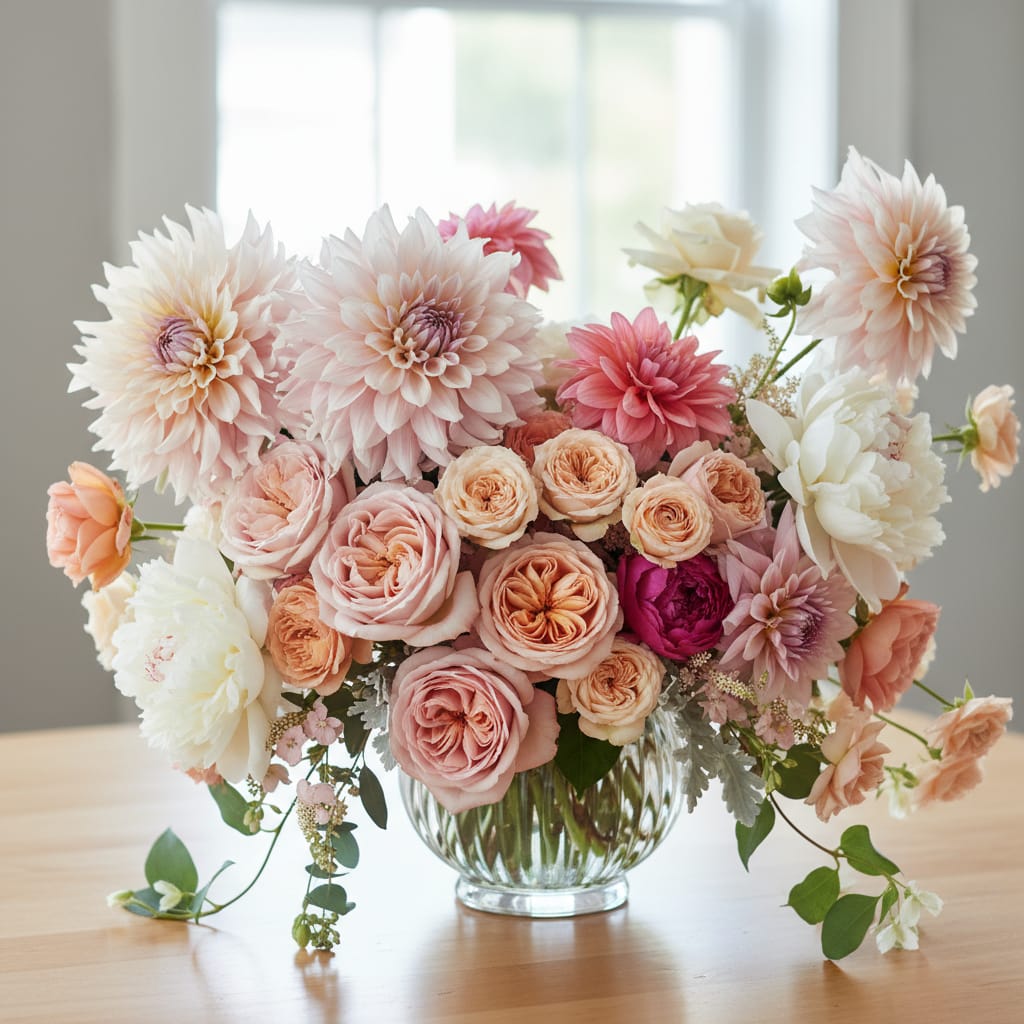
With up to 150 paper-thin petals per bloom, ranunculus are like flowers out of a painting soft, layered, ethereally translucent when backlit, and available in the most exquisite colour palette in all of floristry. From pure white through cream, lemon, peach, coral, deep red, and burgundy, ranunculus exist in a colour range that seems to have been curated specifically for beauty.
They're the most photogenic cut flower available: wedding photographers request them over almost any other bloom because their petal density creates extraordinary depth in macro photography. And unlike peonies, ranunculus are available for a full four months (February through May), making them one of the most accessible truly beautiful flowers.
The Most Beautiful Flowers Available at US Florists Right Now
If you want to experience extraordinary flower beauty immediately, these are available at verified local florists across the US:
Spring (now): Ranunculus, peonies, garden roses, sweet peas, anemones the most beautiful spring window in floristry.
Summer: Dahlias (August–October), lisianthus, sunflowers, cosmos.
Year-round: Garden roses, orchids, birds of paradise.
Frequently Asked Questions
Quick answers to common questions


