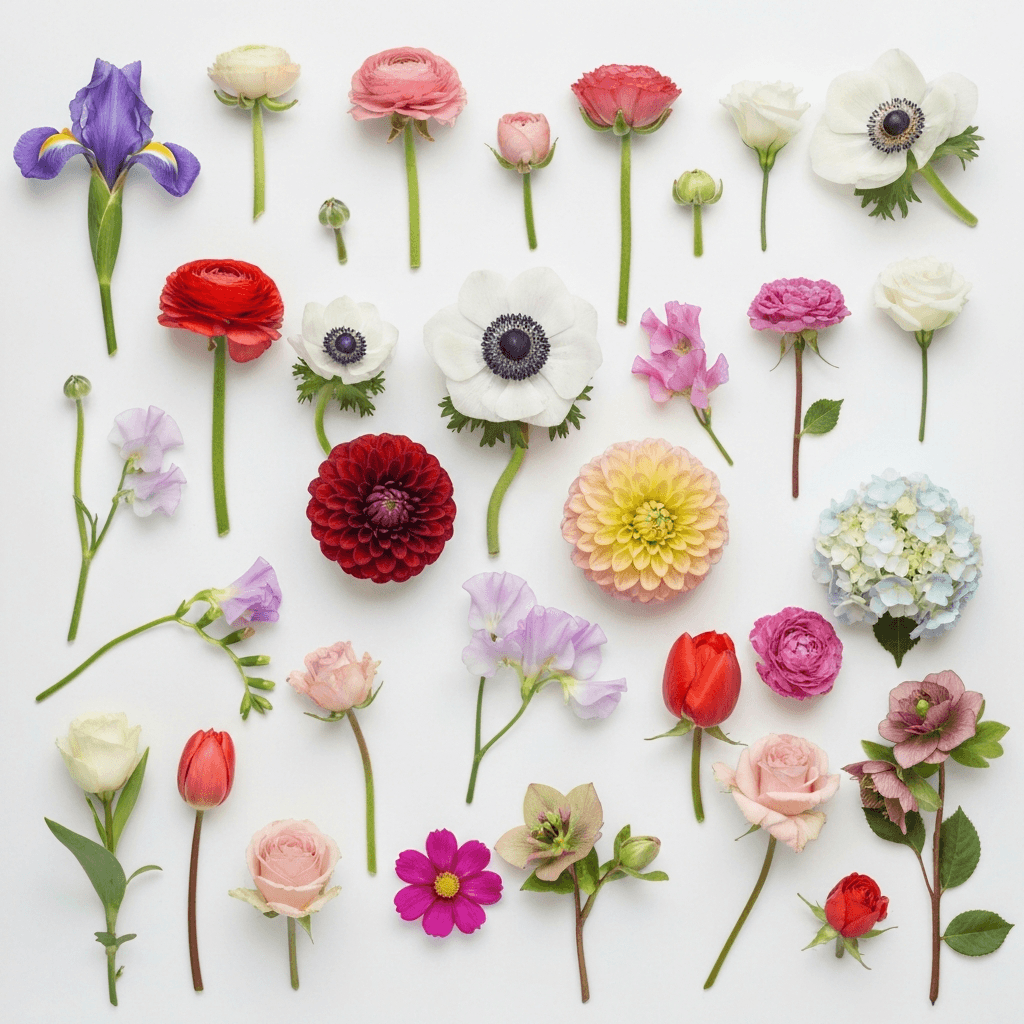
You already know roses, tulips, and sunflowers. Now it's time to expand your flower vocabulary beyond the basics. These 20 flower names cover everything from everyday florist staples to stunning specialty blooms that appear in high-end wedding floristry and editorial bouquets. Master all 20 and you'll be able to walk into any florist in America and sound like a professional.
The First 10: Essential Flowers Everyone Should Know
If you're new to flowers, start with these foundational 10. They're available at virtually every florist and grocery store across the United States, year-round or seasonally.
1. Rose (Rosa)
The world's most recognised flower. Available in over 150 species and thousands of cultivated varieties. Colours range from classic red and pink to white, yellow, orange, lavender, and even black-adjacent deep burgundy. Vase life: 7-14 days.
2. Tulip (Tulipa)
Clean, cup-shaped blooms on a single stem. Available in spring (February-May) in over 3,000 registered varieties. Tulips continue growing after cutting they may gain 1-2 inches in the vase. Vase life: 7-10 days.
3. Lily (Lilium)
Large, fragrant blooms carried on tall stems. Two main cut flower types: Asiatic (vivid, unscented) and Oriental (white/pink, intensely fragrant). Each stem carries 5-8 buds that open over 10-14 days. Remove pollen anthers to prevent fabric staining.
4. Orchid (Orchidaceae)
The largest flowering plant family with 25,000+ species. As cut flowers (cymbidium variety), orchids last 3-4 weeks. As potted plants (Phalaenopsis), they bloom for 2-4 months. The luxury flower of choice for premium gifting.
5. Carnation (Dianthus)
The most underrated flower in floristry. Ruffled, dense petals in every colour imaginable. Vase life of 14-21 days makes them the longest-lasting common cut flower. Professional event designers rely on them for maximum impact at minimum cost.
6. Gerbera Daisy (Gerbera jamesonii)
The bold, colourful cultivated daisy from South Africa. Available in every colour except blue. Simple, joyful, and one of the most-gifted flowers in the world. Vase life: 7-10 days.
7. Sunflower (Helianthus annuus)
Iconic yellow petals around a golden-brown centre disk. Grows 12-60 inches tall depending on variety. Vase life: 6-12 days. The universal "happiness" flower.
8. Lavender (Lavandula)
Purple flower spikes with a powerful, distinctive calming fragrance. Used fresh and dried. Dries beautifully and retains its scent for 1-2 years. Harvest in summer.
9. Peony (Paeonia)
The most beloved seasonal flower in American floristry. Available only in May-June, which makes them highly sought after. Large, lush, layered blooms with a light sweet fragrance. Vase life: 5-7 days.
10. Chrysanthemum (Chrysanthemum)
Commonly called "mums." Available in globe, spider, and cushion forms. Year-round availability, exceptional vase life (14-21 days), and every colour make them a florist staple. The national flower of Japan.
The Next 10: Intermediate Flowers That Make You Sound Like a Florist
These are the flowers that separate flower enthusiasts from casual buyers. All are available at good florists some require asking specifically.
11. Ranunculus (Ranunculus asiaticus)
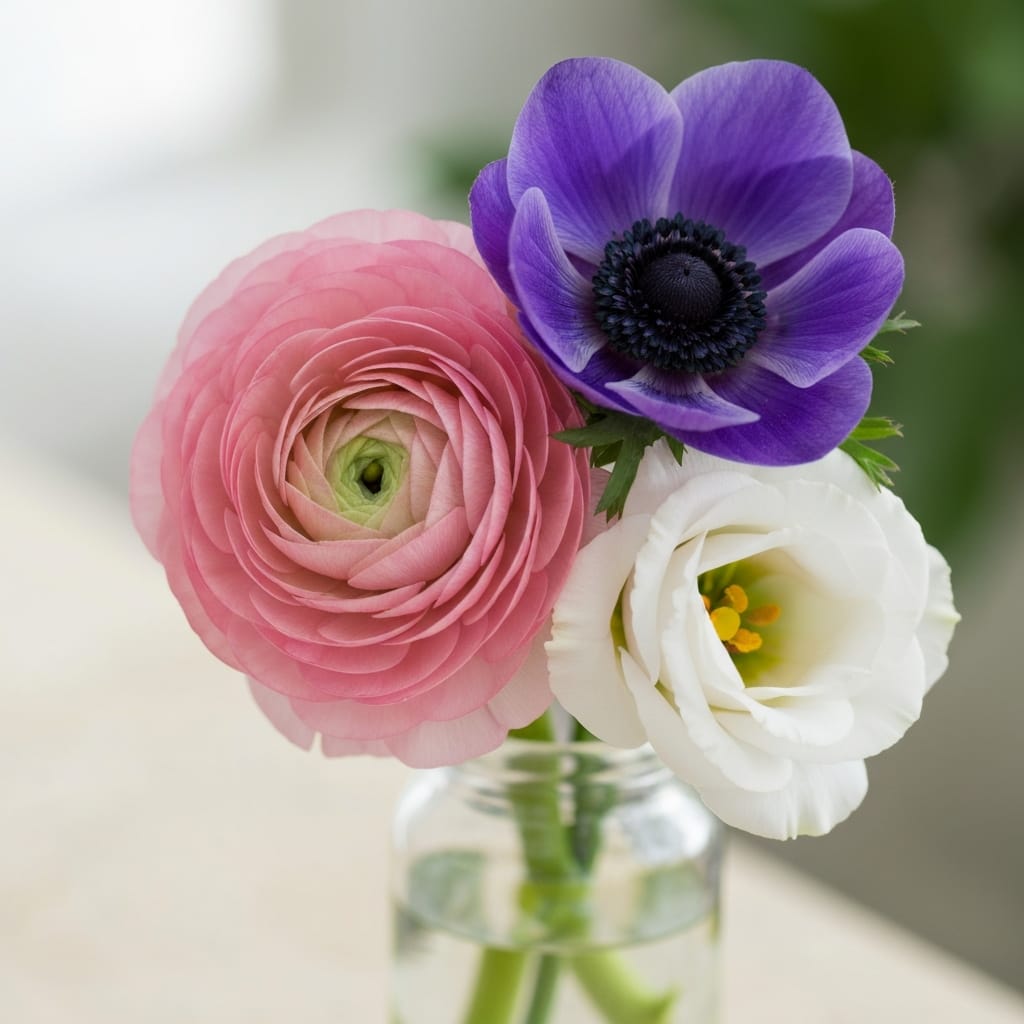
Ranunculus has become one of the most photographed flowers on social media and for good reason. Its tightly layered, tissue-paper petals look almost artificially perfect, resembling a cross between a rose and a peony. Available in spring (February-May), ranunculus is a wedding florist's favourite for romantic, garden-style bouquets.
Where to find it: Specialty florists and farmers' markets in spring.
Colours: Pink, white, coral, red, yellow, orange.
Vase life: 7-10 days.
Fun fact: The word ranunculus comes from Latin for "little frog" because it often grows near water.
12. Anemone (Anemone coronaria)
Anemones are instantly recognisable by their dark, almost black centre surrounded by silky, poppy-like petals. The contrast creates a dramatic, jewel-like quality that makes them stand out in any arrangement. Available in late winter and spring.
Colours: Red, white, purple, pink (all with dark centres).
Vase life: 5-7 days.
Available: October-May at specialty florists.
13. Lisianthus (Eustoma grandiflorum)
The most underappreciated flower on this list. Lisianthus looks almost identical to a rose or peony from a distance, which makes it a valuable budget-friendly substitute in arrangements. Single stems carry multiple blooms that open over time, extending its vase life considerably.
Colours: Purple, white, pink, blue-purple, bicolour.
Vase life: 14-21 days (outstanding longevity).
Origin: Native to North America a US wildflower that became a florist staple.
14. Hydrangea (Hydrangea macrophylla)
Large, globe-shaped flower heads made up of dozens of tiny individual blooms clustered together. One hydrangea stem can fill a large vase on its own. Their colour-changing behaviour (blue in acidic soil, pink in alkaline) is one of botany's most fascinating demonstrations.
Colours: Blue, purple, pink, white, green.
Vase life: 7-10 days.
Available: Spring through fall; year-round from specialty florists.
Tip: Hydrangeas wilt quickly without water re-cut stems and submerge the entire head in cold water for 30 minutes if wilting begins.
15. Dahlia (Dahlia)
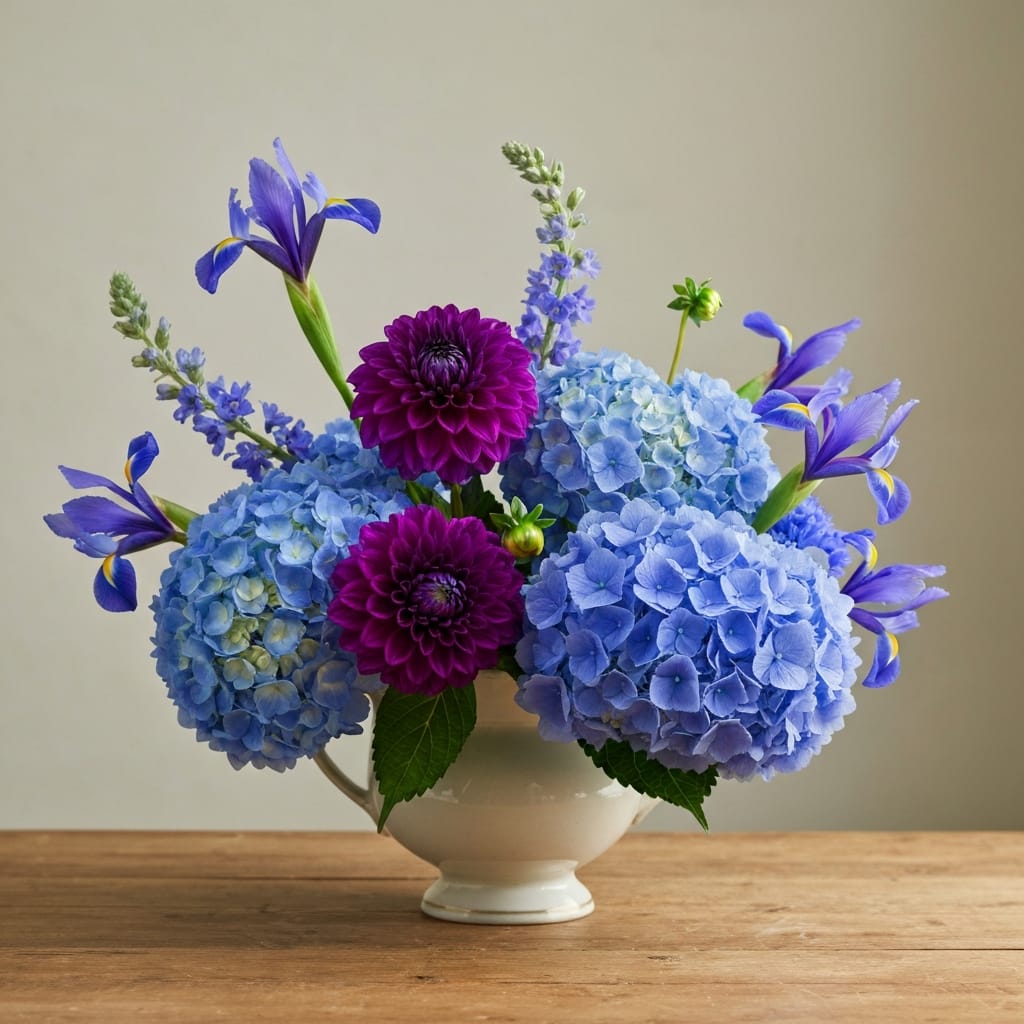
Dahlias are the geometric masterpiece of the flower world. Their mathematically perfect spiral petal arrangements come in ball, dinner-plate, cactus, and pompon forms. Available in late summer through fall, dahlias are one of the most photographed flowers of the harvest season.
Colours: Every colour except true blue.
Bloom time: August-October.
Vase life: 5-8 days.
Sizes: Thumb-sized pompon to dinner-plate varieties 12+ inches across.
16. Iris (Iris germanica)
Recognisable by their three upright petals (standards) and three drooping petals (falls). Iris has a distinctive architectural quality that works beautifully in both minimal arrangements and full garden-style bouquets. Iris pseudacorus (yellow flag iris) is the fleur-de-lis symbol of French heraldry.
Colours: Deep purple, blue, white, yellow, bronze.
Vase life: 5-7 days.
Available: Spring (March-May).
17. Sweet Pea (Lathyrus odoratus)
The quintessential English cottage garden flower. Sweet peas have ruffled, butterfly-wing petals and an extraordinary fragrance that many consider the finest of any flower. They're delicate, which makes them rare at florists but when you find them, buy as many as you can.
Colours: Pink, purple, white, red, salmon, bicolour.
Fragrance: Intensely sweet and distinctive.
Available: Spring-early summer; rare at florists.
18. Freesia (Freesia refracta)
Freesia blooms grow on arching stems with buds opening sequentially from bottom to top like a slow, fragrant unfolding. They're intensely fragrant (a single stem can scent a room) and available year-round from most florists.
Colours: White, yellow, orange, pink, purple, red.
Fragrance: Sweet, honeyed, distinctive.
Vase life: 7-10 days.
19. Cosmos (Cosmos bipinnatus)
Delicate, daisy-like flowers on long, slender stems with feathery, fern-like leaves. Cosmos create an airy, wildflower quality in arrangements that heavier flowers can't achieve. They're a summer garden flower that also works beautifully as a cut flower.
Colours: Pink, white, magenta, dark burgundy.
Available: Summer (June-September).
Garden tip: Cosmos self-seeds freely plant once and they return every year.
20. Hellebore (Helleborus)
The most mysterious and sophisticated flower on this list. Hellebores bloom in late winter and early spring, nodding downward on elegant stems in dusky, complex colours: dusty plum, smoky rose, pale cream, dark burgundy. They're rare at florists but increasingly available at farmers' markets and specialty floral suppliers.
Colours: Dusty rose, plum, cream, near-black, spotted varieties.
Bloom time: January-April.
Symbolism: Tranquillity and serenity.
Quick Reference: 11-20 at a Glance
| Flower | Season | Vase Life | Key Feature |
|---|---|---|---|
| Ranunculus | Spring | 7-10 days | Layered paper-like petals |
| Anemone | Winter-Spring | 5-7 days | Dark centre, silky petals |
| Lisianthus | Year-round | 14-21 days | Looks like rose or peony |
| Hydrangea | Spring-Fall | 7-10 days | Large cluster head |
| Dahlia | Summer-Fall | 5-8 days | Geometric spiral petals |
| Iris | Spring | 5-7 days | Three-petal architectural form |
| Sweet Pea | Spring | 5-7 days | Extraordinary fragrance |
| Freesia | Year-round | 7-10 days | Sequential blooming, fragrant |
| Cosmos | Summer | 5-7 days | Delicate, airy, wildflower |
| Hellebore | Winter-Spring | 5-7 days | Nodding, dusky colours |
How to Build Your Flower Vocabulary Fast
The best way to learn 20 flower names is through regular, deliberate exposure:
- 1Weekly florist visits ask staff to name any flower you can't identify
- 2One new variety per week buy it, observe it, remember its smell and texture
- 3Instagram and Pinterest follow florists and tag flowers you don't recognise
- 4Farmers' markets in season you'll discover seasonal varieties you'll never see at a supermarket
- 5MyCareerly articles our care guides break down each flower in depth
Frequently Asked Questions
Quick answers to common questions


