
Some flowers have transcended simple beauty to become cultural icons: flowers that appear in ancient poetry, religious texts, royal courts, great paintings, and modern wedding aisles alike. These are the flowers that human beings have chosen, century after century, as the most meaningful, most beautiful, and most worthy of celebration.
This list is built not on a single poll but on the accumulated weight of history: which flowers appear most frequently in art and literature, hold the deepest cultural significance, and continue to capture hearts across the modern world.
1. Rose 5,000 Years of Devotion
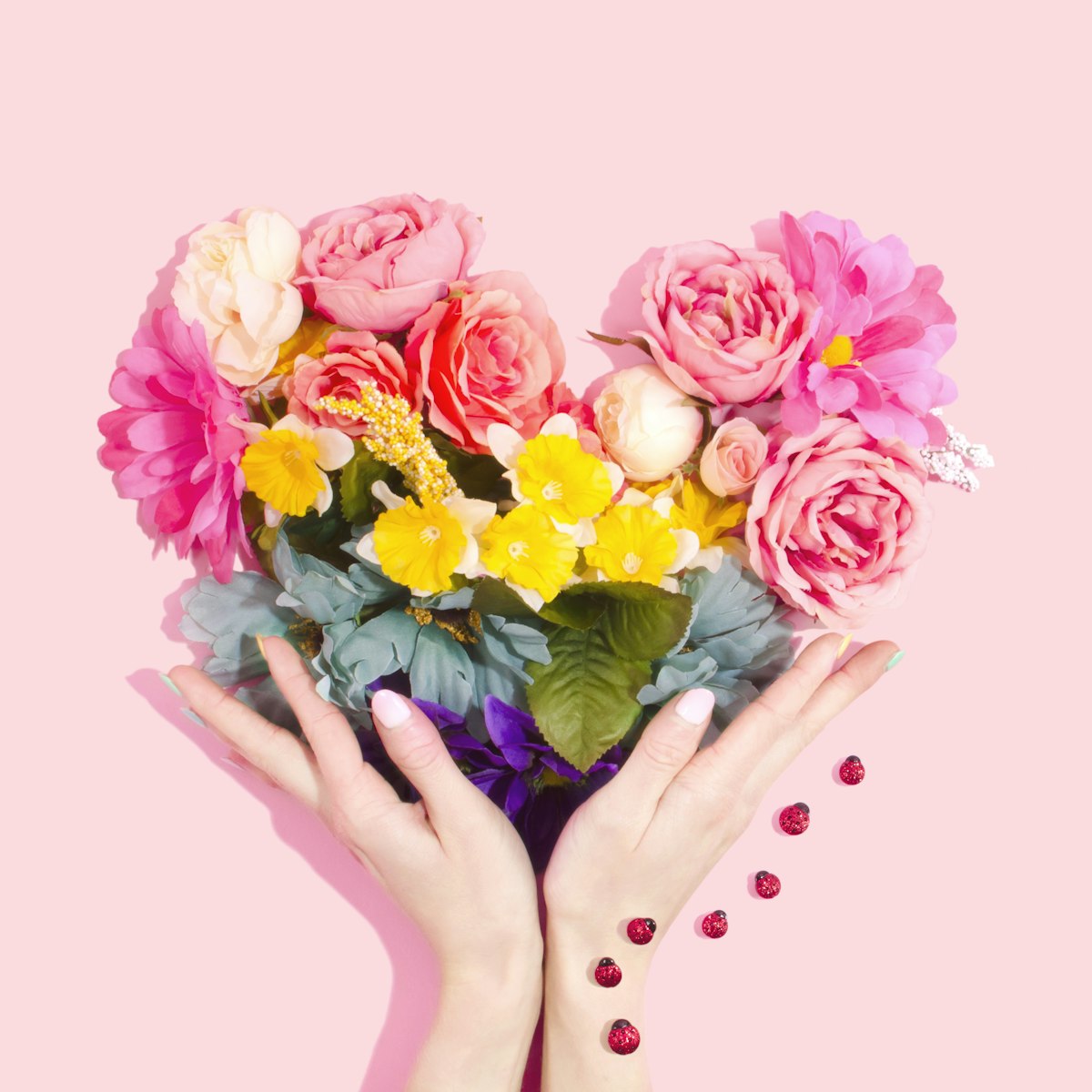
The rose's claim to the top of any "favourite flower" list is irrefutable. It has been cultivated for at least 5,000 years, appearing in ancient Persian gardens, Greek mythology (the rose was said to have sprung from the tears of Aphrodite), Roman celebrations, Elizabethan poetry, and today's billion-dollar floral industry. The word "rose" appears in the literature of virtually every language and every era.
What makes the rose enduringly the world's favourite is its combination of qualities no other flower matches simultaneously: extraordinary visual beauty, complex fragrance, remarkable variety (150+ species, thousands of cultivars), and a symbolic range wide enough to cover love, grief, joy, devotion, and national pride. England, the US, and Bulgaria all claim the rose as a national flower. The red rose is universally understood as the most powerful symbol of love in human culture.
2. Lotus The Sacred Bloom
The lotus holds a position of spiritual significance unlike any other flower in the world. Sacred in Hinduism (associated with Brahma, Vishnu, and Lakshmi), Buddhism (the Buddha is typically depicted seated on a lotus), Jainism, and ancient Egyptian religion (associated with creation and rebirth), the lotus appears across the full sweep of Eastern civilisation as a symbol of purity, enlightenment, and transcendence.
What makes the lotus particularly powerful as a symbol is its biology: it grows from murky, muddy water to produce flowers of extraordinary purity and beauty. This physical reality makes it the perfect metaphor for spiritual development beauty arising from difficulty. The lotus has been cultivated in sacred gardens for over 3,000 years.
3. Cherry Blossom The Flower of Impermanence
The cherry blossom (sakura) holds a position in Japanese culture so profound that the entire nation pauses for "hanami" (flower viewing) celebrations each spring when the trees bloom. The blossoming period lasts only 1–2 weeks, and this very transience is central to what the cherry blossom means: the beauty of the present moment, the acceptance of impermanence, the poignant awareness that the most beautiful things do not last.
Cherry blossoms have become one of the most globally recognised symbols of spring, and their iconic pale pink colour against blue sky has inspired art, poetry, and design across centuries and cultures. As a cut flower, cherry blossom branches are extraordinarily sought-after during the brief bloom window.
4. Lily Ancient Elegance
The lily has been a symbol of purity, innocence, and divine favour across multiple major world religions and cultures for thousands of years. The Madonna lily (Lilium candidum) appears in Christian iconography representing the Virgin Mary. In ancient Greek mythology, lilies were said to have sprung from the milk of Hera. In ancient Egypt, lilies symbolised fertility and abundance.
Today, white lilies remain the most used flower for sympathy and memorial occasions precisely because of this deeply rooted association with purity and spiritual peace. Their large, architectural blooms and (in Oriental varieties) powerful, beautiful fragrance make them one of the most immediately recognisable flowers in the world.
5. Sunflower The Face of Happiness
No artist in history has immortalised a flower more powerfully than Van Gogh's sunflower paintings and no flower better deserves that immortalisation. Sunflowers are one of the few flowers that seem to contain pure emotion without complication. Their enormous, bright faces radiate warmth and joy in a way that is impossible to resist.
Native to North America and cultivated by Indigenous peoples for thousands of years (as a food source and ceremonially), sunflowers were brought to Europe in the 16th century and have been beloved across the world ever since. They track the sun across the sky while young a behaviour called heliotropism which cemented their symbolic association with devotion, loyalty, and longing.
6. Lavender Two Thousand Years of Service
Lavender's claim to "favourite" status rests on a unique combination: it is the only flower that functions equally as a visual delight, a fragrance source, a medicinal herb, and a culinary ingredient. The Romans used lavender to scent their baths (the name comes from the Latin "lavare," to wash), and the tradition of lavender in personal care continues unbroken into the present day.
The scent of lavender has been extensively studied for its calming, anxiety-reducing effects there is measurable science behind the way it makes people feel. Fields of lavender in Provence, France, and the Sequim Valley of Washington state draw visitors in the hundreds of thousands each summer. As a dried flower, lavender lasts indefinitely.
7. Peony China's Treasured Bloom
In China, where the peony has been cultivated for over 1,500 years, it holds the title of "king of flowers." The peony represents wealth, prosperity, honour, and romance it appears in Chinese art, poetry, and ceremonial contexts more than any other flower. Entire festivals are held in its honour during peak bloom season each May.
In the modern Western world, the peony has undergone a remarkable renaissance, becoming the most sought-after wedding flower and the quintessential symbol of romantic abundance. Their enormous, deeply layered blooms in blush, cream, magenta, and rose-pink; their intoxicating fragrance; and their brief but spectacular season (late April through June) make them one of the most emotionally resonant flowers in the world.
8. Orchid The Collector's Obsession
Throughout history, no flower has inspired quite the same combination of passion, obsession, and financial speculation as the orchid. During the Victorian era, wealthy collectors sent expeditions into tropical jungles at enormous expense and risk to bring back new species. This phenomenon, known as "orchidelirium," saw single plants sell for what would be thousands of dollars today.
Orchids represent the most diverse family of flowering plants on Earth, with over 28,000 species. Their exotic beauty, extraordinary variety of form and colour, and remarkable longevity as houseplants make them the go-to luxury gift across cultures. The most popular species, Phalaenopsis, can bloom continuously for 3–4 months and relast year after year with minimal care.
9. Tulip The Flower That Changed Finance
The tulip holds a unique position in history: it is the only flower to have caused a stock market crash. Tulip Mania in 1637 Netherlands saw single tulip bulbs selling for more than a skilled craftsman's annual salary the world's first recorded speculative financial bubble, driven entirely by the passion for a flower. When the market collapsed, it ruined thousands of investors.
That level of obsession, even today, speaks to the tulip's extraordinary appeal. Their clean, elegant form, their availability in virtually every colour, and their status as the quintessential herald of spring have made them one of the world's most beloved flowers for over four centuries. The Netherlands still produces 3 billion tulip bulbs annually, primarily for export.
10. Daisy The Universal Flower
The daisy may be the most universally known flower on Earth. Its simple, archetypal form white petals radiating from a yellow centre is the flower shape that children draw instinctively, that appears in every culture's folk art, and that has been depicted in art since ancient times. Daisy motifs appear in Minoan palace frescoes, Egyptian hieroglyphics, and medieval European manuscripts alike.
The daisy represents innocence, simplicity, and loyal love across virtually every cultural tradition. The childhood game of "she loves me, she loves me not" (plucking petals from a daisy) is known across North America, Europe, and beyond. In modern floristry, gerbera daisies are one of the longest-lasting and most colourful cut flowers available.
Looking at this list, several patterns emerge. The flowers humans love most tend to:
- 1Have distinctive, memorable visual form that is immediately recognisable
- 2Carry profound symbolic meaning in multiple cultures simultaneously
- 3Have a documented history of use stretching back thousands of years
- 4Appear regularly in the art and literature of multiple civilisations
- 5Continue to be commercially successful in the modern flower market
Beauty alone is not enough to make a flower truly beloved across centuries. The flowers on this list have earned their place through a combination of beauty, meaning, cultural resonance, and the undeniable emotional response they produce in the humans who encounter them.
Frequently Asked Questions
Quick answers to common questions


