
Flowers are among the oldest medicines in human history. Long before pharmaceutical companies synthesised compounds in laboratories, healers across every culture on Earth reached for flowers as their primary therapeutic tools. The ancient Egyptians catalogued medicinal flowers in the Ebers Papyrus (1550 BC). Traditional Chinese medicine has used flower-based remedies for over 3,000 years. Indigenous healers across the Americas developed sophisticated botanical medicine systems using local flowering plants.
What's remarkable is that modern science has validated many of these ancient uses. Clinical trials now confirm what generations of healers discovered empirically: certain flowers contain potent bioactive compounds that can measurably reduce anxiety, support immune function, heal wounds, and relieve pain. This is not alternative medicine it's pharmacognosy, the scientific study of drugs derived from plants.
Here are the 10 most medicinally significant flowers, with the science behind each one.
Important Note Before We Begin
This article is educational and informational. Medicinal flowers can interact with pharmaceutical drugs, produce allergic reactions, or be contraindicated for specific health conditions. Always consult a qualified healthcare provider before using any herbal remedy to treat a health condition. The information below reflects current research but is not medical advice.
1. Lavender (Lavandula angustifolia) Anxiety, Sleep, Headache
Active compounds: Linalool, linalyl acetate, 1,8-cineole
Primary uses: Anxiety reduction, sleep improvement, tension headache relief, wound healing
Forms: Essential oil (aromatherapy), oral capsules (Silexan/Lasea), topical cream, tea
Lavender is the most clinically studied medicinal flower for anxiety. A 2014 clinical trial published in Phytomedicine found that oral lavender oil (Silexan, 80mg/day) was as effective as lorazepam (0.5mg/day) for treating generalised anxiety disorder without the dependence risk or cognitive side effects. Multiple subsequent trials have confirmed lavender's anxiolytic properties.
For aromatherapy, inhaled lavender essential oil activates GABA receptors in the brain the same receptors targeted by benzodiazepine drugs through olfactory pathways. Even a 5-minute lavender aromatherapy session has measurable effects on heart rate variability and perceived stress.
Home use: Lavender aromatherapy (essential oil diffuser), lavender tea (1 tbsp dried flowers steeped 10 minutes), dried lavender sachets under pillow.
Safety: Generally safe for aromatherapy and topical use. Oral supplements may interact with CNS depressants; avoid during pregnancy.
2. Echinacea (Echinacea purpurea/pallida) Immune Support
Active compounds: Alkylamides, polysaccharides, chicoric acid
Primary uses: Immune stimulation, reduction of cold/flu duration and severity
Forms: Tea, tincture, capsules, syrup
Echinacea is the most widely sold herbal supplement in the United States, with annual retail sales over $300 million. Its immune-modulating properties are among the most extensively researched of any medicinal plant. A 2015 meta-analysis of 24 randomised controlled trials found that echinacea preparations could reduce the incidence of the common cold by 10–58% and reduce duration by 1–4 days.
The mechanism: echinacea activates macrophages (immune cells that destroy pathogens) and stimulates the production of interferon (an antiviral protein). It also contains anti-inflammatory compounds that reduce the severity of cold and flu symptoms.
Home use: Echinacea tea at the first sign of illness (1 tsp dried herb per cup, steep 10–15 minutes). Most effective taken early in the course of illness.
Safety: Not for continuous use longer than 8 weeks; may interact with immunosuppressant medications.
3. Chamomile (Matricaria chamomilla) Sleep, Digestion, Anxiety
Active compounds: Apigenin, chamazulene, alpha-bisabolol, flavonoids
Primary uses: Sleep promotion, anxiety reduction, digestive relief, wound healing
Forms: Tea, essential oil, topical cream, capsules
Chamomile is the most widely consumed herbal tea in the world, with global consumption estimated at over 1 million cups per day. Its sleep-promoting properties come primarily from apigenin, a flavonoid that binds to GABA receptors in the brain producing a mild sedative effect without the next-day grogginess of pharmaceutical sleep aids.
For digestion, chamomile reduces intestinal spasms (antispasmodic effect) and reduces inflammation in the gut lining. It's one of the most evidence-based remedies for irritable bowel syndrome (IBS) and gastritis.
Home use: Chamomile tea 30–45 minutes before bedtime (2 tsp dried flowers per cup, steep covered for 5 minutes). For digestion, drink after meals.
Safety: Rare allergic reactions in people with ragweed allergy (cross-reactivity). Avoid high doses during pregnancy.
4. St. John's Wort (Hypericum perforatum) Mild Depression
Active compounds: Hypericin, hyperforin, flavonoids
Primary uses: Mild to moderate depression, seasonal affective disorder, wound healing
Forms: Capsules, tea, tincture, topical oil
St. John's Wort is the most extensively studied herbal antidepressant. A comprehensive Cochrane review of 29 clinical trials (over 5,000 patients) concluded that it was significantly more effective than placebo for mild to moderate depression and had a better side-effect profile than standard antidepressants. German health authorities have licensed it as a prescription treatment for mild depression.
Critical drug interaction warning: St. John's Wort is a potent inducer of cytochrome P450 enzymes, which metabolise many common drugs. It can significantly reduce the effectiveness of antidepressants, oral contraceptives, blood thinners (warfarin), HIV medications, and transplant rejection drugs. Do not combine with other medications without medical supervision.
Home use: St. John's Wort should only be used medicinally under healthcare provider supervision due to drug interactions.
5. Calendula (Calendula officinalis) Wound Healing, Skin
Active compounds: Triterpenoids, flavonoids, carotenoids, essential oils
Primary uses: Wound healing acceleration, skin inflammation, eczema, burns
Forms: Topical cream/ointment, infused oil, tincture, tea
Calendula is the most widely used medicinal flower in natural skincare. Clinical research demonstrates its ability to accelerate wound healing (it promotes angiogenesis, the formation of new blood vessels), reduce inflammation, and fight specific bacteria and fungi on the skin's surface.
A notable clinical trial found calendula cream equally effective to trolamine (a conventional treatment) for radiation dermatitis in cancer patients with fewer side effects. Major cosmetic companies including Johnson & Johnson now use calendula extract as a key ingredient in baby skin care products.
Home use: Calendula cream for minor skin irritation, eczema flares, diaper rash, and minor burns. Calendula tea as a mouthwash for oral inflammation.
Safety: Topically very safe. Internal use generally safe; avoid during pregnancy (may stimulate uterine contractions).

6. Passionflower (Passiflora incarnata) Anxiety, Insomnia
Active compounds: Chrysin, vitexin, orientin, isovitexin (all flavonoids)
Primary uses: Anxiety reduction, insomnia, pre-operative anxiety
Forms: Tea, tincture, capsules
Passionflower is particularly interesting because it has demonstrated anxiolytic (anxiety-reducing) effects without producing the sedation associated with benzodiazepine drugs. A clinical trial comparing passionflower extract to oxazepam (a pharmaceutical benzodiazepine) found comparable anxiety-reducing effects, with passionflower producing significantly less impairment on job performance.
Home use: Passionflower tea (1–2 tsp dried herb, steep 10 minutes) in the evening. Works well combined with chamomile and lavender for a comprehensive relaxation tea blend.
Safety: May enhance sedative effects of other medications. Avoid during pregnancy.
7. Arnica (Arnica montana) Bruising, Muscle Pain
Active compounds: Helenalin, dihydrohelenalin (sesquiterpene lactones), flavonoids
Primary uses: Bruising, muscle soreness, joint pain, post-operative swelling
Forms: Topical gel/cream only (oral arnica is toxic)
Arnica is one of the most widely used post-injury and post-surgical topical treatments in integrative medicine. Clinical studies support its use for reducing bruising severity and duration, reducing muscle soreness after exercise, and managing osteoarthritis pain. It's the most recommended natural treatment by both integrative medicine practitioners and some conventional surgeons for post-operative bruising.
Critical safety note: Arnica is toxic when taken internally. Only topical application (cream, gel, ointment) is safe. Do not apply to broken skin or open wounds.
Home use: Apply arnica gel to bruises, muscle soreness, and sprains 3–4 times daily, avoiding broken skin.
8. Evening Primrose (Oenothera biennis) Hormonal Symptoms
Active compounds: Gamma-linolenic acid (GLA), cis-linoleic acid
Primary uses: PMS symptoms, menopause symptoms, eczema
Forms: Evening primrose oil capsules (1,000–3,000mg/day)
Evening primrose oil is one of the richest plant sources of gamma-linolenic acid (GLA), an omega-6 fatty acid with significant anti-inflammatory properties. Clinical evidence supports its use for PMS (particularly breast pain/tenderness), menopausal hot flashes, and inflammatory skin conditions like eczema and psoriasis.
Home use: Evening primrose oil capsules are widely available at health food stores and pharmacies. Most studies use 1–3g per day.
9. Elderflower (Sambucus nigra) Cold and Flu
Active compounds: Rutin, isoquercitrin, kaempferol, anthocyanins
Primary uses: Cold and flu symptom relief, upper respiratory tract infections, fever reduction
Forms: Elderflower/elderberry syrup, tea, capsules
Elderflower and elderberry products are among the best-selling natural cold remedies in the United States. A meta-analysis of elderberry supplementation found a significant reduction in both duration and severity of cold and flu symptoms (average reduction: 4 days for colds, 2 days for flu). The mechanism involves both antiviral properties (flavonoids directly inhibit influenza virus replication) and immune activation.
Home use: Elderflower tea or elderberry syrup at the onset of cold/flu symptoms. Commercially prepared syrups (Sambucol, Nature's Way) are the most convenient form.
10. Red Clover (Trifolium pratense) Menopause Symptoms
Active compounds: Biochanin A, formononetin, daidzein, genistein (isoflavones)
Primary uses: Menopausal hot flashes, bone density support
Forms: Capsules, tea, tincture
Red clover contains isoflavones plant compounds that weakly mimic oestrogen in the body (called phytoestrogens). Clinical trials show red clover isoflavone supplements can reduce hot flash frequency by 30–50% in menopausal women, with a particular benefit for women who cannot use hormone replacement therapy.
Safety: Women with oestrogen-sensitive cancers (breast, uterine, ovarian) should consult an oncologist before using red clover or any phytoestrogen supplement, as the effects on oestrogen-sensitive tissues are not fully characterised.
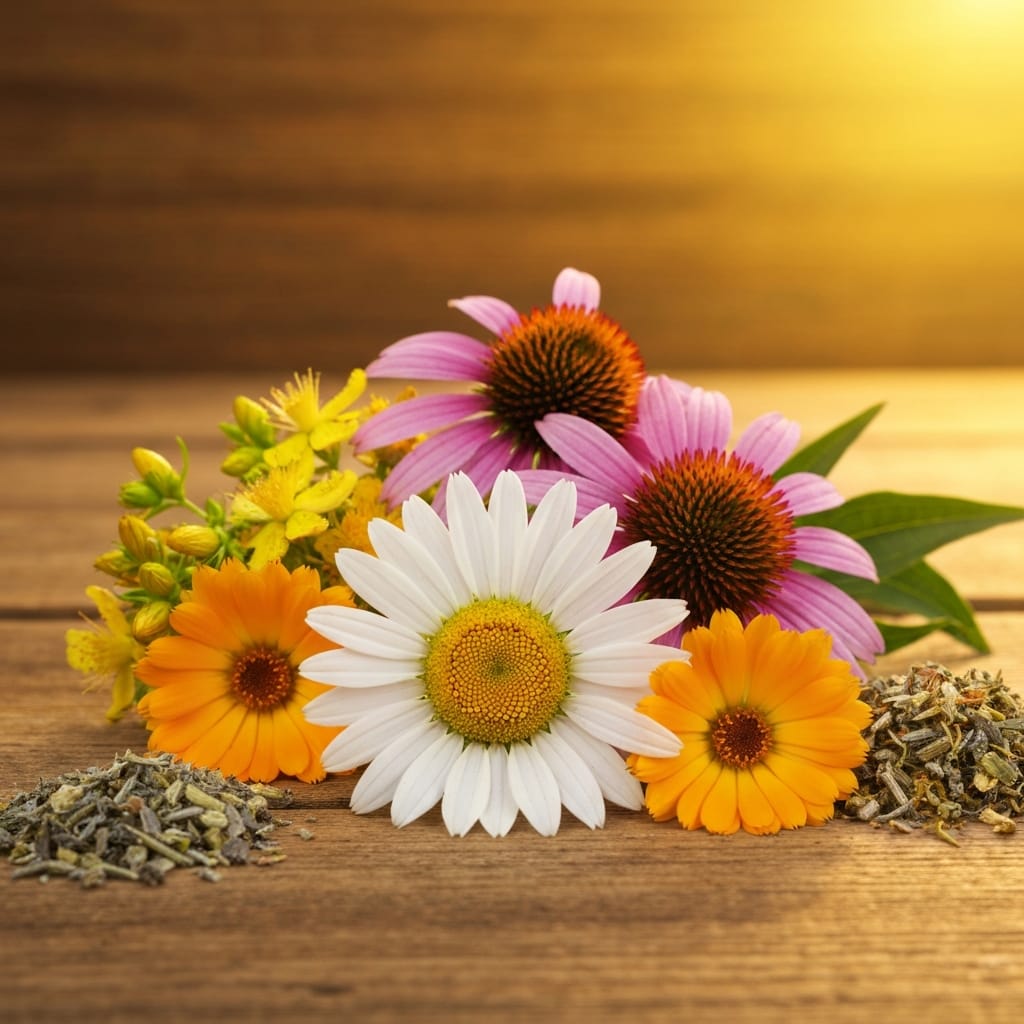
Growing Medicinal Flowers at Home
Many of the flowers above grow easily in US home gardens:
- Lavender: Full sun, well-draining soil, drought-tolerant. Zones 5–9.
- Chamomile: Self-seeds prolifically, tolerates poor soil. Annual; re-plants each year.
- Echinacea: Native to the US, extremely easy to grow. Perennial in Zones 3–9.
- Calendula: Cool-season annual, blooms spring and fall. Direct sow in garden.
- St. John's Wort: Sun or partial shade, spreads well. Perennial in Zones 3–9.
- Elderflower: Large shrub (8–12 feet); needs space but produces abundantly. Zones 3–9.
Frequently Asked Questions
Quick answers to common questions


