
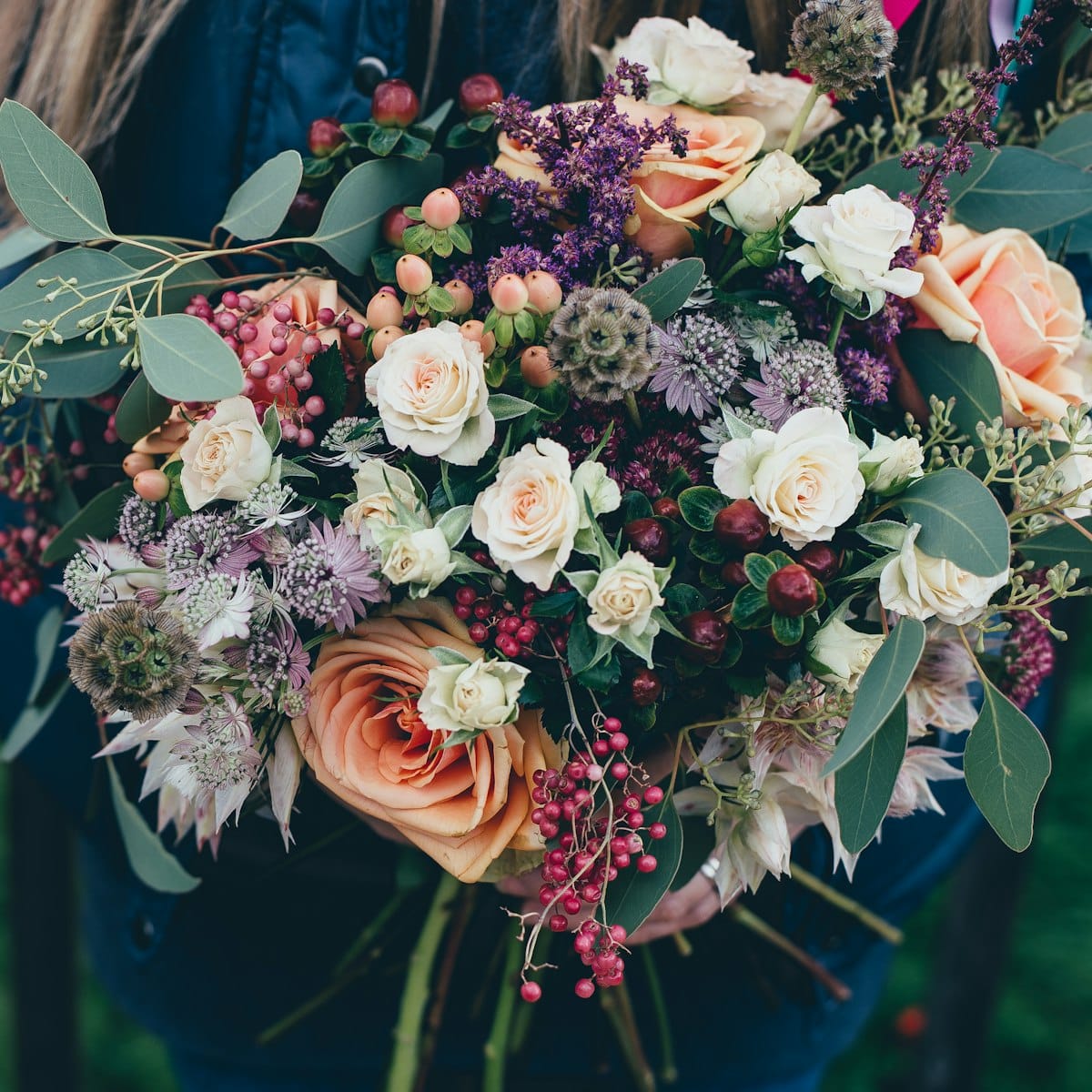
You're at a farmers market and a vendor has a stunning flower you've never seen before. Your neighbor's garden has something blooming you keep meaning to look up. Someone sends you a bouquet and you want to know exactly what's in it. We've all been there: staring at a beautiful flower and wondering "What on Earth is that?"
This guide gives you the complete toolkit for identifying any flower you encounter: the best apps, the step-by-step visual method, the most commonly confused look-alikes, and a guide to getting the right ID even when the app struggles.
Method 1: Plant Identification Apps (The Fastest Approach)
Modern AI-powered plant identification apps have transformed what once required a botany degree into a 10-second smartphone task. These are the best options ranked by accuracy and usability for US users.
Google Lens Best Free All-Around Option
Google Lens is the most accessible flower identification tool and one of the most accurate for common flowers. It's built into every Android device and available as a free download on iPhone.
How to use: Open the camera, aim at the flower, and tap the search/lens icon. Google Lens will identify the flower, often with a confidence level and links to learn more.
Best for: Common flowers (roses, tulips, lilies, sunflowers, daisies, orchids) the ones most likely to appear in a garden or bouquet. Also excellent for houseplants.
Limitations: Less reliable for regional wildflowers, rare cultivars, and flowers photographed in poor light or at unusual angles.
iNaturalist Best for Accuracy and Learning
iNaturalist is the preferred tool of professional botanists and citizen scientists. Your photo identification is submitted to the community, where experts and knowledgeable amateurs vote on the identification. Disputed identifications get escalated to specialists.
How to use: Download the free app, photograph the flower (multiple angles help), and submit. You'll typically receive an AI suggestion immediately, followed by community refinement.
Best for: Wild plants and less common species. If you're trying to identify something in a natural setting, iNaturalist outperforms Google Lens for unusual species.
Bonus: Your identifications contribute to global biodiversity databases. You're doing science while satisfying your curiosity.
PictureThis Best Dedicated Plant ID App
PictureThis is a purpose-built plant identification app with a database of 17,000+ plant species and a claimed 98% accuracy rate for common species. It also provides growing advice, disease diagnosis, and watering reminders.
How to use: Open the app, photograph the flower, and receive an immediate identification with detailed information including toxicity, care tips, and related species.
Best for: Home gardeners who want identification plus ongoing plant care guidance. The premium version ($30/year) includes more features.
PlantNet Best Free Scientific Option
PlantNet is developed by a consortium of scientific institutions and is widely used in academic research. It's free, has no subscription, and provides scientific names with confidence scores.
How to use: Take a clear photo of the flower (and separately the leaves this dramatically improves accuracy). Select which plant part you're photographing, and submit.
Best for: When you want the proper scientific (Latin) name for a flower. Less consumer-friendly than PictureThis but more scientifically rigorous.
Method 2: Visual Identification The Systematic Approach
When apps fail or you want to understand what you're seeing rather than just getting a name, visual identification teaches you to read flowers the way botanists do.
Step 1: Colour and Number
Start with the most obvious features: colour and petal count. These two factors alone can narrow most flowers to a handful of families.
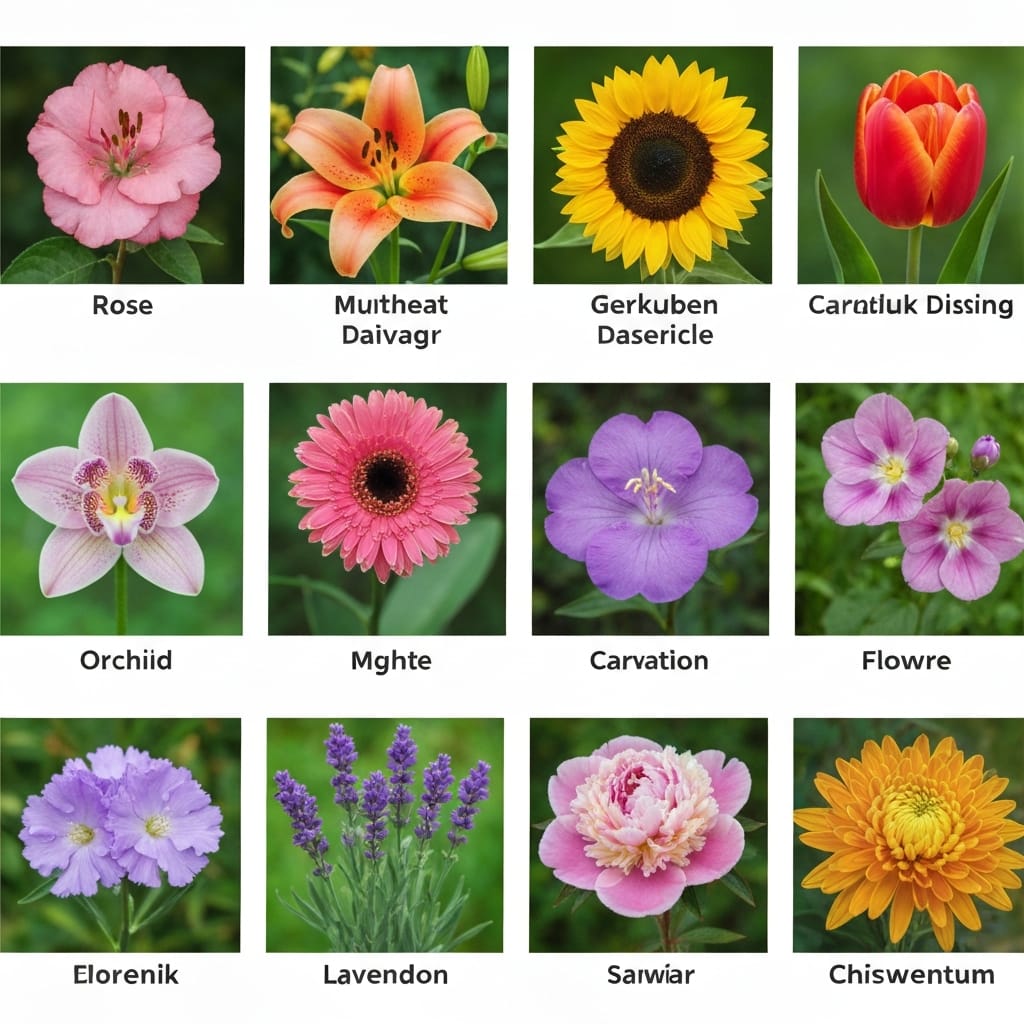
Common petal counts and what they suggest:
- 3 petals: Trilliums, many orchids, some lilies
- 4 petals: Poppies, phlox, some mustard family flowers
- 5 petals: Roses, geraniums, wild strawberry, forget-me-nots, most violas
- 6 petals (or 3+3 sepals): Tulips, lilies, most bulb flowers (technically 3 petals + 3 sepal, but look identical)
- Many petals: Chrysanthemums, daisies (composite family many tiny florets arranged as one flower)
Colour as a filter:
- True blue (rare): Forget-me-not, chicory, delphiniums, aconite narrow field
- Yellow/orange: Dandelion family, sunflowers, marigolds, black-eyed Susans
- White: Wide field narrow by form and scent
- Purple/lavender: Lavender, iris, allium, salvia, echinacea, violets
Step 2: Flower Form
After colour and petal count, look at the overall form of the flower:
Single disc: Flat-faced, one ring of petals around a central disc (daisy, gerbera, black-eyed Susan, coneflower). These are typically composite flowers (the "disc" is actually hundreds of tiny florets).
Cup/bowl: Petals form a cup or bowl shape (rose, peony, poppy, ranunculus, water lily).
Trumpet/funnel: Petals fused into a tube flaring at the end (lily, morning glory, petunia, daffodil's trumpet).
Spike/wand: Many small flowers arranged along a central stem (lavender, delphinium, snapdragon, foxglove, gladiolus).
Spherical/pom-pom: Many petals in a dense globe (chrysanthemum pompon, allium, globe amaranth).
Irregular/orchid-like: Petals in an asymmetric arrangement (orchids, sweet peas, passionflower, iris).
Step 3: Leaf Arrangement
Leaves can be the most reliable identifier for flowers that look similar:
Opposite leaves (pairs directly across from each other on the stem): Common in mint family, asters, phlox.
Alternate leaves (one at each level, alternating sides): Most common arrangement; appears in roses, cosmos, daisies.
Whorled leaves (3+ at the same level): Rare; indicates specific families (like bedstraw or some lilies).
Leaf shape also matters: compound leaves (divided into leaflets, like roses) vs. simple leaves (one piece, like daisies) significantly narrow identification.
Step 4: Scent
Smell the flower. This is often the fastest diagnostic. Some scent profiles are nearly unique:
Sweet peas: A light, powdery sweetness unlike anything else
Lavender: Unmistakably herbal-floral
Lily (Oriental varieties): Intensely sweet and heavy
Jasmine: Very sweet, slightly exotic
Chamomile: Apple-like, herbaceous
Allium/wild garlic: Distinctly onion-like
If a flower smells like onion when you cut the stem, it's almost certainly an allium (ornamental onion).
Step 5: Habitat and Season
Where are you? What time of year is it? These factors alone can eliminate huge swaths of possibilities:
Spring wildflowers (March–May in most of the US): Trilliums, violets, bloodroot, trout lily, wild geranium
Summer wildflowers (June–August): Black-eyed Susans, coneflowers, milkweed, Queen Anne's lace
Fall wildflowers (September–October): Asters, goldenrod, goldenrod, ironweed
Garden flowers by season: See the seasonal flower guide on MyCareerly for what's at peak in your region
The Most Commonly Confused Look-Alike Pairs
Ranunculus vs. Garden Rose
Ranunculus: Very thin, almost translucent petals; up to 150 per bloom; the bloom opens flat at full maturity. Shorter stem, typically 10–18 inches. Available January–May only.
Garden rose: Thicker petals that feel more substantial; petals are stiffer and hold their form longer; stem has thorns; available year-round.
The quickest tell: run your finger over the petals. Ranunculus petals are soft and almost silky-thin; garden rose petals feel slightly firmer and more textured.
Lisianthus vs. Peony
Lisianthus: Petals are thinner and more papery; blooms are smaller (2–3 inches) and grow on a branching stem with multiple flowers at once; available most of the year.
Peony: Much larger bloom (5–8 inches when fully open); much denser petals; grown on a single upright stem; available only April–June.
The quickest tell: stem structure. Lisianthus branches, with multiple blooms at various stages. A peony has one main bloom per stem.
Anemone vs. Poppy
Anemone: Has a distinctive dark (near-black or dark purple) button centre; available January–May; commonly found at florists.
Poppy: Centre is typically lighter (pale grey-green) with a ring of stamens; petals are thinner and more crepe-paper in texture; mostly spring wildflowers, less common at florists.
The quickest tell: the centre. Anemone's dark centre is its most distinctive feature.
Cosmos vs. Daisy
Cosmos: Petals are slightly more pointed and regular in shape; the plant itself is very tall (3–5 feet) and feathery-leafed.
Daisy: Petals typically slightly wider and more random in shape; leaves are broader and less feathery.
In a bouquet, cosmos petals tend to be more uniformly shaped and the petals are a bit more sharply pointed at their tips.
Allium vs. Other Round Flower Heads
Allium: Cut the stem it smells distinctly of onion. No other ornamental flower has this characteristic.
Globe thistle (Echinops): Feels prickly; individual florets are tubular.
Agapanthus: Clusters of tubular flowers on arching stems; no onion scent.
Identifying Flowers in a Bouquet
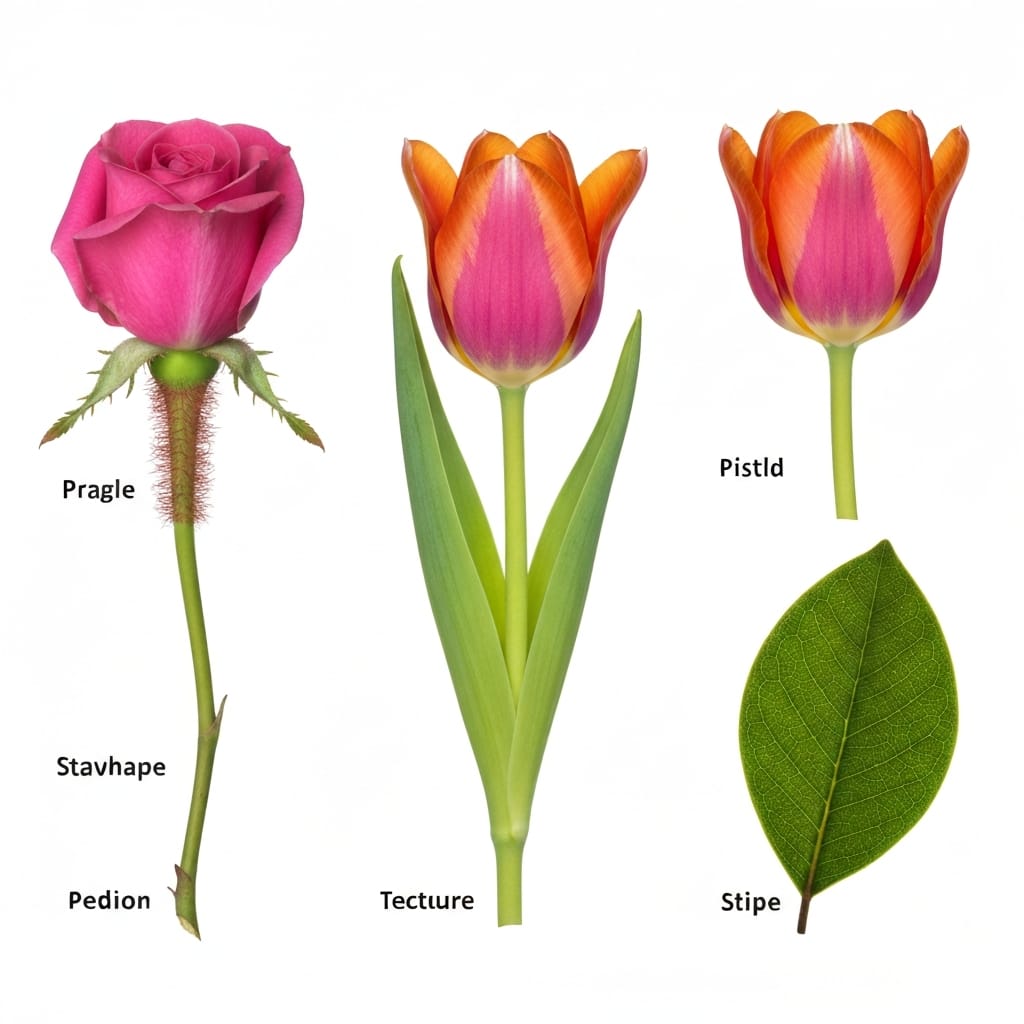
When you receive a bouquet and want to know what's in it, a systematic approach helps:
- 1Photograph the whole bouquet and use Google Lens on the full image
- 2Separate the stems and photograph each flower individually
- 3Note the characteristics of each: colour, petal count, form, scent
- 4Cross-reference against the season flowers are usually in season (unless greenhouse-grown)
- 5Ask the florist they always know what's in their arrangements
For MyCareerly-ordered bouquets, the florist who arranged your flowers knows every variety they used and can answer your question immediately.
Frequently Asked Questions
Quick answers to common questions


