Roses are among the most beloved flowers in the world, and for good reason. Their velvety petals, intoxicating fragrance, and timeless elegance make them the go-to gift for birthdays, anniversaries, and everything in between. But roses also have a reputation for wilting quickly and most people accept that as inevitable. It doesn't have to be. With the right care techniques, used by professional florists every single day, you can keep your roses vibrant, upright, and beautiful for up to two full weeks.
This guide covers everything: from the moment you bring your roses home to the daily habits that dramatically extend their life. Whether you received a bouquet as a gift or bought them for yourself, these steps will make every petal count.
Why Roses Wilt So Fast (And What Actually Causes It)
Before diving into the solutions, it helps to understand the problem. Cut roses wilt for two main reasons: bacterial growth in the water and blocked water uptake in the stems. The moment a stem is cut, it begins sealing itself a natural defense mechanism that, unfortunately, prevents the flower from drinking. Add bacteria-filled water and you have a recipe for a bouquet that droops within 3 days.
Everything in this guide targets one or both of those root causes. Once you understand the why, the steps become intuitive rather than arbitrary.
Step 1 Start with a Spotlessly Clean Vase
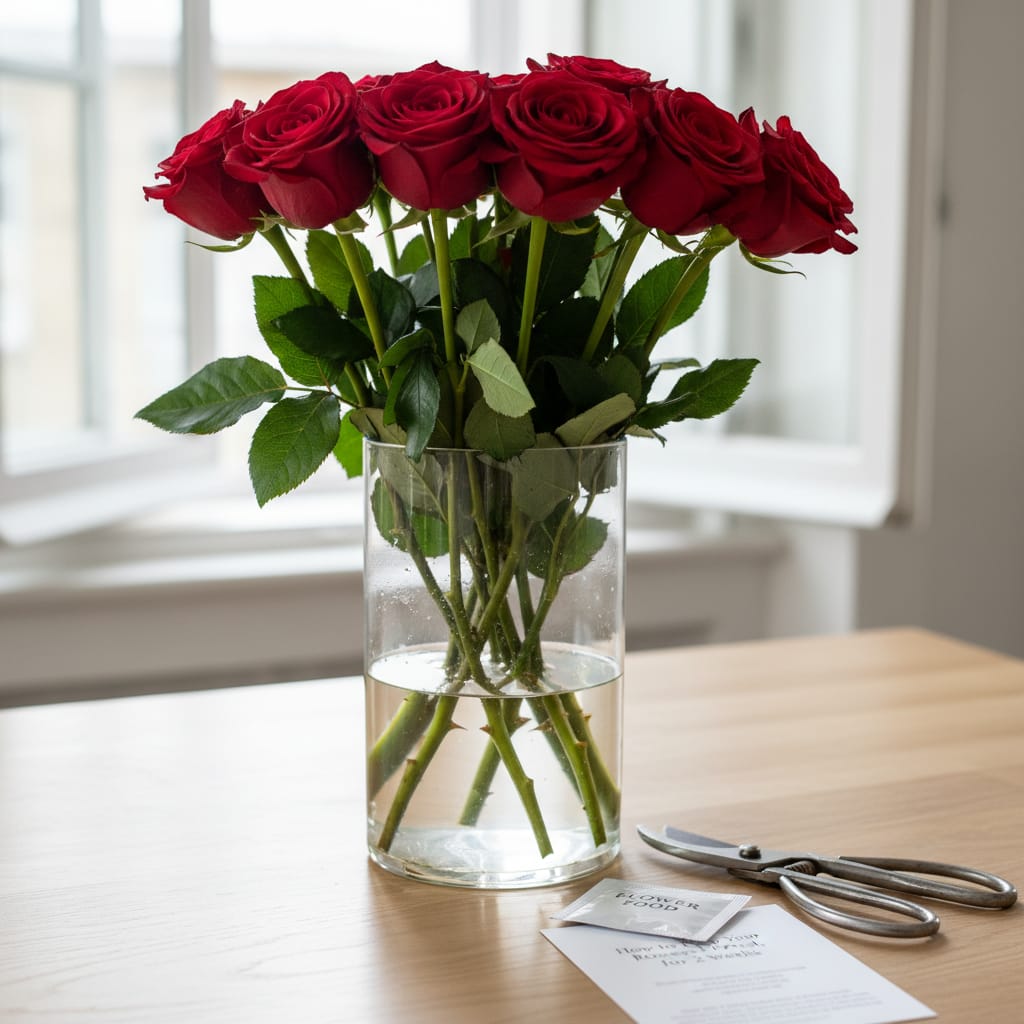
This is the single most overlooked step. Even a vase that looks clean can harbor enough bacteria from a previous bouquet to kill your roses within days. Wash your vase thoroughly with hot soapy water, rinse it well, and if you have it, wipe the inside with a small splash of diluted bleach before rinsing again. This eliminates the bacterial environment before it starts.
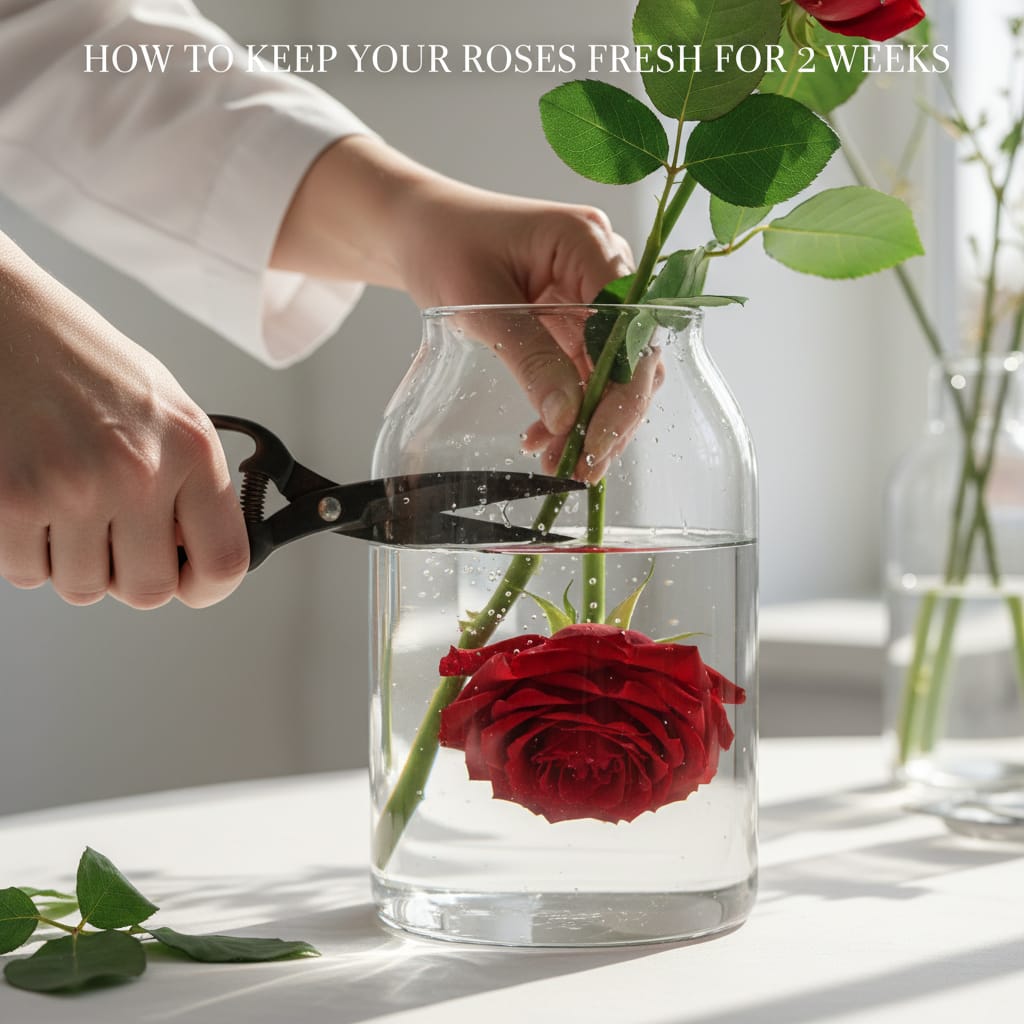
Step 2 Trim Stems at a 45-Degree Angle, Under Water
Use sharp, clean scissors or a dedicated floral knife never dull scissors, which crush the stem rather than cutting it. Cut each stem at a 45-degree angle, removing 2–3 cm from the base. The angled cut increases the surface area available for water absorption.
Here is the critical part most people miss: do this under running water or while the stems are submerged in water. Cutting in air allows tiny air bubbles to enter the stem immediately, blocking the water channels. Cutting underwater prevents this entirely.
Repeat this trim every time you change the water.
Step 3 Use the Right Water Temperature
Temperature matters more than most people realise. Cold water can shock freshly cut roses and slow their water uptake. Use lukewarm water at around 38–40°C (roughly the temperature of a warm shower). This is the ideal temperature for maximum water absorption, especially in the first few hours after cutting.
Fill your vase about two-thirds full. Roses need enough water to drink freely, but not so much that excess stem is submerged unnecessarily.
Step 4 Strip Every Leaf Below the Waterline
Leaves submerged in water begin to rot within 24–48 hours. Rotting leaves release bacteria into the water at an accelerated rate, dramatically shortening your roses' vase life. Before placing any stem in the vase, remove all foliage from the lower one-third of each stem.
Be gentle when removing leaves tearing them aggressively can damage the stem itself. Use your fingers to peel them off smoothly or snip them with scissors close to the stem.
Step 5 Add Flower Food (or Make Your Own)
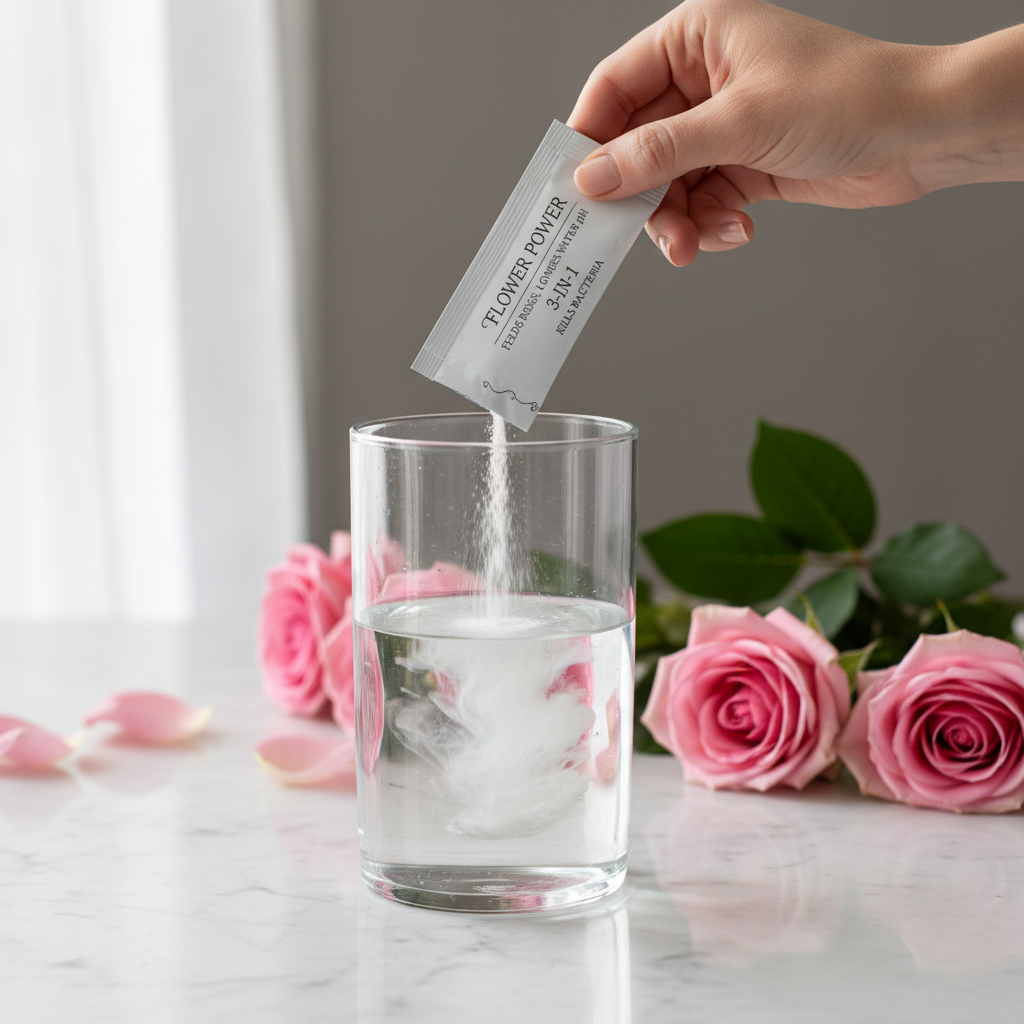
Commercial flower food sachets the small packets that often come with bouquets do three jobs at once: they feed the flowers, lower the pH of the water to improve uptake, and inhibit bacterial growth. Use them whenever you have them.
No sachet? Mix your own:
- 1 tablespoon white sugar (carbohydrates that feed the flowers)
- 1 tablespoon white vinegar or lemon juice (lowers pH, improves uptake)
- A few drops of bleach (kills bacteria)
- 1 litre of lukewarm water
This DIY mix performs comparably to commercial flower food in independent tests.
Step 6 Choose the Right Location
Where you place your roses matters enormously. Roses last longest in environments that are:
- Cool away from radiators, sunny windowsills, and ovens
- Humid not near air conditioning vents, which dry out petals fast
- Away from fruit ripening fruits release ethylene gas, a natural plant hormone that accelerates wilting. Keep roses well away from your fruit bowl.
The ideal spot is a cool room (around 65°F / 18°C), out of direct sunlight, with good air circulation. At night, consider moving them to the coolest room in your home.
Step 7 Change the Water Every Two Days
Bacteria multiply rapidly in stagnant water. Changing the water every two days and re-trimming the stems each time keeps bacterial levels low and water channels clear. When you change the water, also clean the vase briefly to prevent buildup on the glass.
This step alone can add 3–4 days to your roses' vase life compared to leaving them in unchanged water.
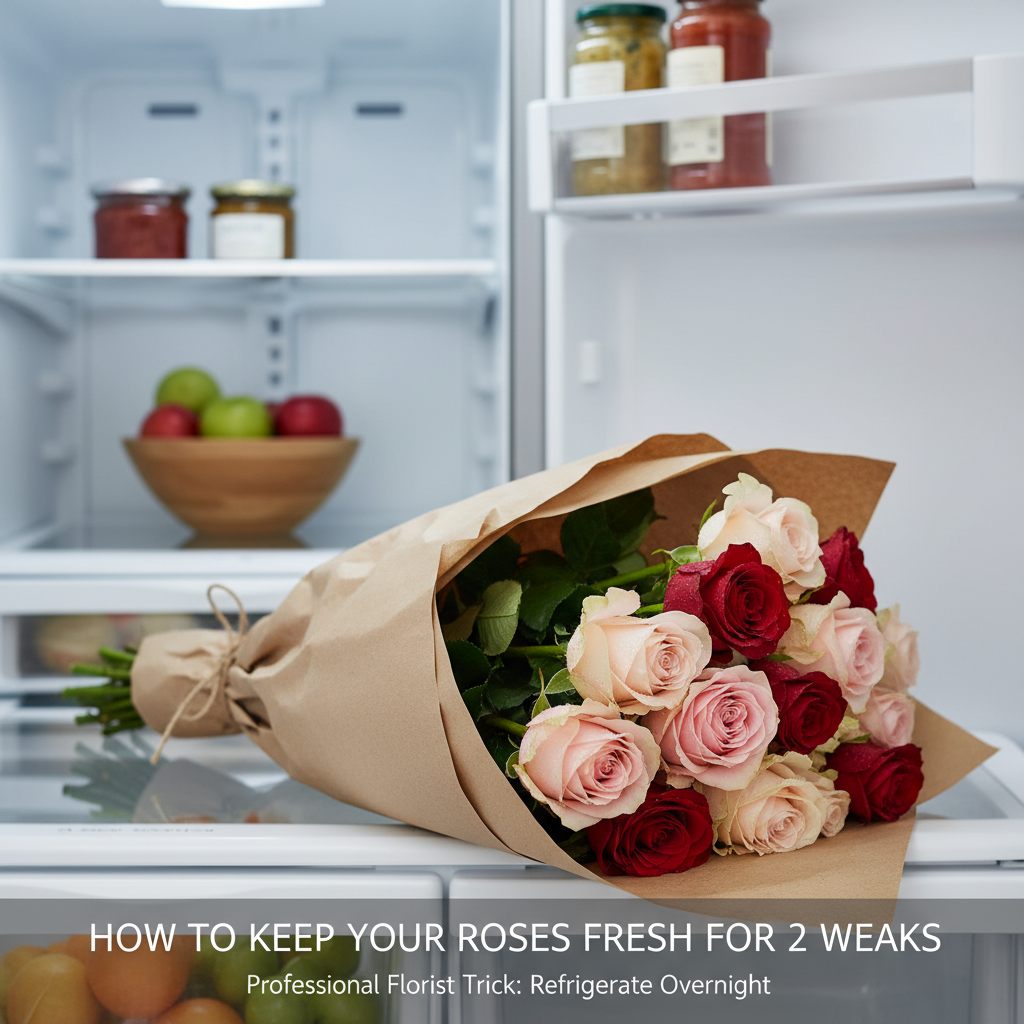
Step 8 The Professional Florist Fridge Trick
Florists store their roses in refrigerated coolers overnight and you can replicate this at home. If you are not displaying your roses overnight, wrap them loosely in newspaper or kraft paper (to protect the petals) and place them in the refrigerator. Keep them away from fruits and vegetables.
The cool temperature dramatically slows the metabolic processes that cause wilting. Remove them in the morning, re-trim the stems, and place them back in fresh water. This trick alone can extend the life of roses by 3–5 days.
Step 9 Mist the Petals Daily
Rose petals absorb small amounts of moisture directly through their surface. A light mist with a spray bottle once a day helps keep them hydrated and delays browning at the petal edges. Avoid heavy saturation you want a fine mist, not droplets pooling on the petals.
Troubleshooting Common Problems
Petals browning at edges: usually caused by dry air or ethylene exposure. Move away from fruit and drafts, mist daily.
Heads drooping suddenly: often caused by an air bubble in the stem. Re-cut the stems under water and place in warm water for 1–2 hours.
Water turning cloudy quickly: indicates heavy bacterial activity. Change water immediately, clean the vase with bleach solution, and re-trim stems.
Leaves yellowing: normal as roses age, but if it happens early it may indicate too much direct sun or over-fertilised water.
How Long Should Roses Last?
With no care at all, cut roses last 3–5 days. With all of the above steps applied consistently, most roses will last 10–14 days. Premium long-stem roses from reputable florists, given optimal care, have been documented lasting up to 21 days.
The difference between a 3-day rose and a 14-day rose is almost entirely about care not the flower itself.
When It Is Time to Let Go
Even with the best care, roses eventually reach the end of their vase life. Signs it is time to compost them include petals falling on their own, stems feeling slimy even after cleaning, a foul odour from the water, or petals that have become translucent and paper-thin.
Composted rose petals are excellent for the garden so even at the end, your roses give back.
Frequently Asked Questions
Quick answers to common questions